Key Takeaways
- Heat stress alters how grass absorbs and uses nutrients.
- Fertilizing at the wrong time can worsen stress rather than fix it.
- Nitrogen-heavy products are risky during extreme heat.
- Proper timing, product choice, and soil moisture matter more than fertilizer rate.
Why Summer Heat Changes How Lawns Respond to Fertilizer
Fertilizing during summer isn’t automatically bad, but it’s often misunderstood. Under heat stress, turfgrass shifts into survival mode. Root growth slows, water demand increases, and nutrient uptake becomes less efficient.
When fertilizer is applied during this period, grass may not use it as effectively as it does in spring or fall. Instead of fueling growth, excess nutrients can burn leaf tissue, overstimulate shallow roots, or encourage disease. Understanding how heat affects turf physiology is essential before making any fertilizer decision.
What Is Heat Stress in Turfgrass?
Heat stress occurs when temperatures exceed the optimal growth range for your grass type. In Georgia, this happens frequently during summer, especially during periods of high humidity and warm nighttime temperatures.
Heat stress typically causes:
- Slowed root growth
- Reduced nutrient uptake
- Increased moisture loss
- Higher susceptibility to disease
Even lawns that appear green can be under physiological stress below the surface.
Why Fertilizer Can Backfire During Hot Weather
Fertilizer pushes growth ,and growth requires energy, water, and oxygen. Under heat stress, turfgrass simply doesn’t have those resources to spare.
Applying fertilizer at the wrong time can:
- Force top growth when roots are weakened
- Increase water demand beyond what the roots can supply
- Intensify heat-related leaf burn
- Raise disease pressure, especially fungal outbreaks
This is why “more fertilizer” rarely solves summer lawn problems.
Does All Fertilizer Harm Lawns in the Heat?
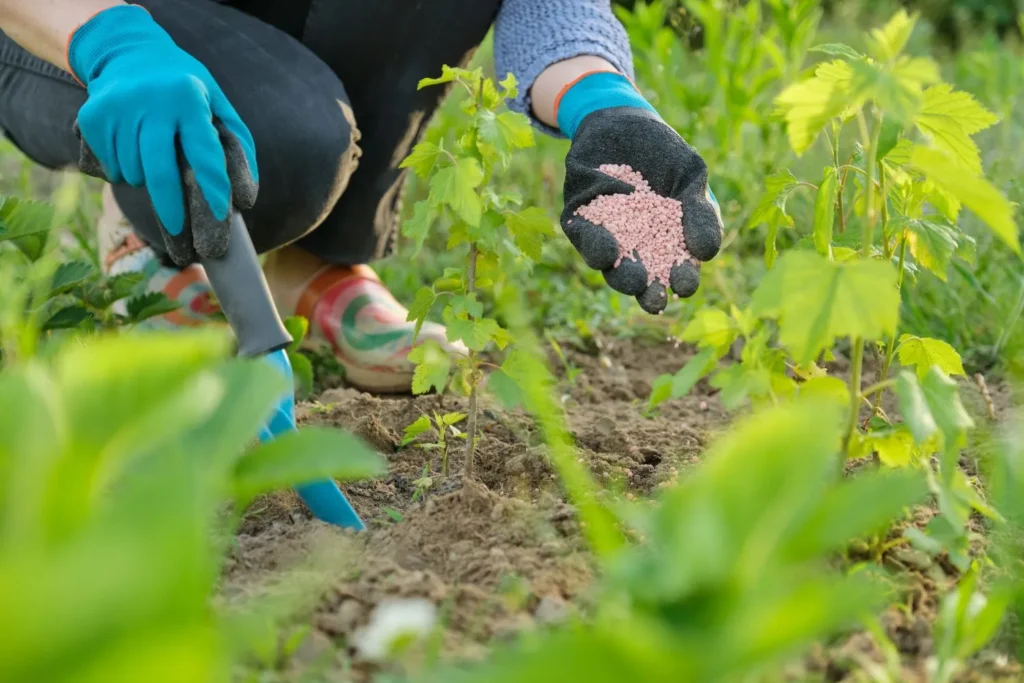
Not all fertilizer is bad during summer, but the type and timing matter greatly. Fast-release, high-nitrogen products are the most risky because they create a rapid growth response.
Lower-risk options include:
- Slow-release nitrogen
- Organic-based fertilizers
- Soil conditioners rather than growth stimulants
The goal in summer is support, not stimulation.
How Grass Type Affects Summer Fertilization

Different grasses respond very differently to summer fertilizer.
Warm-Season Grasses (Bermuda, Zoysia)
Warm-season grasses are actively growing in summer and can tolerate light, well-timed feeding. However, excessive nitrogen still creates stress and increases mowing frequency.
Cool-Season Grasses (Tall Fescue)
Cool-season grasses struggle in Georgia summers. Fertilizing fescue during heat stress often worsens decline by stimulating growth that the roots cannot sustain.
Matching fertilizer strategy to grass type prevents unnecessary damage.
Why Nitrogen Is the Most Common Summer Mistake
Nitrogen drives leaf growth and chlorophyll production. During heat stress, that growth demand becomes a liability.
Excess nitrogen during summer:
- Encourages shallow root systems
- Increases drought sensitivity
- Makes turf more attractive to disease
- Causes rapid dehydration
That’s why summer fertilization, if done at all, should be conservative and controlled.
| Weed Pro Lawn Care: Local Lawn & Outdoor Pest Experts Reliable Service Backed by Results You Can See Choose the Right Lawn Care Solution for Your Property: – Complete Lawn Care Programs: Ongoing, customized lawn care plans designed to strengthen turf, improve soil health, and reduce weeds. – Targeted Weed & Pest Control: Focused solutions for persistent lawn weeds, invasive pests, and seasonal pressures such as mosquitoes and surface insects. – Irrigation & Lawn Health Support: Professional support for irrigation efficiency, aeration, overseeding, and soil conditioning to improve water absorption, reduce runoff, and help lawns recover from compaction, disease, or environmental damage. Customer Praise:“Easy and quick set-up. Immediate results. I have been trying and failing little by little to maintain my yard over the past three years. Weed pro came in and turned the yard around in 6 months. Thank you Weed Pro Lawn care for excellent and affordable lawn care.” – Antonio Rizzo Why Homeowners Choose Weed Pro Lawn Care: – Locally owned and operated, serving North Georgia communities – Experienced technicians trained in region-specific lawn and pest challenges – Customized service plans based on property conditions, not one-size-fits-all programs – Environmentally responsible treatments with a focus on long-term lawn health – Clear communication, reliable scheduling, and service you can trust Schedule your Service Today! |
When Fertilizing During Heat Stress May Make Sense
There are situations where light fertilization can help, but only under specific conditions.
Fertilizing may be appropriate when:
- Soil moisture is adequate
- Temperatures are warm but not extreme
- The lawn is actively growing
- Slow-release products are used
Even then, applications should be lighter than those for spring or fall.
Why Soil Moisture Matters More Than Fertilizer Rate
Dry soil magnifies fertilizer stress. Without adequate moisture, nutrients remain concentrated near the surface, causing damage to leaf tissue.
Before fertilizing in summer:
- Ensure soil moisture is consistent
- Avoid fertilizing before heat waves
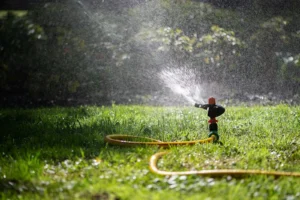
- Water lightly after application if the label allows
Fertilizer should never be applied to drought-stressed turf.
How Fertilization Can Increase Disease Pressure in Summer
Many lawn diseases thrive in warm, humid conditions. Excess nitrogen creates dense, tender leaf growth that holds moisture, ideal conditions for fungi.
Summer fertilization mistakes often precede:
- Brown patch
- Dollar spot
- Pythium outbreaks
Reducing nitrogen inputs during heat stress is one of the most effective steps for disease prevention.
Better Alternatives to Fertilizing During Heat Stress
Instead of fertilizing aggressively, focus on reducing stress and improving resilience.
Smarter Summer Lawn Support Strategies
- Raise the mowing height to shade the soil
- Improve irrigation timing and depth
- Apply soil conditioners or biostimulants
- Reduce foot traffic during peak heat
These steps help turf survive summer without forcing growth.
Why Professional Fertilization Timing Matters
Professionals adjust fertilizer programs seasonally, not habitually. Summer plans focus on root protection, disease prevention, and recovery, not fast growth.
A professional approach accounts for:
- Grass type
- Soil condition
- Weather patterns
- Disease history
That precision prevents costly mistakes homeowners often don’t see until damage appears.
Feed Your Lawn Without Feeding the Stress

Summer fertilization isn’t about pushing growth, it’s about protecting your lawn through the toughest months of the year. At Weed Pro Lawn Care, we tailor fertilization programs to Georgia’s heat, humidity, and soil conditions so your lawn stays healthy without unnecessary stress.
Our summer plans focus on proper timing, product selection, and soil support, not one-size-fits-all treatments.
Contact us today to schedule a lawn evaluation and ensure your fertilization strategy helps your lawn survive summer, not struggle through it.
FAQ: Fertilizing Lawns Under Heat Stress
Should you fertilize your lawn during a heat wave?
No. Fertilizing during extreme heat increases the risk of burn and stress. It’s best to wait until temperatures moderate or choose non-growth products like soil conditioners instead.
What happens if you fertilize dry grass in summer?
Fertilizer applied to dry turf can burn leaf tissue and worsen drought stress. Without adequate moisture, nutrients concentrate and damage the grass rather than supporting it. Always ensure soil moisture is proper before any application.
Is organic fertilizer safer during summer heat?
Organic fertilizers release nutrients more slowly, making them lower risk than fast-release synthetics. However, they can still cause stress if applied too heavily or during extreme heat. Rate and timing always matter.
Reference: Continue Learning About Summer Lawn Challenges
Next, read Why Lawn Color Isn’t Always a Nutrient Issue to learn why yellowing or dull turf during summer isn’t always caused by fertilizer deficiency and what’s really happening below the surface.