
Key Takeaways
- Discolored grass is often caused by stress, not nutrient deficiency.
- Heat, soil conditions, and water issues commonly affect lawn color.
- Over-fertilizing can worsen discoloration and turf damage.
- Root health plays a major role in how green your lawn appears.
- Correct diagnosis prevents unnecessary treatments and long-term problems.
Why Lawn Color Can Be Misleading
When a lawn loses its deep green color, homeowners often reach for fertilizer first. While nutrients are essential, lawn color alone is not a reliable indicator of what your lawn actually needs. Grass can appear pale, yellow, or patchy for reasons unrelated to nutrient shortages.
In Georgia lawns, color changes frequently reflect environmental stress rather than deficiency. Heat, compacted soil, moisture imbalance, disease pressure, and root decline all affect how chlorophyll functions in grass blades. Treating discoloration without understanding the cause often leads to frustration and wasted effort.
What Grass Color Really Tells You About Lawn Health
Grass color reflects how efficiently the plant is photosynthesizing. Chlorophyll production depends on many factors working together, not just nitrogen availability. When roots are stressed or oxygen-deprived, nutrient uptake slows even if nutrients are present in the soil.
That’s why lawns with perfectly adequate fertilizer levels can still look weak or washed out. The problem isn’t what’s missing, it’s what the grass can’t access.
Heat Stress Is One of the Biggest Color-Changing Factors
During Georgia summers, heat stress is one of the most common causes of lawn color loss. High temperatures force turfgrass to conserve energy and limit growth. As a result, chlorophyll production drops and grass appears lighter or duller.
This response is protective, not problematic. Fertilizing during heat stress often pushes growth when the lawn is trying to survive, leading to more damage rather than a greener color.
Why Water Issues Mimic Nutrient Deficiency
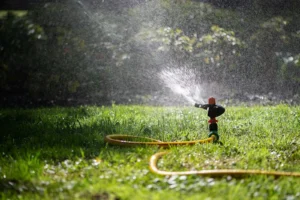
Improper watering is another major contributor to off-color turf. Both overwatering and underwatering interfere with nutrient uptake.
When soil stays too wet, oxygen levels drop, and roots struggle to function. When the soil is too dry, nutrients become inaccessible. In both cases, grass may yellow even though nutrients are present in the soil profile.
Correcting irrigation habits often restores color without adding fertilizer.
Soil Compaction and Poor Oxygen Flow Affect Color

Compacted soil restricts root expansion and oxygen movement. Without adequate oxygen, roots cannot absorb nutrients efficiently, regardless of how much fertilizer has been applied.
Lawns growing in compacted soil frequently show:
- Uneven green coloration
- Thin or stunted growth
- Increased stress during heat
Aeration and soil improvement often correct these color issues more effectively than fertilization.
Why Root Health Matters More Than Leaf Color
Roots are responsible for water and nutrient uptake, but they’re often overlooked because they’re hidden below the surface. When roots are shallow, damaged, or stressed, the lawn cannot maintain rich color.
Root stress may come from:
- Heat and drought
- Compacted or poorly drained soil
- Excessive nitrogen applications
- Disease pressure
Improving root conditions leads to more consistent color across the lawn.
| Weed Pro Lawn Care: Local Lawn & Outdoor Pest Experts Reliable Service Backed by Results You Can See Choose the Right Lawn Care Solution for Your Property: – Complete Lawn Care Programs: Ongoing, customized lawn care plans designed to strengthen turf, improve soil health, and reduce weeds. – Targeted Weed & Pest Control: Focused solutions for persistent lawn weeds, invasive pests, and seasonal pressures such as mosquitoes and surface insects. – Irrigation & Lawn Health Support: Professional support for irrigation efficiency, aeration, overseeding, and soil conditioning to improve water absorption, reduce runoff, and help lawns recover from compaction, disease, or environmental damage. Customer Praise:“Easy and quick set-up. Immediate results. I have been trying and failing little by little to maintain my yard over the past three years. Weed pro came in and turned the yard around in 6 months. Thank you Weed Pro Lawn care for excellent and affordable lawn care.” – Antonio Rizzo Why Homeowners Choose Weed Pro Lawn Care: – Locally owned and operated, serving North Georgia communities – Experienced technicians trained in region-specific lawn and pest challenges – Customized service plans based on property conditions, not one-size-fits-all programs – Environmentally responsible treatments with a focus on long-term lawn health – Clear communication, reliable scheduling, and service you can trust Schedule your Service Today! |
Lawn Disease Can Change Color Before Damage Is Obvious
Fungal diseases often alter turf color early in their development. Subtle yellowing, dull patches, or uneven green tones can appear days or weeks before thinning or dieback becomes visible.
Applying fertilizer to diseased turf can accelerate disease spread by encouraging tender growth. That’s why identifying disease-related color changes early is critical.
Why Over-Fertilizing Makes Color Problems Worse
Applying fertilizer when the lawn doesn’t need it creates an imbalance. Excess nitrogen can:
- Increase leaf growth without root support
- Intensify heat and drought stress
- Trigger disease outbreaks
- Cause rapid color changes followed by a decline
A greener lawn for a week can turn into a bigger problem later if fertilization is mistimed.
How Professionals Diagnose Lawn Color Issues Correctly
Professional lawn care focuses on diagnosis before treatment. Color is evaluated alongside soil conditions, root depth, moisture levels, and recent weather patterns.
Instead of guessing, professionals determine whether discoloration is caused by:
- Nutrient imbalance
- Environmental stress
- Soil structure issues
- Disease activity
That targeted approach prevents unnecessary applications and protects long-term turf health.
Fix the Cause, Not Just the Color
If your lawn’s color keeps changing despite regular fertilization, the issue likely runs deeper than nutrients alone. At Weed Pro Lawn Care, we look beyond surface symptoms to identify what’s really affecting your turf, from soil compaction to heat stress and root health.
Our lawn evaluations focus on long-term solutions, not quick fixes.
Contact us today to schedule a professional assessment and get a plan that restores healthy color by addressing the real problem beneath your lawn.
FAQ: Lawn Color and Nutrient Misconceptions
Does yellow grass always mean your lawn needs fertilizer?
No. Yellowing is often caused by heat stress, poor drainage, compaction, or disease rather than nutrient deficiency. Fertilizing without identifying the cause can worsen the issue.
Can watering problems make a lawn look nutrient-deficient?
Yes. Improper watering limits nutrient uptake even when nutrients are present in the soil. Correcting irrigation habits often improves color without additional fertilizer.
Why does a lawn look green in spring but pale in summer?
Spring conditions favor growth and nutrient uptake, while summer heat stresses roots and slows chlorophyll production. This seasonal shift is normal and doesn’t always require fertilization.
Reference: Continue Building Smarter Lawn Knowledge
Next, explore Why Mulch Beds Fail Around Atlanta Tree Roots and Shade Canopies to understand how shade, root competition, and moisture imbalance affect landscape health beneath mature trees.