Key Takeaways
- Lawn edges experience more direct sun exposure and airflow.
- Border stress often develops from irrigation gaps and uneven coverage.
- Heat concentration along sidewalks and driveways accelerates moisture loss.
- Soil runoff and edge compaction limit water absorption.
- Microclimate shifts make perimeter turf more vulnerable than center zones.
The Perimeter Problem Most Homeowners Miss
Take a slow walk around your yard in Alpharetta, and you’ll probably notice it. The center of the lawn looks reasonably stable, but the lawn edges, especially along sidewalks, driveways, and curb lines, appear lighter, thinner, or slightly crispy. This pattern shows up in yard after yard, and it’s not random.
Edges exist in a completely different environment from the interior of your lawn. They face stronger sun exposure, greater airflow patterns, and higher heat concentration from nearby hard surfaces. At Weed Pro, we often explain that border turf lives in a harsher microclimate than grass in the middle of the yard.
Once you understand how those outer zones function, the drying pattern makes perfect sense.
Lawn Edges Experience a Different Microclimate
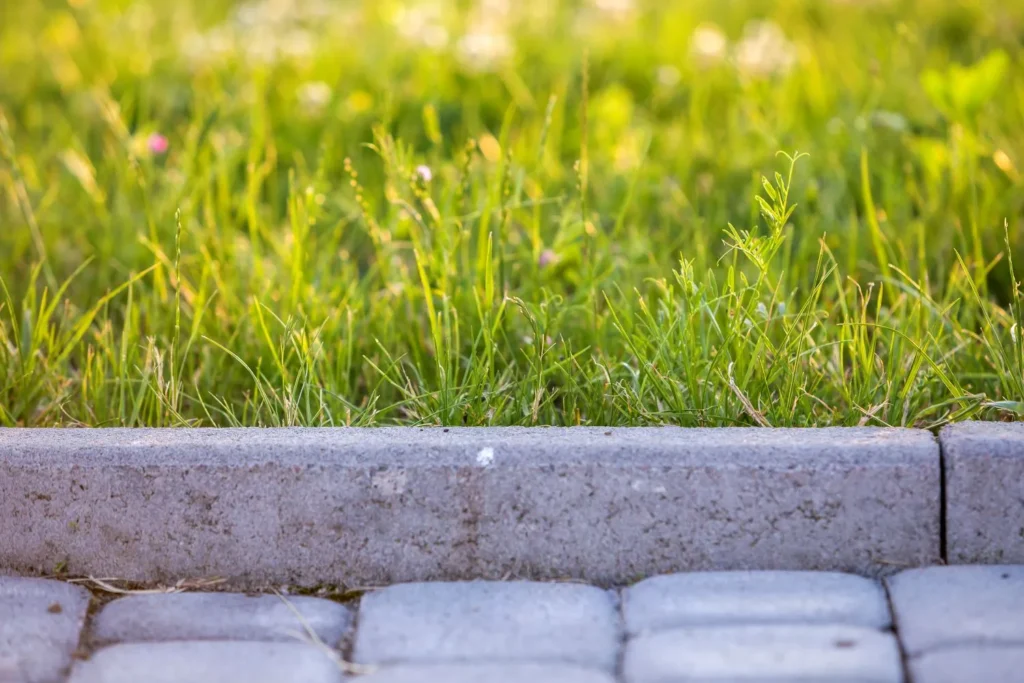
The center of your yard benefits from insulation. Surrounding turf blocks wind, shades soil, and slows surface evaporation. In contrast, lawn edges sit exposed. They border pavement, fences, or open space where airflow patterns increase drying speed.
These microclimate shifts matter more than homeowners realize. Increased air movement accelerates moisture loss, especially during warm afternoons. Meanwhile, radiant heat from concrete creates additional stress that the center turf simply doesn’t have to endure.
Edges operate under different rules.
Heat Concentration Along Hard Surfaces
Driveways, sidewalks, patios, and curb lines absorb and radiate heat throughout the day. This heat concentration raises soil temperature along perimeter strips of turf. Warmer soil increases evaporation rates and intensifies surface drying.
As temperatures rise, moisture loss speeds up dramatically near hard edges. Even if your irrigation system runs evenly, perimeter zones may lose water faster than interior areas. Over time, this imbalance leads to visible border stress.
The edge isn’t failing; it’s overheating.
| Weed Pro Lawn Care: Local Lawn & Outdoor Pest Experts Reliable Service Backed by Results You Can See Choose the Right Lawn Care Solution for Your Property: –Complete Lawn Care Programs: Ongoing, customized lawn care plans designed to strengthen turf, improve soil health, and reduce weeds. –Targeted Weed & Pest Control: Focused solutions for persistent lawn weeds, invasive pests, and seasonal pressures such as mosquitoes and surface insects. -Irrigation & Lawn Health Support: Professional support for irrigation efficiency, aeration, overseeding, and soil conditioning to improve water absorption, reduce runoff, and help lawns recover from compaction, disease, or environmental damage. Customer Praise:“Have been using Weed Pro for over 10 years and have been very pleased with the results and their service. I often get comments about how great my yard always looks.” – Lynn B. Why Homeowners Choose Weed Pro Lawn Care: -Locally owned and operated, serving North Georgia communities -Experienced technicians trained in region-specific lawn and pest challenges -Customized service plans based on property conditions, not one-size-fits-all programs -Environmentally responsible treatments with a focus on long-term lawn health -Clear communication, reliable scheduling, and service you can trust Schedule your Service Today! |
Irrigation Gaps Are More Common Than You Think
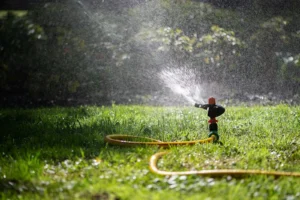
Many homeowners assume their sprinkler system evenly covers the entire lawn. However, irrigation gaps often develop near borders. Sprinkler heads may overshoot pavement or underdeliver along property lines.
Even slight coverage inconsistencies can compound during hot weeks. Edges that receive marginally less water will dry first. Repeated cycles of uneven moisture accelerate turf thinning in those zones.
Small distribution errors create noticeable differences in the perimeter.
Why Soil Runoff Targets Lawn Edges
Water doesn’t always stay where you apply it. On sloped properties, soil runoff tends to move toward lower areas along the perimeter or flow off the lawn entirely. This movement reduces effective hydration along edges.
Additionally, compacted soil near sidewalks can repel water rather than absorb it. That means even adequate irrigation may not penetrate deeply. Surface evaporation removes moisture before roots can fully benefit.
Runoff amplifies edge vulnerability.
Primary Reasons Lawn Edges Dry Faster
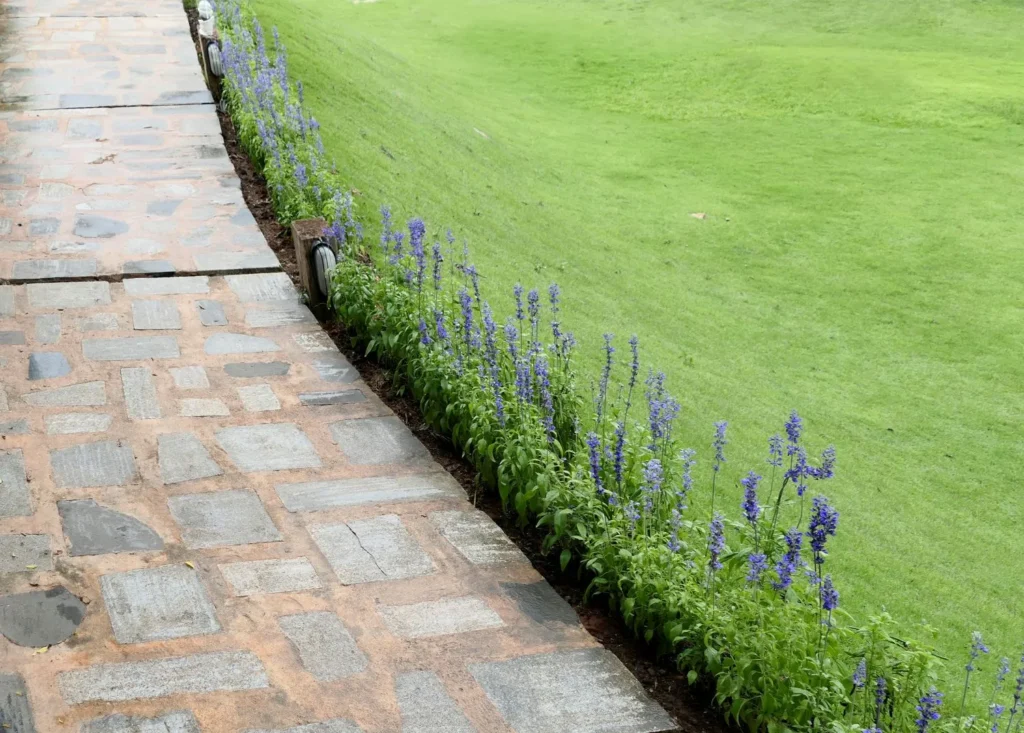
Here are the most common drivers behind drying perimeter turf:
- Increased sun exposure with little shade buffer
- Heat concentration from adjacent pavement
- Accelerated surface evaporation due to airflow
- Minor irrigation gaps at sprinkler boundaries
- Compacted soil is limiting water infiltration
Each of these factors alone can stress turf. Combined, they intensify moisture loss along borders.
Edge Compaction Restricts Absorption
Foot traffic often follows property lines. People walk along sidewalks, step out of driveways, or cut across lawn edges. Over time, this repeated pressure creates edge compaction.
Compacted soil reduces pore space and limits water penetration. Even if irrigation covers the area properly, moisture may remain near the surface and evaporate quickly. Shallow absorption leads to shallow root systems.
Compaction doesn’t just dry turf; it weakens it.
Border Stress Builds Gradually
You won’t usually see dramatic dieback overnight. Instead, border stress accumulates slowly. Edges may appear slightly lighter or thinner compared to the center. During heat waves, they show signs of fatigue sooner.
Because stress develops incrementally, homeowners often overlook it until thinning becomes pronounced. By then, root systems along those strips may already be weakened by repeated moisture loss.
Recognizing early patterns prevents larger repair needs.
Airflow Patterns Accelerate Moisture Loss
Open yard edges often experience stronger wind movement than protected interior zones. Airflow patterns increase drying by enhancing evaporation from leaf surfaces and soil.
This effect is particularly noticeable near open streets or corner lots in Alpharetta. Without surrounding turf to buffer the wind, the perimeter grass loses moisture more rapidly. Even moderate breezes can significantly affect drying speed.
Air movement quietly shapes turf performance.
Structural Differences Between Center and Edge Turf
Interior turf benefits from consistent root interconnection and stable soil temperature. Edges lack that insulation. Heat radiates from the pavement while airflow removes surface moisture more quickly.
Additionally, root zones near pavement may face temperature fluctuations not experienced elsewhere. These structural differences explain why the same watering schedule produces uneven visual results.
The lawn is not uniform in environmental exposure.
Signs Your Lawn Edges Are Under Stress
Perimeter stress often presents with subtle visual cues before a severe decline. Watch for:
- Fading green tone along borders
- Thinning strips near sidewalks
- Faster wilting during warm afternoons
- Soil pulling away slightly from pavement
- Reduced density compared to the center zones
These indicators suggest moisture imbalance and environmental pressure.
Prevention Strategies for Drying Lawn Edges
If you want to reduce edge drying, focus on improving moisture consistency and soil absorption:
- Adjust sprinkler heads to eliminate irrigation gaps
- Aerate compacted perimeter soil
- Monitor runoff patterns during watering
- Add organic matter to improve infiltration
- Trim nearby hardscape vegetation to balance airflow
Small adjustments can significantly improve long-term perimeter stability.
Strengthen Your Lawn Edges Before They Decline
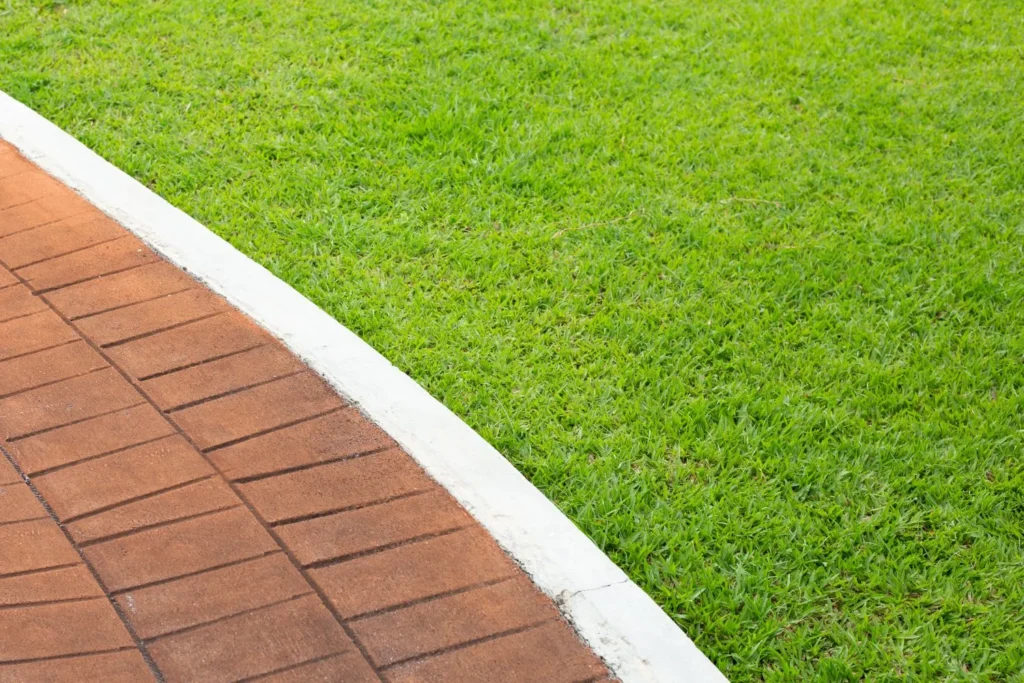
If your lawn edges consistently dry faster than the center, it’s time to take a closer look at irrigation coverage, compaction, and heat concentration patterns. At Weed Pro, we evaluate perimeter microclimates and identify the structural reasons behind edge stress.
Contact us today for a professional lawn assessment in Alpharetta. We’ll pinpoint moisture loss patterns, address irrigation gaps, and help stabilize your borders before thinning spreads inward.
Healthy edges protect the entire lawn.
Frequently Asked Questions
Do raised garden beds contribute to edge drying?
Yes, raised beds can alter drainage patterns and redirect water away from turf edges. This redirection may increase localized dryness.
Can decorative rock borders worsen heat concentration?
Decorative stone absorbs and radiates heat similarly to concrete. In some cases, it may increase soil temperature near lawn edges.
Does edging too frequently increase border stress?
Frequent mechanical edging can slightly disturb root systems along borders. Over time, repeated disruption may reduce density in those strips.
Up Next: Renovation Choices That Shape Long-Term Turf Health
Now that you understand why lawn edges dry faster, let’s look at a broader decision affecting Alpharetta lawns. Next Read: How Lawn Renovation Choices Affect Long-Term Turf Longevity in Alpharetta.