Most homeowners treat lawn disease like a sudden emergency—waking up to see orange spots or slimy patches and rushing to the store for a cure. But by the time you see the damage, the fungal infection has likely been active for weeks.
In the professional agronomy world, we don’t wait for spots to appear. We operate on a predictive schedule.
Just as you wouldn’t wait for a blizzard to buy a shovel, you shouldn’t wait for high humidity to think about fungal suppression. Effective disease management is about closing the “Translation Gap” between complex climatic data and what you actually do on your Saturday morning. It’s not just about looking at the calendar; it’s about reading the environment.
This guide moves beyond generic advice to give you a prevention-first framework. We’ll break down exactly how to anticipate disease pressure based on temperature triggers and soil conditions, helping you evaluate whether your current plan—DIY or professional—is robust enough to protect your investment.
The Science of Anticipation: Why Calendars Aren’t Enough
Generic lawn care calendars often fail because fungi don’t own calendars—they own thermometers and hygrometers.
A fungus like Brown Patch doesn’t care if it’s “early June.” It cares if the nights are staying above 70°F with high humidity. If you are strictly following a printed schedule without accounting for unseasonal heatwaves or heavy rainfall, you are leaving your turf vulnerable.
We use a localized hybrid strategy. We combine the rigid structure of a seasonal calendar with flexible “trigger protocols” based on real-time weather data. This approach allows us to deploy preventative treatments (fungicides applied before infection) and cultural adjustments (changing how you mow and water) exactly when pathogen pressure spikes.
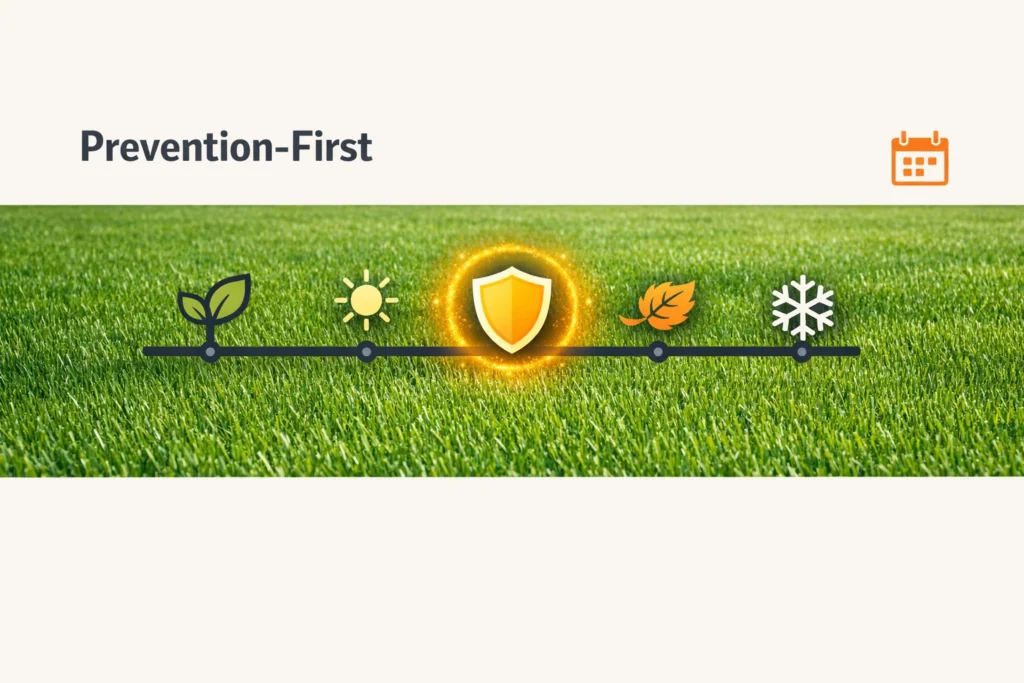
The 4-Season Prevention Roadmap
To move from reactive repair to proactive defense, your lawn care year needs to be divided into four distinct strategic phases.
Phase 1: Spring Preparation (The Foundation)
Spring is often misdiagnosed as the start of the growing season; in reality, it’s the audit season. Before you apply a single drop of product, you must understand what is happening beneath the surface.
- The Snow Mold Cleanup: In cooler regions like Ohio, as snow melts, you may find matted, gray circles (Snow Mold). Lightly raking these areas promotes airflow and recovery.
- The Soil Audit: Disease thrives in imbalanced soil. If your pH is off, your grass is stressed, and stressed grass is an open invitation to infection. We recommend conducting professional soil testing before aeration to determine if your lawn has the nutrient density required to fight off infection naturally.
- Pre-Emergent Defense: While often associated with weeds, early spring is also when we establish the “health baseline.” By preventing competition from weeds, we ensure the grass has full access to nutrients.
Phase 2: Summer Management (High Pressure)
This is the critical window. The combination of heat and moisture creates a petri dish for fungal growth.
- The Brown Patch Threat: This is the most common summer enemy for cool-season grasses like Tall Fescue. It strikes when nutrients are high (specifically nitrogen) and the air is thick.
- Preventative Action: If you know a heatwave is coming, avoid applying quick-release nitrogen fertilizers, which fuel the fungus. Instead, switch to slow-release nutrients and ensure your blade height is raised to reduce stress.
- Identifying the Issue: If you see “smoke rings” or circular dead areas, you need to verify the diagnosis immediately. Misdiagnosing brown patch grass as simple drought stress often leads homeowners to water more, which essentially pours gasoline on the fungal fire.
Phase 3: Fall Recovery & Pre-Wintering
As temperatures drop, the pressure shifts from active fungal growth to recovery and preparation for the next dormancy.
- Aeration & Seeding: Relieving soil compaction is the single best preventative measure against future disease. Compacted soil holds water near the surface—exactly where fungi want it.
- The “Clean Bed” Protocol: Removing leaf litter is not just aesthetic. Wet leaves are a breeding ground for Snow Mold.
- Southern Transition: For our clients with warm-season grasses (like Bermuda or Zoysia in transitional zones), fall is the time to apply the best pre emergent for georgia and similar climates to prevent winter weeds that harbor pests and diseases.
Phase 4: Winter Protection
While the lawn looks dormant, the roots are surviving. Your goal here is “Do No Harm.”
- Traffic Control: Frozen grass is brittle. Walking on frosted turf breaks the plant cells, creating wounds that pathogens can enter once the thaw begins.
- Equipment Maintenance: This is the time to sharpen mower blades. Dull blades shred grass tips, leaving ragged wounds that heal slowly and invite disease in the spring.
Trigger-Based Prevention: Reading the Signs
The difference between a lawn that survives and one that thrives is understanding specific environmental triggers. University extension research provides us with precise data points that signal when to act.
The “Danger Zone” Metrics:
- Brown Patch: Requires daytime temperatures of 80–95°F combined with nighttime temperatures remaining above 68°F. High humidity (leaf wetness for >10 hours) is the ignition switch.
- Large Patch: Common in warm-season turf, this triggers when soil temperatures drop between 60°F and 75°F in the fall or rise to that level in the spring.
If you are evaluating professional services, ask them: “Do you adjust your application schedule based on soil temperature and humidity forecasts?” If the answer is no, they are likely following a static route sheet rather than a dynamic agronomic plan.
The Evaluation: Organic vs. Chemical Prevention
A major shift is occurring in the lawn care market. Recent data indicates a 5.5% annual growth rate in organic and biological fungicides. Homeowners are increasingly asking, “Can I prevent disease without harsh chemicals?”
The answer is yes, but it requires a different mindset.
The Biological/Organic Approach (Soil Health)
This method focuses on “competitive exclusion.” By packing the soil with beneficial microbes (via compost teas or bio-fungicides), you leave no room for pathogens to take hold.
- Pros: Safe for pets/kids immediately; improves long-term soil structure; aligns with sustainable values.
- Cons: Slower to act; requires stricter adherence to schedule; often more expensive due to material costs.
The Conventional Approach (Synthetic)
This uses traditional fungicides to create a chemical barrier on the leaf blade.
- Pros: fast-acting; highly effective during high-pressure outbreaks; cost-effective for large areas.
- Cons: Can impact soil microbiome if overused; reentry restrictions for pets/kids.
Many homeowners worry about toxicity. It is valid to ask is pre emergent toxic or if fungicides pose risks. At Weed Pro, we believe in an Integrated Pest Management (IPM) approach—using organic inputs to build health first, and reserving synthetics for curative emergencies or high-risk thresholds.
Decision Matrix: DIY vs. Professional Management
Knowing what to do is different from having the capacity to do it. Preventative disease management requires precision—applying a treatment two days too late often renders it useless.
Use this framework to decide if you should manage disease prevention yourself or hire a specialist.
- The Equipment Gap: Professional applicators use calibrated ride-on sprayers that ensure consistent coverage. A hand-can or hose-end sprayer often results in “hot spots” (burned grass) or missed patches where disease survives.
- The Product Gap: Many effective preventatives (both biological and synthetic) are “Restricted Use” or simply not sold at big-box stores in the concentrations required for efficacy.
- The Cost-Benefit: If you miss a preventative window and lose 30% of your lawn to Brown Patch, the cost of aeration, seeding, and repair will likely exceed the cost of an annual professional program.
Frequently Asked Questions
Is it too late to apply preventative fungicide if I already see spots?
Yes and no. Once you see atlanta lawn problems (or similar issues in Ohio), the damage is done to those specific blades. However, switching to a curative rate immediately can stop the spread to the rest of the lawn. Prevention is always cheaper than the cure.
Can I mix organic and synthetic treatments?
Absolutely. This is the core of a “Hybrid” program. You can use organic soil amendments to build long-term resistance while using targeted synthetics during the 2-3 weeks of peak summer disease pressure. This reduces overall chemical load while maintaining results.
How does watering affect disease pressure?
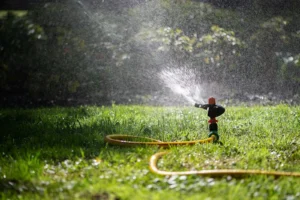
Watering in the late evening is the number one cause of fungal outbreaks. It leaves the grass wet all night—perfect for spores. Always water deeply and infrequently in the early morning (between 4 AM and 8 AM) so the sun can dry the blades quickly.
Taking the Next Step
A healthy, disease-resistant lawn isn’t an accident; it’s a result of engineered soil health and timed intervention. Whether you are looking to protect a commercial property or a residential backyard, the key is anticipating the threat before the temperature triggers are met.
If you are unsure if your current soil conditions are ready to fight off the coming season’s threats, the best first step is a professional assessment. Let’s look at the data beneath your feet before we look at the calendar on the wall.