You’ve seen the signs and labels—”organic,” “natural,” “chemical-free”—and they sound great, right? Who wouldn’t want to treat their lawn with all-natural goodness? But here’s the dirt on the green truth: organic lawn care in Georgia isn’t always the healthiest option for your grass, especially if you want thick, thriving turf that can take the Southern heat.
At Weed Pro, we’re all about results—and we’ve seen firsthand how some organic solutions can actually cause more frustration than satisfaction. Before you toss out the synthetic treatments, let’s break down why organic isn’t always a perfect match for Georgia lawns.
The Georgia Climate: Beautiful but Brutal
Let’s start with the basics. Georgia is known for its sweltering summers, unpredictable rainfall, and heavy clay soil. While your garden veggies might appreciate an organic boost, your lawn has different needs—especially when it comes to consistent nutrients, pest resistance, and disease control.
Organic lawn care products often work slower, which might be fine up north—but here in the Peach State, grass doesn’t get the luxury of long growing seasons and mellow weather. Instead, it needs strong roots, quick response to stress, and protection from the elements.
Problem #1: Slow-Release Solutions, Slow Results
Organic fertilizers typically rely on materials like compost, bone meal, and seaweed. While that sounds wholesome, these ingredients take time to break down—and even longer to show results.
Meanwhile, your lawn is out here battling:
- Sudden heat waves
- Rainy week-long spells
- Dry, cracked soil
- Seasonal lawn pests
In many cases, slow-release lawn solutions just can’t keep up. Homeowners often find themselves with green but thin turf or uneven color patches, especially in summer. Synthetic treatments (even when used sparingly) can deliver faster, targeted results when timing is everything.
Problem #2: Nutrient Deficiencies and Imbalance
Not all organic fertilizer blends are created equal. Many fail to provide key micronutrients that Georgia soil lacks—like iron, magnesium, or sulfur. Over time, this can lead to:
- Yellowing leaves
- Stunted growth
- Weak root systems
Plus, organic applications are harder to control precisely. Without the right soil test, you might end up creating more nutrient deficiencies than you fix.
Problem #3: Natural Weed Control = Not Always Effective
Let’s talk weeds—because they love Georgia. Clover, crabgrass, dandelions, nutsedge, and more are all too common here. And guess what? Most natural weed control options just aren’t strong enough.
You can apply corn gluten meal or vinegar sprays all day, but they often don’t stop aggressive weeds once they’ve taken hold. And Georgia’s long growing season gives them all the time they need to spread.
That’s where pre-emergent herbicides and targeted synthetic treatments come into play—they stop weeds before they germinate, especially during crabgrass prevention season.
Problem #4: Pest & Disease Vulnerability
Organic lawn care doesn’t always protect your lawn from the real-life bugs and fungus it’ll face throughout the year. In Georgia, your turf may be at risk for:
- Armyworms
- Grubs
- Brown patch
- Dollar spot
- Rust fungus
Most organic pest control products are repellent-based and need frequent reapplication. If your lawn is already under attack, you’ll likely need a stronger, faster solution to avoid permanent damage.
Problem #5: Root Development Problems in Clay Soil
Georgia’s infamous red clay is nutrient-dense but notoriously hard. For new lawns or struggling turf, organic lawn care often lacks the kick needed to improve root penetration.
This means your lawn:
- Struggles during dry spells
- Can’t bounce back after mowing
- Won’t spread as quickly as it should
Meanwhile, well-balanced synthetic solutions can enhance root development and help drought-tolerant turf dig deep and thrive.
But Wait—Is Organic Ever a Good Option?
Absolutely. There are certain scenarios where organic makes sense:
- For homeowners who prioritize eco-sustainability
- In areas with young children or pets
- When paired with a hybrid treatment program
- In flower beds or edible gardens (where runoff risk matters more)
The key is understanding that organic lawn myths—like “it’s always safer,” or “it’s just as effective”—don’t tell the full story. In many cases, a well-timed synthetic treatment can do more to protect your turf and your investment than going 100% organic.
Your Lawn Deserves Better Than Buzzwords
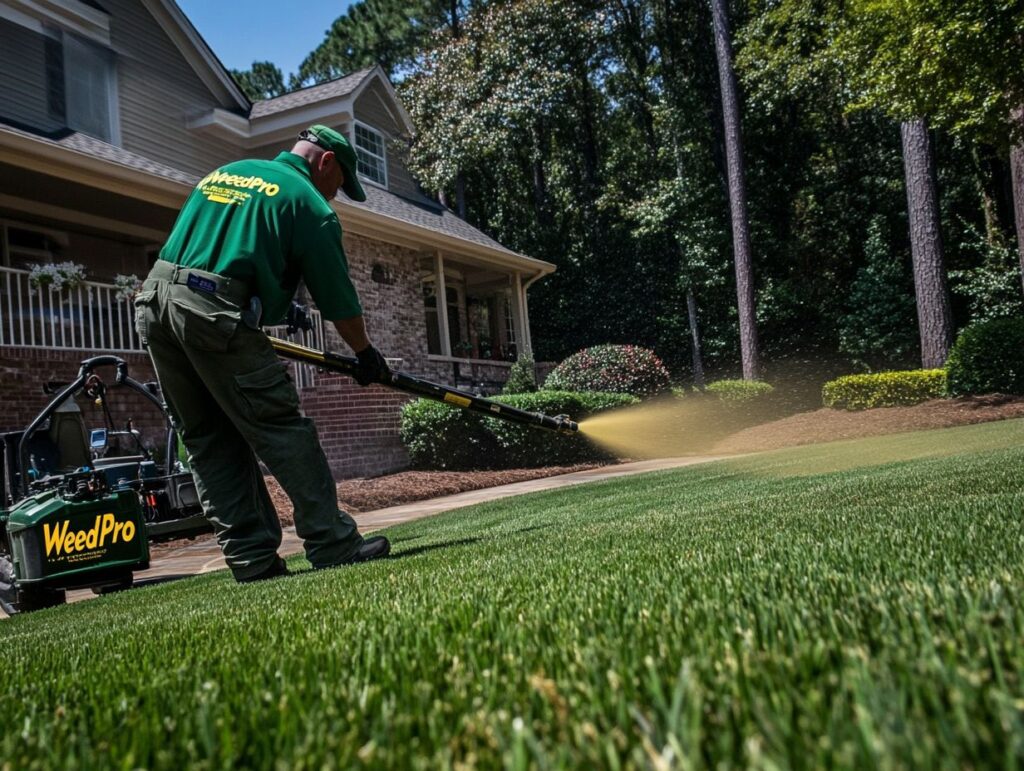
At Weed Pro, we tailor every treatment to your lawn’s actual needs—whether that’s a compost-based boost or a pre-emergent weed stop. Our team understands Georgia soil, Atlanta climate, and the balance it takes to get that lush, weed-free turf without wasting time (or water).
We’ll walk your property, review your goals, and build a plan that works with your preferences, not against them. Organic, synthetic, or somewhere in between—we do what’s right for your lawn, not just what’s trending.
👉 Schedule your lawn consultation today and find out what your grass is really craving.
FAQ: Questions About Organic Lawn Care in Georgia
Can you switch from synthetic to organic lawn care without damaging the lawn?
Yes, but do it gradually. A sudden switch can stress your grass if it’s used to fast-acting nutrients. We recommend transitioning one season at a time and closely monitoring how your lawn responds—especially during Georgia’s tougher seasons like summer and fall.
Are organic treatments safe for all grass types in Georgia?
Not always. Warm-season grasses like Bermuda and Zoysia may not get enough nitrogen from organic-only treatments, especially in their peak growth months. That can lead to thinning or color loss, so you’ll want to test your lawn’s response before fully committing.
How long does it take for organic fertilizers to show visible results?
Typically 4–6 weeks, depending on the product and conditions. Unlike synthetic fertilizers, which release nutrients quickly, organic materials break down slowly over time, meaning your lawn might green up later than expected—especially if you’re dealing with nutrient deficiencies or compacted soil.
Up Next
Still thinking natural is the way to go? Hold that thought – Georgia Pests and Organic Treatments: When Natural Isn’t Enough is up next.