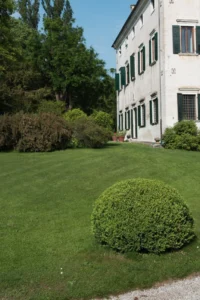
Most homeowners approach lawn selection backward. They fall in love with a specific “look”—the deep emerald of a Kentucky Bluegrass or the carpet-like density of Zoysia—and try to force it into their landscape. This is the primary cause of turf failure, leading to a cycle of excessive watering, chemical dependence, and frustration.
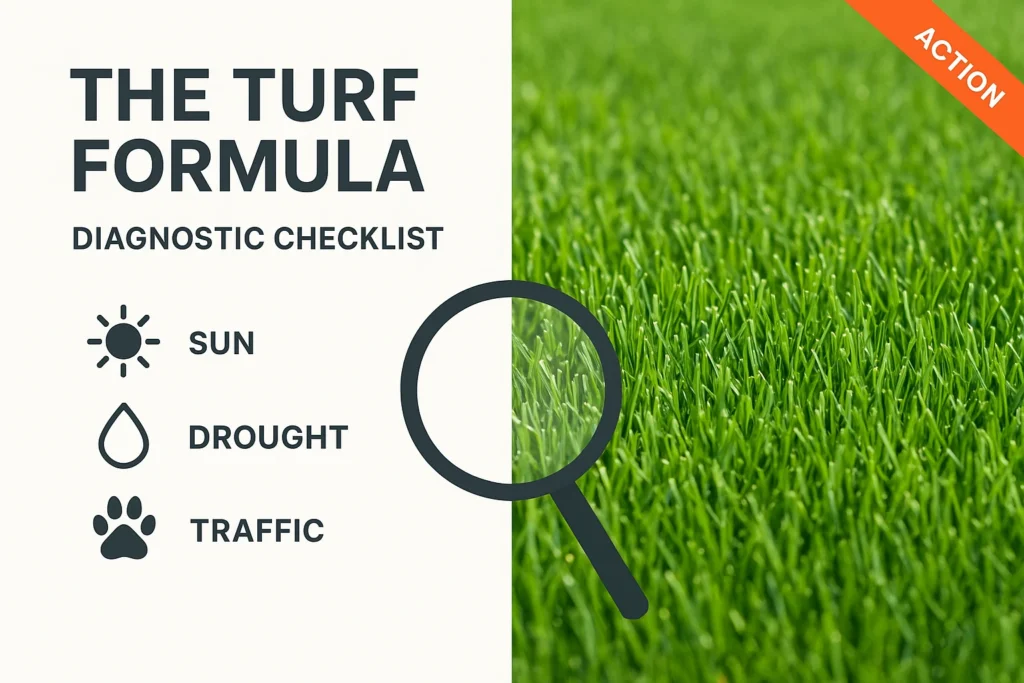
At this stage in your evaluation, you likely aren’t looking for a generic list of “Top 5 Grasses.” You need a diagnostic framework. You need to understand how your site’s specific constraints—shade density, soil chemistry, and traffic patterns—dictate which cultivars will actually thrive, rather than just survive.
Successful turfgrass selection isn’t about picking a seed; it’s about solving an equation where the variables are your environment and your lifestyle.
The Hidden Technical Gap: Soil Chemistry and Climate
The most overlooked factor in turf selection isn’t rainfall—it’s what low rainfall does to your soil chemistry.
In regions prone to drought or lower precipitation, we often see a “Hidden Technical Gap.” When rain doesn’t naturally flush the soil, pH levels tend to rise, creating alkaline (basic) conditions (pH > 7.5). Why does this matter for your grass selection? Because at high pH levels, iron becomes chemically “locked” in the soil.
You might see your lawn turning yellow and assume it needs more water. However, if you are in an arid or transition zone, that yellowing is often Iron Chlorosis. The iron is present, but the grass can’t “eat” it because of the soil’s alkalinity.
Before committing to a sod installation or seeding plan, professional soil testing georgia homeowners trust is essential. It validates whether your site requires a native-adapted species that can tolerate alkalinity or if you need to budget for regular sulfur amendments to lower pH.
The Arid & Drought Specialists: Water-Smart Selection
For property owners prioritizing sustainability and lower water bills, the market has shifted away from generic “drought-tolerant” labels toward specific, high-performance cultivars.
Research from UC Davis and other cooperative extensions has reshaped how we view water requirements. For example, UC Verde Buffalograss has been shown to require approximately 75% less water than Tall Fescue and 30-40% less than traditional Bermudagrass. This isn’t just a marginal gain; it is a fundamental shift in resource management.
However, the trade-off is often winter dormancy. Hybrid Bermudas, such as TIFTUF™, offer a compelling middle ground. They maintain color longer into the fall and, if allowed to go dormant, can offer near 100% water savings during the winter months compared to cool-season grasses that demand year-round irrigation.
When evaluating drought-resistant grass for atlanta yards or Ohio landscapes, consider the “Feel vs. Function” dynamic. Native options like Buffalograss are incredibly resilient but may not offer the soft, barefoot-friendly texture of a maintained Zoysia or Bermuda.
The Functional Force: Matching Grass to Lifestyle
Once the environmental baseline is set, we must address the functional load. This is where the “family factor” comes in. A visual-only lawn has very different biological requirements than a backyard hosting two golden retrievers and neighborhood football games.
The Shade vs. Traffic Paradox
The most difficult challenge in turfgrass selection is the combination of deep shade and high traffic. Biologically, grasses that tolerate shade (like Fine Fescues) usually have poor wear tolerance because they grow slowly. Grasses that recover fast from traffic (like Bermuda) usually crave full sun.
If your property features large trees and active pets, you cannot rely on standard seed mixes. You may need to investigate Rhizomatous Tall Fescue (RTF). Unlike standard clump-forming fescues, RTF sends out underground shoots (rhizomes) that help the turf self-repair, bridging the gap between shade tolerance and durability.
For homeowners debating zoysia vs fescue, the decision often comes down to recovery speed. Zoysia forms a dense, carpet-like mat that resists weeds and wear, but if it is damaged, it recovers slowly. Fescue allows for easier overseeding to repair damage but requires more frequent maintenance to handle heat stress.
The Transition Protocol: Managing the Shift
For those in the “Transition Zone”—that difficult band across the U.S. where it’s too hot for cool-season grass and too cold for warm-season grass—timing is everything.
If you are upgrading your lawn, the window for seeding or sodding is narrow.
- Warm-Season (Bermuda/Zoysia): Installation should align with sustained soil temperatures above 65°F.
- Cool-Season (Fescue/Ryegrass): The best grass seed for georgia and the Midwest is typically established in the early fall, allowing root development before the summer heat arrives.
Failure to respect these biological clocks is a primary reason for new lawn failure. It isn’t bad seed; it’s bad timing.
Troubleshooting: When Good Grass Goes Bad
Even the perfect cultivar can struggle if the underlying inputs are off. We frequently see homeowners searching for how to fix yellow grass spots in mid-summer.
As mentioned earlier, do not assume this is drought stress. If you have selected a drought-resistant species like Bermuda or Buffalograss and are still seeing yellowing, return to the “Hidden Technical Gap.” Your soil pH may be locking out essential nutrients.
In these cases, increasing water volume will not solve the problem—it may actually worsen fungal issues. The solution often involves introducing lawn micronutrients, specifically chelated iron, which remains available to the plant even in alkaline soils.
Final Thoughts
Selecting the right turfgrass is a science that balances botany, chemistry, and lifestyle requirements. By moving beyond simple aesthetics and understanding the diagnostic factors of your specific environment, you can establish a lawn that is not only beautiful but resilient and environmentally responsible.
If you are ready to validate your soil conditions or need guidance on the specific cultivars best suited for your local micro-climate, our team is ready to help you navigate these technical decisions.
Frequently Asked Questions
Can I mix grass types to get the benefits of both?
Generally, we advise against mixing warm and cool-season grasses in a permanent lawn (a “blended” lawn) because their textures and colors will clash seasonally, creating a patchy appearance. However, overseeding a dormant warm-season lawn with annual ryegrass is a common strategy to maintain winter green, provided you manage the spring transition carefully so the permanent turf isn’t choked out.
How do I fix a lawn that is already failing due to shade?
If you have pruned your trees and your shade-tolerant fescue is still thinning, you may need to look beyond traditional turf. In areas with less than 4 hours of direct sunlight, alternative groundcovers like Pachysandra or even decorative mulch beds may be the only sustainable eco-friendly choice.
Is soil testing really necessary before sodding?
Absolutely. Sod is a significant investment. Laying sod on soil with an incompatible pH is like building a house on a cracked foundation. A simple test ensures your investment pays off.