If your Atlanta lawn has been looking more tired than a Monday morning without coffee, it might be time to give it a breath of fresh air—literally. That’s where lawn aeration steps in, and today we’re diving into the two big contenders: Liquid Aeration and Spike Aeration.
At Weed Pro, we know that healthy turf starts with healthy soil. And when that soil gets compacted from heavy foot traffic, rainfall, or Georgia clay doing its thing, your lawn’s roots are practically gasping for air. That’s why understanding the right aeration technique can make or break your lawn care strategy. So let’s loosen things up—shall we?
Why Lawn Aeration Matters in Atlanta
Here in the South, our lawns deal with a lot: humidity, hot summers, red clay soil, and year-round wear and tear. Over time, this leads to compacted soil, which blocks essential nutrients, water, and oxygen to roots—three things your grass absolutely needs.
Lawn aeration solves this problem by breaking up that dense soil. It promotes deep root growth, boosts turf recovery, and enhances your lawn’s ability to absorb water and fertilizer. Whether you’re working with Bermuda, Zoysia, or Fescue, aeration is like a reboot for your lawn’s health.
What Is Liquid Aeration?
Liquid Aeration is a newer method in the lawn care world, and it’s gaining traction fast, especially in urban and compact residential areas. Rather than poking holes in the soil, this method uses a liquid solution that loosens the soil chemically and biologically.
How It Works:
- A solution made of humic acids and soil surfactants is sprayed evenly across your lawn.
- These agents work their way into the soil, breaking apart bonds in compacted areas.
- The result? Enhanced water penetration and soil loosening—without the need for machinery.
Liquid aeration is especially great for homeowners who want a low-impact, eco-friendly lawn treatment without the mess of soil plugs or machinery.
What Is Spike Aeration?
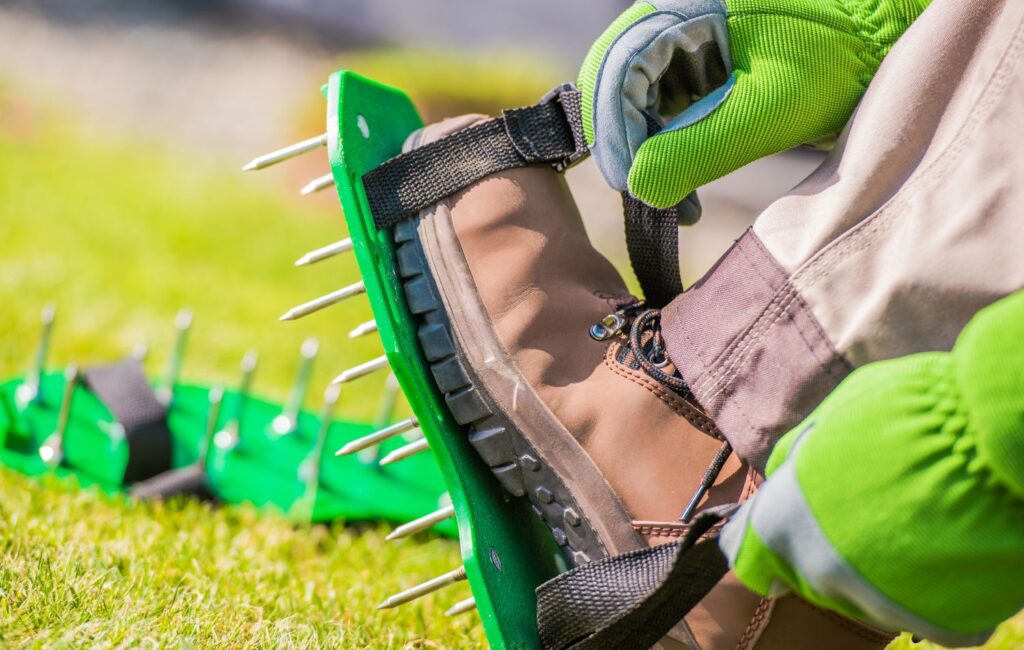
Old school and proud of it, spike aeration is one of the traditional go-to methods. It’s simple: metal tines or spikes puncture the ground to create channels for air and water.
How It Works:
- The tool (manual or mechanical) is pushed into the lawn.
- Spikes create narrow holes, relieving surface compaction and improving nutrient flow.
While it’s more hands-on and may require some elbow grease, spike aeration can be effective, especially if you don’t have severe compaction or large lawn areas.
Liquid Aeration vs. Spike Aeration: Let’s Break It Down
When choosing between liquid aeration and spike aeration, your decision should depend on your lawn’s condition, soil type, and even your patience level.
✅ Coverage
- Liquid Aeration: Soaks into every nook and cranny. Great for even, complete coverage.
- Spike Aeration: Only affects where spikes touch the soil. Uneven coverage is more likely.
✅ Soil Impact
- Liquid Aeration: Improves the entire soil profile over time. Ideal for long-term soil treatment methods.
- Spike Aeration: Provides short-term relief but may contribute to further compaction near the puncture zones.
✅ Ease of Use
- Liquid Aeration: Attach a sprayer, walk the yard—done.
- Spike Aeration: Requires equipment or tools. More physically demanding.
✅ Environmental Friendliness
- Liquid Aeration: Usually made with natural, organic materials. Very eco-friendly.
- Spike Aeration: No chemicals, but some mechanical options use gas-powered machines.
When to Use Which Aeration Technique in Atlanta
Here’s the local breakdown:
Use Liquid Aeration if:
- You want even coverage and minimal soil disruption.
- Your soil is moderately compacted and needs long-term improvement.
- You prefer a no-mess, no-fuss application—especially in landscaped yards.
Use Spike Aeration if:
- Your lawn has only minor compaction in select areas.
- You need a quick fix before overseeding or fertilizing.
- You enjoy DIY projects and don’t mind some physical effort.
If you’re facing serious compacted soil, neither method may be enough on its own. In that case, consider core aeration comparison or combining aeration with topdressing and seeding to really get that lawn back on track.
The Atlanta Advantage with Liquid Aeration
Here in Atlanta, we’ve got heavy clay soils and yards that see all four seasons. That makes liquid aeration especially appealing—it works its magic below the surface and keeps your yard intact above it. No plugs, no patchy messes, and no stressing out your already struggling turf.
Plus, with liquid aeration, your lawn can bounce back faster from Georgia’s fluctuating weather conditions. Whether it’s bouncing back after a soggy spring or prepping for a dry summer, this aeration technique gives your soil the flexibility it needs.
Add-On Tips: Pairing Aeration with Lawn Treatments
To get the most out of either aeration technique, consider combining it with:
- Fertilizer applications right after aeration for improved nutrient absorption.
- Overseeding to fill in thin or bare spots.
- Soil amendments (like compost or lime) for better pH and structure.
- Irrigation tuning to ensure proper moisture distribution post-aeration.
It’s not just about punching holes or spraying the yard—it’s about what you do before and after.
🌱 Ready to Let Your Lawn Breathe? Let’s Make It Happen.
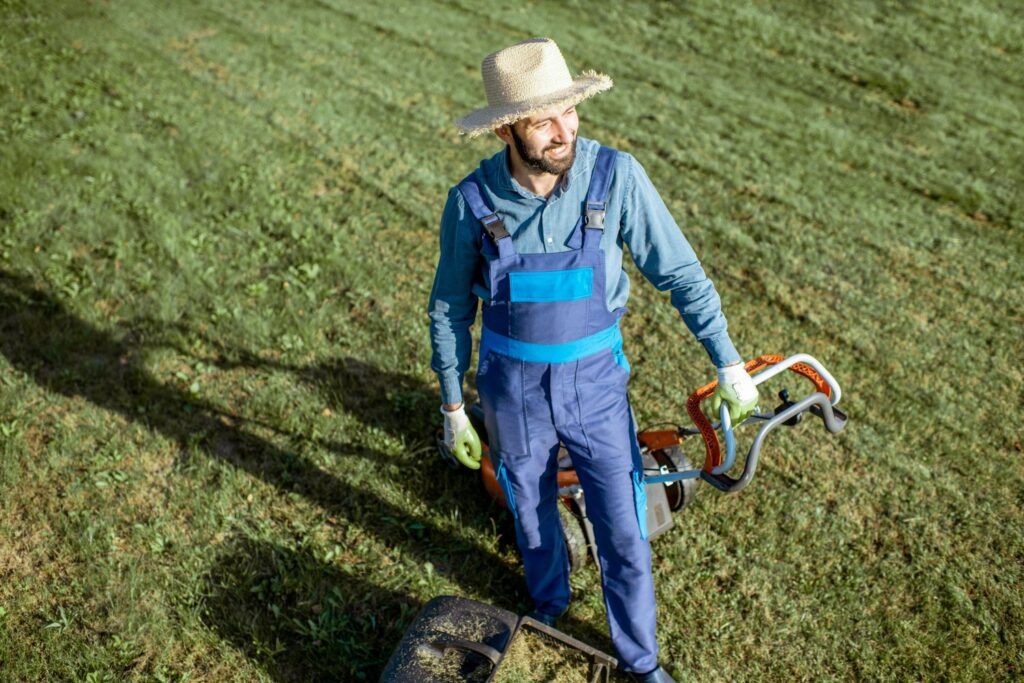
Whether you’re leaning toward the tried-and-true spike method or curious about liquid aeration’s modern touch, we’ve got the tools, the team, and the turf know-how to get your Atlanta lawn back in top shape.
Give your grass the room it needs to stretch its roots and soak in all the goodness. Let’s revive, restore, and rev up your lawn’s health—Weed Pro style.
❓ FAQ: Not-So-Frequently Asked Questions About Lawn Aeration
How do you know if your soil is too compact for liquid aeration to work?
If your soil feels rock-solid underfoot and water pools on the surface after rain, you might need to start with core aeration or a hybrid approach. You can also do the screwdriver test—if a screwdriver can’t easily penetrate the soil, it’s likely too compacted for liquid aeration alone.
Will aeration help with standing water in a lawn?
It can! Both liquid and spike aeration improve water penetration, which helps reduce puddling. However, if your lawn has drainage issues or low spots, you may need grading or a drainage system on top of your aeration efforts.
Can you apply lawn treatments right after liquid aeration?
Yes—and it’s actually encouraged. After liquid aeration, the soil is more receptive to fertilizers, overseeding, and even pest treatments. Just make sure you’re spacing out any chemical treatments to avoid overlap and product interference.
🧪 Up Next: Can Liquid Aeration Fix Soil Compaction on Cumming’s Sloped Properties?
Want to know if liquid aeration works just as well on tricky terrain? Check out our next blog post: “Can Liquid Aeration Fix Soil Compaction on Cumming’s Sloped Properties?“ We’ll break down what works, what doesn’t, and how to care for those uneven Georgia landscapes.