Key Takeaways
- Acworth’s clay-heavy soil is the biggest driver of lawn decline, making aeration and soil improvement essential for real recovery.
- Warm-season grasses (Bermuda & Zoysia) respond best to late-spring/summer repair, while Fescue repairs thrive in fall.
- Many thinning lawns stem from compaction, irrigation problems, pests, or weeds, each requiring a different fix.
- Aeration and overseeding are the most reliable repair combo for stressed Georgia lawns.
- Stable recovery depends on good soil health, targeted fertilization, and a properly tuned sprinkler system.
- Know when to DIY and when calling Weed Pro is the faster, safer choice for long-term results.
A Local Approach to Lawn Repair in Acworth
If your Acworth lawn is thinning, patchy, or losing color, you’re dealing with issues that hit Georgia lawns hardest: compacted clay soil, summer heat, pest pressure, and inconsistent irrigation. Repairing turf here isn’t about quick fixes; it’s about restoring the soil beneath it and rebuilding a dense, healthy canopy with the right timing for our warm-season grasses.
This guide breaks down the exact lawn repair steps that work in Acworth yards, how to diagnose the cause of the damage, and how to prioritize tasks so your lawn becomes thicker, greener, and more resilient this year.
Common Causes of Lawn Damage in Acworth
Acworth lawns decline for predictable, climate-driven reasons, and each one requires a tailored repair approach.
1. Soil Compaction
Clay soils compact easily, reducing pore space and blocking oxygen, nutrients, and water from reaching roots.
Fix: Core aeration.
2. Improper Irrigation
Overwatering, underwatering, or misaligned heads create stress patterns and thin out turf.
Fix: Adjust run times, repair heads, and correct pressure.
3. Pests
Grubs, moles, and fire ants frequently damage Acworth lawns.
Fix: Diagnose early and apply targeted treatments.
4. Disease
Warm, humid summers promote brown patch and dollar spot.
Fix: Improve airflow, avoid overwatering, and use select fungicides if needed.
5. Weed Invasion
Thin turf allows clover, crabgrass, and dollarweed to take over.
Fix: Cultural improvements first; herbicides second.
How Soil Compaction & Local Climate Stress Your Lawn
Acworth’s clay soils naturally have low pore space. When foot traffic, mowing equipment, or simple settling compress the soil even further, roots stay shallow and turf declines. Signs include:
- Puddling after rain
- Turf that feels spongy or hard-packed
- Grass that tears instead of cutting cleanly
- A screwdriver that won’t penetrate easily
Why This Matters
Relieving compaction improves infiltration, boosts root depth, and makes every other repair, overseeding, fertilization, and pest control work better.
Pests & Diseases You’ll See Most in Acworth
Warm-season grasses face both surface and subsurface threats.
Common Pests
- Grubs: Turf lifts easily like a carpet; animals dig for larvae.
- Moles: Tunnels caused by feeding on soil insects.
- Fire ants: Mounds that disrupt soil and turf growth.
Common Diseases
- Brown patch: Circular brown lesions, often after humid weather.
- Dollar spot: Small silver-dollar patches in stressed turf.
Early diagnosis matters; treating the wrong problem wastes time and lets damage spread.
| Weed Pro Lawn Care: Local Lawn & Outdoor Pest Experts Reliable Service Backed by Results You Can See Choose the Right Lawn Care Solution for Your Property: –Complete Lawn Care Programs: Ongoing, customized lawn care plans designed to strengthen turf, improve soil health, and reduce weeds. –Targeted Weed & Pest Control: Focused solutions for persistent lawn weeds, invasive pests, and seasonal pressures such as mosquitoes and surface insects. –Irrigation & Lawn Health Support: Professional support for irrigation efficiency, aeration, overseeding, and soil conditioning to improve water absorption, reduce runoff, and help lawns recover from compaction, disease, or environmental damage. Customer Praise:“We have been with WeedPro for many years and I like their responsiveness to any of my requests. They keep my lawn weed free. Thanks” – Hugh M. Why Homeowners Choose Weed Pro Lawn Care: -Locally owned and operated, serving North Georgia communities -Experienced technicians trained in region-specific lawn and pest challenges -Customized service plans based on property conditions, not one-size-fits-all programs -Environmentally responsible treatments with a focus on long-term lawn health -Clear communication, reliable scheduling, and service you can trust Schedule your Service Today! |
Aeration & Overseeding: The Backbone of Acworth Lawn Repair
Compacted clay soil and thinning turf respond best to a combined approach:
Core Aeration
- Pulls plugs from the soil
- Opens channels for water and oxygen
- Encourages deeper rooting
- Reduces runoff and puddling
Liquid Aeration
- Loosens soil chemically
- Improves structure over time
- Works best as a supplement, not a replacement for core aeration
Overseeding
Rebuilds turf density with better-matched varieties. Timing is key:
Best Overseeding Windows
- Bermuda & Zoysia (warm-season): Late spring–early summer
- Fescue (cool-season): Fall overseeding (September–November)
Why This Combo Works
Aeration improves the soil. Overseeding improves the canopy. Together, they give you lasting density and weed resistance.
Best Weed & Pest Control for Recovering Acworth Lawns
Once turf begins recovering, you must protect it from opportunistic invaders.
Weed Control
- Pre-emergents: Stop annual grassy weeds (avoid during overseeding periods).
- Selective post-emergents: Spot-treat clover, dollarweed, and broadleaf weeds.
- Cultural controls: Proper mowing, watering, and fertilization reduce weed niches.
Common Acworth Weeds & Fixes
| Pest/Weed | Signs | Recommended Treatment / Timing |
| Crabgrass | Low, sprawling grassy patches in spring/summer | Pre-emergent in early spring; spot post-emergent if needed |
| Dollarweed | Shiny, round leaves in wet areas | Improve drainage; apply selective herbicide after recovery |
| Clover | Small trifoliate leaves, nitrogen-fixing patches | Maintain fertility, spot-treat with selective herbicide |
Pest Control
Professionals can quickly identify root damage vs. surface feeding:
- Grubs: Treat during active larval stages.
- Moles: Address underlying food sources or consider trapping.
- Fire ants: Combine baits and broadcast treatments.
How Soil Health & Irrigation Affect Recovery
Soil and water management make or break your repair plan.
Soil Improvements
- Conduct a soil test
- Apply amendments based on deficiencies
- Use compost topdressing for clay-heavy yards
- Apply slow-release fertilizers for steady growth
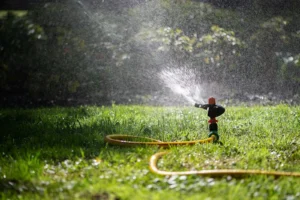
Irrigation Maintenance
Healthy recovery requires:
- Even coverage
- Correct run times
- Clean, aligned sprinkler heads
- Seasonal schedule adjustments
Newly seeded areas need consistent moisture, light, frequent cycles at first, then deeper watering as roots grow.
Practical Repair Guide for Acworth Lawns
1. Fix Compaction First
Core aerate during the active growing season.
2. Overseed or Plug
Match timing to your grass type (warm-season vs. Fescue).
3. Address Weeds Strategically
Avoid herbicides within 2 weeks of overseeding windows.
4. Correct Irrigation Issues
Tune zones, repair heads, and prevent overwatering.
5. Support Soil Health
Use compost, balanced fertilizer, and organic amendments.
6. Monitor Pests
Look for grubs, moles, and fire ants during peak seasons.
Let Weed Pro Restore Your Lawn, The Right Way
Your lawn doesn’t need guesswork it needs the right repairs at the right time for Acworth’s clay soils and Georgia’s warm-season grasses.
Weed Pro Lawn Care can help you rebuild density, strengthen roots, and protect your lawn from pests and weeds with local, science-backed solutions.
We follow a simple, effective process: Property Assessment → Tailored Plan & Quote → Treatment & Ongoing Maintenance.
Ready for expert lawn repair in Acworth? Call Weed Pro Lawn Care or request a service visit today.
FAQ
What’s the fastest way to fix bare patches in Acworth lawns?
Start with core aeration to relieve compaction, then overseed during the correct seasonal window for your grass type. Keep soil consistently moist for the first 2–3 weeks.
Can you use a pre-emergent if you plan to overseed?
Not at the same time. Pre-emergents block both weed seeds and grass seeds. Time applications around overseeding windows to avoid germination failure.
How often should Acworth lawns be aerated?
Once a year for most lawns, twice for high-traffic or heavily compacted properties.
Looking Ahead: Should You Repair or Replace Your Lawn?
For a deeper look at when simple repairs are enough and when a full overhaul is the better investment, check out our next guide: “Lawn Repair vs. Replacement: Which Is Right for Your Yard?” It walks you through the decision-making process so you can choose the most effective long-term solution for your lawn.