Key Takeaways
- The choice between lawn repair and full replacement mostly comes down to how much of the lawn is damaged and how healthy the soil is underneath.
- As a rule of thumb, if less than about one-third of the lawn is thin or bare, repair is usually practical. If over half is gone or failing, replacement often makes more sense.
- In Atlanta and North Georgia, clay-heavy soils, drainage issues, and warm-season grasses (Bermuda, Zoysia) shape how you should repair or rebuild.
- Core aeration, overseeding, topdressing, and irrigation fixes are the backbone of effective lawn repair.
- Sod or full reseeding are better options when compaction, grading, or repeated weed/disease problems keep undoing your efforts.
- A professional lawn assessment can confirm whether you’re throwing money at temporary fixes or ready for a one-time reset.
Understanding the Real Condition of Your Lawn
Before you decide to repair or replace, you need a clear picture of what’s actually going on in the yard, not just what it looks like from the street.
Signs Your Lawn Is a Good Candidate for Repair
Lawn repairs usually make sense when the lawn’s basic structure is still intact and the soil can support new growth. Typical “repairable” situations include:
- Thinning turf with scattered bare spots
- Some weed patches, but not wall-to-wall weeds
- Localized pest damage (a few affected areas, not the whole yard)
- Soil that still allows a screwdriver or soil probe to penetrate with steady pressure
As a loose guideline, repairs are usually cost-effective when roughly under 30–40% of the lawn is damaged and the soil isn’t completely hardpan.
Signs It May Be Time for Full Replacement
Replacement starts to make more sense when problems are widespread or keep coming back, such as:
- More than 50% of the turf is dead or missing
- Major drainage issues that leave standing water or bone-dry patches
- Recurring weeds, disease, or pest problems even after treatments
- The wrong grass type for your sun, shade, or lifestyle
- Soil that’s so compacted you can barely push in a screwdriver
In those cases, starting over lets you fix deeper issues (soil, grading, irrigation, grass choice) instead of fighting the same problems every year.
How Atlanta and North Georgia Conditions Affect Your Decision
Yards around Atlanta and North Georgia don’t behave like lawns in other regions. Our clay soils, heat, humidity, and warm-season grasses change what works.
Clay-Heavy Soils and Compaction
Clay supports great lawns when treated right, but it:
- Compacts easily under foot traffic and mowing
- Holds water at the surface and then dries hard
- Limits root depth when not aerated regularly
If compaction is the main issue, core aeration, overseeding, or topdressing can often save the lawn. But if compaction is severe across the whole yard and has been ignored for years, a more extensive renovation may be needed.
Drainage, Shade, and Grass Type
Other local factors that shape your choice:
- Drainage: Low spots and runoff paths may need grading or soil replacement.
- Shade patterns: Fescue or shade mixes may be needed in areas where Bermuda/Zoysia will never thrive.
- Heat and humidity: Influence timing for seeding, sodding, and disease prevention.
When several of these issues overlap, a planned replacement with better soil prep and the right grass type often provides longer-lasting results than patchwork repairs.
| Weed Pro Lawn Care: Local Lawn & Outdoor Pest Experts Reliable Service Backed by Results You Can See Choose the Right Lawn Care Solution for Your Property: –Complete Lawn Care Programs: Ongoing, customized lawn care plans designed to strengthen turf, improve soil health, and reduce weeds. –Targeted Weed & Pest Control: Focused solutions for persistent lawn weeds, invasive pests, and seasonal pressures such as mosquitoes and surface insects. –Irrigation & Lawn Health Support: Professional support for irrigation efficiency, aeration, overseeding, and soil conditioning to improve water absorption, reduce runoff, and help lawns recover from compaction, disease, or environmental damage. Customer Praise:“This is a great company! Jimmy has been keeping us up to date to explain step by step what their treatments are doing and gradually, our lawn has been springing into full life. I’m really glad I went with this company for our lawn treatment.” – Mistic F. Why Homeowners Choose Weed Pro Lawn Care: -Locally owned and operated, serving North Georgia communities -Experienced technicians trained in region-specific lawn and pest challenges -Customized service plans based on property conditions, not one-size-fits-all programs -Environmentally responsible treatments with a focus on long-term lawn health -Clear communication, reliable scheduling, and service you can trust Schedule your Service Today! |
What Lawn Repair Usually Involves
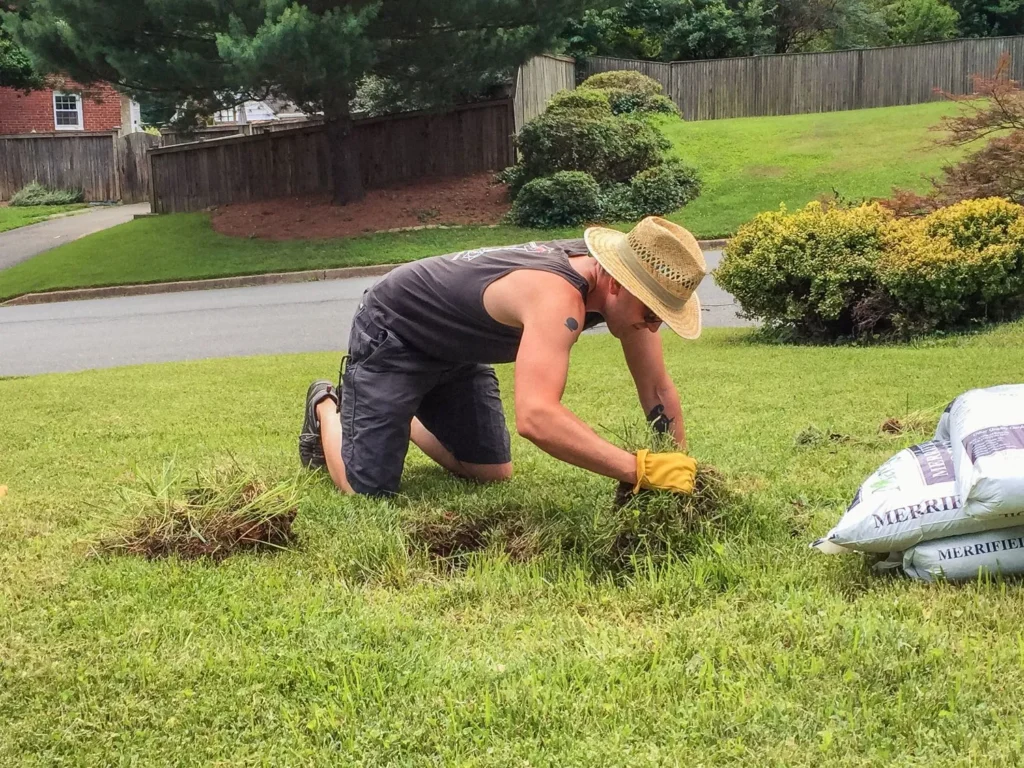
If the lawn still has a decent base, repairing it is often the more budget-friendly way to get it back into shape.
Core Aeration and Overseeding
For many Atlanta-area lawns, this combo is the starting point:
- Core aeration
- Pulls soil plugs from clay-heavy turf
- Relieves compaction and improves root access to water and nutrients
- Helps reduce runoff and standing water
- Overseeding
- Fills in thin and bare areas
- Uses region-appropriate seed blends to improve color and density
- Works best when paired with aeration for good seed-to-soil contact
For Bermuda and Zoysia, repair work is usually timed for late spring into summer. For Fescue, repairs and overseeding are typically best in the fall.
Spot Repairs, Topdressing, and Targeted Weed/Pest Control
Other repair tools often used alongside aeration and overseeding include:
- Topdressing with compost or amended soil to smooth small depressions and improve structure
- Targeted weed control (not blanket spraying) once new grass is established
- Grub or fire ant treatments where specific pest issues are confirmed
- Mowing, irrigation, and fertilization adjustments to support recovery
If these steps give consistent improvement season over season, repair is probably still the right path.
When a Full Lawn Replacement Makes More Sense
Sometimes, trying to repair a lawn over and over starts to cost as much as replacing it outright — especially when the soil or layout is fundamentally wrong.
Full Reseeding as a Complete Renovation
Full reseeding is a good option when you:
- Can live with a longer establishment period
- Want to update the grass type or blend
- Need to correct the underlying issues without the cost of sod
A quality reseeding project usually includes:
- Removing or killing off the failed turf
- Loosening and amending the soil, sometimes adding new topsoil
- Correcting grade and drainage where needed
- Seeding with a grass type appropriate to your sun/shade and usage
- Establishment watering and follow-up overseeding as needed
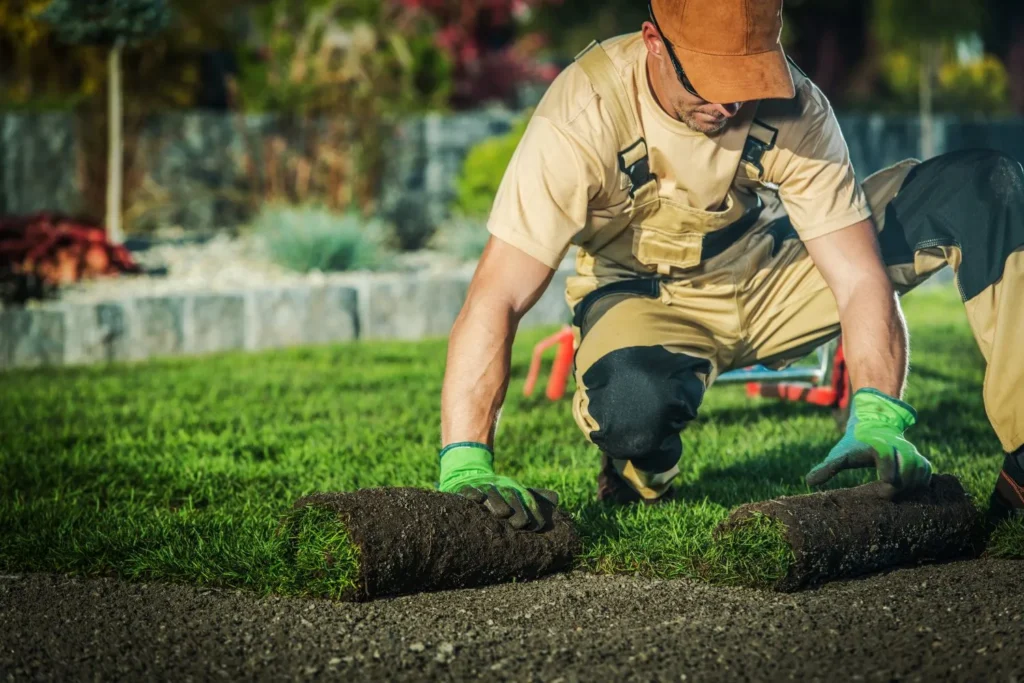
Sod Installation for Instant Coverage
Sod is the better choice when you:
- Want instant coverage and curb appeal
- Need the yard to be usable more quickly
- Are already investing in grading, soil prep, and irrigation fixes
Sod still requires:
- Proper grading and soil preparation
- Correct watering for the first several weeks
- Careful traffic management until roots knit in
While sod has a higher up-front cost than seeding, it can be the most efficient option when the existing turf is mostly gone or you want a clean reset.
Costs and Timelines: Repair vs. Replacement
Every property is different, but some general patterns hold true across the Atlanta area.
When Repair Is Most Cost-Effective
Repair methods like core aeration, overseeding, and spot treatments tend to be more economical when:
- Less than about one-third of the lawn is heavily damaged
- Soil is compacted but still workable
- Weeds and pests are present, but not overwhelming
- You’re okay with gradual improvement over one or two growing seasons
Results to expect:
- Noticeable thickening in 6–12 weeks during the active growing season
- Continued improvement with repeated seasonal aeration and proper care
What to Expect From a Full Replacement
Replacement — whether full reseeding or sod — brings:
- Higher up-front investment
- A chance to fix grading, soil, and irrigation correctly
- The ability to choose a better-matched grass type
Typical expectations:
- Sod: Instant look, usually 2–4 weeks for initial rooting and around 6–8 weeks before heavy use
- Reseeding: Several weeks to germinate and months to fully fill in, depending on timing and weather
If you find yourself paying for aeration, overseeding, weed control, and pest work year after year with limited improvement, it may be time to price out a full renovation instead.
How Weed Pro Helps You Choose the Right Path
You don’t have to guess whether your lawn needs a targeted repair plan or a complete restart. Weed Pro Lawn Care helps homeowners throughout Atlanta and North Georgia make the right choice by evaluating soil compaction, drainage patterns, grass type, and any underlying pest or disease pressure. Our team determines whether repair or replacement will deliver the best long-term value, then builds a tailored plan that may include core aeration, overseeding, topdressing, reseeding, sod installation, or irrigation adjustments. We follow a clear process from property assessment to customized recommendations and ongoing care, ensuring your investment actually pays off.
Call Weed Pro Lawn Care to schedule an assessment or request a quote today.
FAQ
How much damage is “too much” for lawn repair to make sense?
If more than half of your lawn is thin, bare, or full of weeds, or if problems keep recurring after treatments, it’s often more cost-effective to consider a full renovation or replacement.
Can you repair your lawn without doing core aeration?
You can try, but in clay-heavy Atlanta soils, skipping aeration usually means seeds and roots never get the access they need. Core aeration is one of the most critical repair steps for long-term results here.
Is sod always better than seeding for replacement?
Not always. Sod gives instant coverage and faster use, but costs more up front. Seeding costs less but takes longer and demands more patience and careful watering. The right choice depends on your budget, timeline, and how you use the yard.
Next Up: Smart Commercial Solutions for Acworth Properties
Ready to explore solutions designed for larger properties? Continue with the next article: “Top Commercial Lawn Repair Solutions for Businesses in Acworth, GA.“ It highlights professional-grade strategies that keep commercial landscapes healthy, polished, and long-lasting.