
Soils rich in clay in Alpharetta often have issues with soil compaction, which is not conducive to healthy root growth, drainage, or recovery. As Alpharetta lawn care services, we recommend seasonal lawn aeration to create important pathways for oxygen, water, and nutrients to reach the soil. In this article, we will discuss the main benefits of lawn aeration, review core aeration versus liquid aeration, disclose the best time of year to overseed, and discuss factors that affect costs.
What Are the Top Benefits of Lawn Aeration for Soil in Alpharetta?
Lawn aeration directly addresses several soil quality issues associated with your soil type: it alleviates compaction, enhances nutrient access, improves water flow to promote root growth, reduces thatch, and protects against disease. Therefore, collectively, these benefits develop a stronger and healthier lawn, especially when dealing with Alpharetta clay!
How Does Lawn Aeration Reduce Compaction in Georgia Clay?
Aeration reduces compaction by improving oxygenation and microbial activity, allowing water to flow without pooling on the surface.
How Does Lawn Aeration Improve Nutrient Uptake In Your Lawn?
Aeration removes the compaction issue to allow fertilizers and organic matter to access the zone around roots. Soil amendments are dispersed evenly when they are applied after aeration, providing a greener lawn and improving the efficiency of nutrient uptake.
How Does Aeration Aid Water Absorption and Drought Resistance?
Aeration improves the infiltration of water through the soil by slowing down surface runoff and encouraging rainfall to penetrate the soil profile. Lawns that have been aerated through core aeration can accept 25% more water, which enhances the lawn’s capability to withstand drought conditions during the hot summer months.
Why Does Aeration Promote Deeper and Stronger Roots?
Aeration promotes deep roots by decreasing the physical resistance inherent in compact soil, allowing the roots to spread out deeper and to take hold sooner. A robust root system is crucial for improved nutrient uptake and keeping the plant stable during times of stress.
How Does Aeration Help Control Thatch and Combat Lawn Pests and Diseases?
Aeration encourages the decomposition of thatch by increasing the available oxygen, which provides the microbes, bacteria, fungi, and earthworms with the necessary energy to break down organic matter. With a thinner layer of thatch, there is less habitat for pests and fungal diseases, promoting a healthier lawn environment.
Core Aeration vs. Liquid Aeration, which is Best for Your Alpharetta Lawn?
There are two ways to aerate your lawn: core aeration, which is the physical process of pulling soil plugs out of the ground, and liquid aeration, which involves introducing a blended solution to loosen compacted soil. Both are designed to increase soil porosity, and while they may have a common goal, their depth of penetration, ideal application time, and longevity of benefit differ.
How Does Core Aeration Work, and When Is It Most Effective?
Core aeration involves using hollow tines to remove soil plugs from the lawn, creating deep channels that allow air, water, and roots to penetrate the soil. Core aeration is best done in early spring (around April) or early fall (around September) when soil moisture is at an optimal level, providing long-lasting relief to heavy clay soil.
What Are the Pros and Cons of Liquid Aeration?
Liquid aeration is the process of soaking a special solution into the turf, allowing it to permeate the soil particles and gently expand them. Liquid aeration is faster to apply and can accommodate uneven areas much more easily than core aeration. However, the efficacy of a liquid aeration treatment is shorter-lived.
When Should You Choose Core Aeration Over Liquid Aeration for your lawn?
Homeowners dealing with severely compacted soil should opt for full core aeration instead of liquid aeration, as the former is more labor-intensive but offers much greater immediate results. Liquid aeration is best used as part of ongoing treatment and is a great follow-up to core aeration methods. A combination of both methods likely leads to the most consistent improvement in soil health.
What is the Best Aeration Schedule for Warm-Season Grasses like Bermuda and Zoysia?
Warm-season grasses respond best to aeration in late spring and summer, as spring temperatures and moisture are conducive to quick uptake of replenished root systems.
When Should Cool-Season Grasses like Fescue Be Aerated in North Georgia?
Cool-season grasses will see the most benefit from aeration in late summer through early fall when temperatures begin to cool down and rainfall becomes more reliable.
What Are the Key Indicators that Your Lawn Needs Aeration?
Watch for pooling water on the surface for days after rain, thin grass blades, firmness in the soil, and layers of thatch thicker than half an inch.
What Are the Key Considerations of Pricing for Lawn Aeration Services in Alpharetta?
A few major key considerations are your lawn size or square footage, the compactness of the soil, whether core aeration or liquid aeration is engaged, and finally, whether there are pre-treatment services.
Let Your Lawn Breathe Again—With Weed Pro’s Expert Help
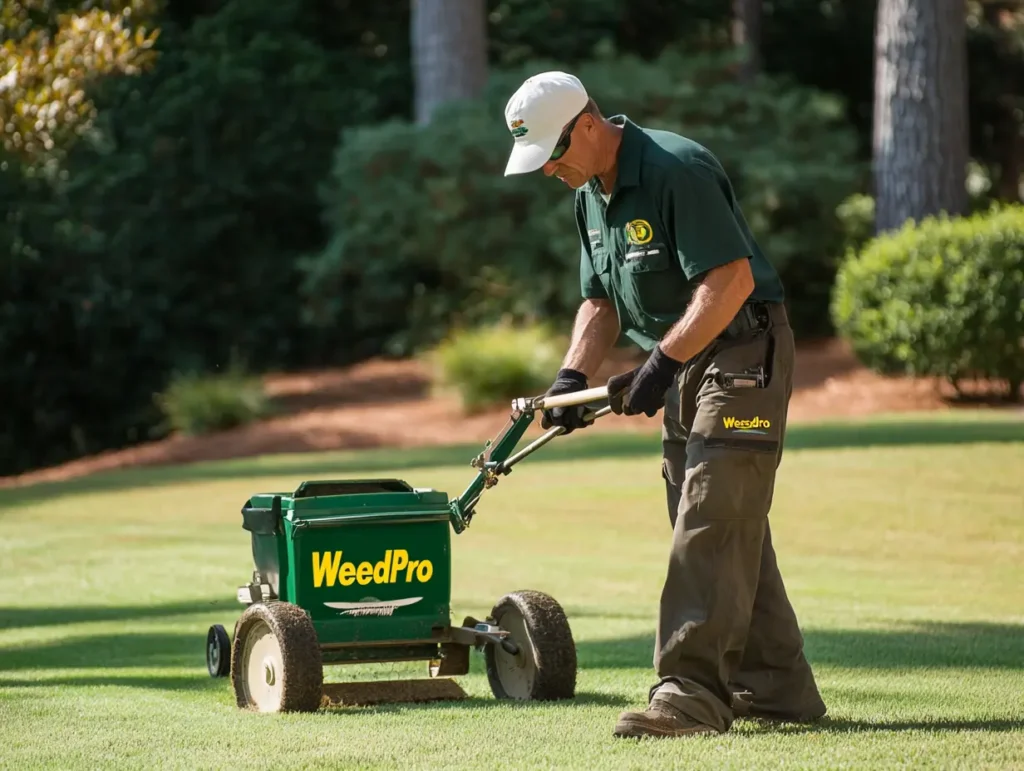
If your grass isn’t growing like it used to, your soil might be the problem—not your mower or watering. Compacted soil chokes root growth and blocks water, nutrients, and oxygen from reaching your lawn’s foundation. Weed Pro solves this with professional lawn aeration services in Alpharetta that loosen up the soil and revitalize your turf from the ground up. We use specialized equipment to target problem areas and boost growth within weeks. It’s one of the simplest, most affordable ways to improve your yard.
Contact us now to schedule your lawn aeration and give your roots the room they need to thrive.
❓ FAQ
How do you know if your lawn needs aeration?
If your grass feels spongy, water pools, or it’s hard to push a screwdriver into the soil, it’s time to aerate.
When is the best time to aerate in Alpharetta?
Spring and fall are ideal. You want to aerate when the grass is actively growing and the soil isn’t too dry or wet.
Will aeration damage a sprinkler system?
Not with a pro! Weed Pro maps out and avoids sprinkler heads during service. We take care to protect your irrigation system.
👉 Up Next: The Environmental Myth
Don’t miss : “The Environmental Myth: Why Organic Lawn Care in Atlanta Isn’t Always Eco‑Friendly”