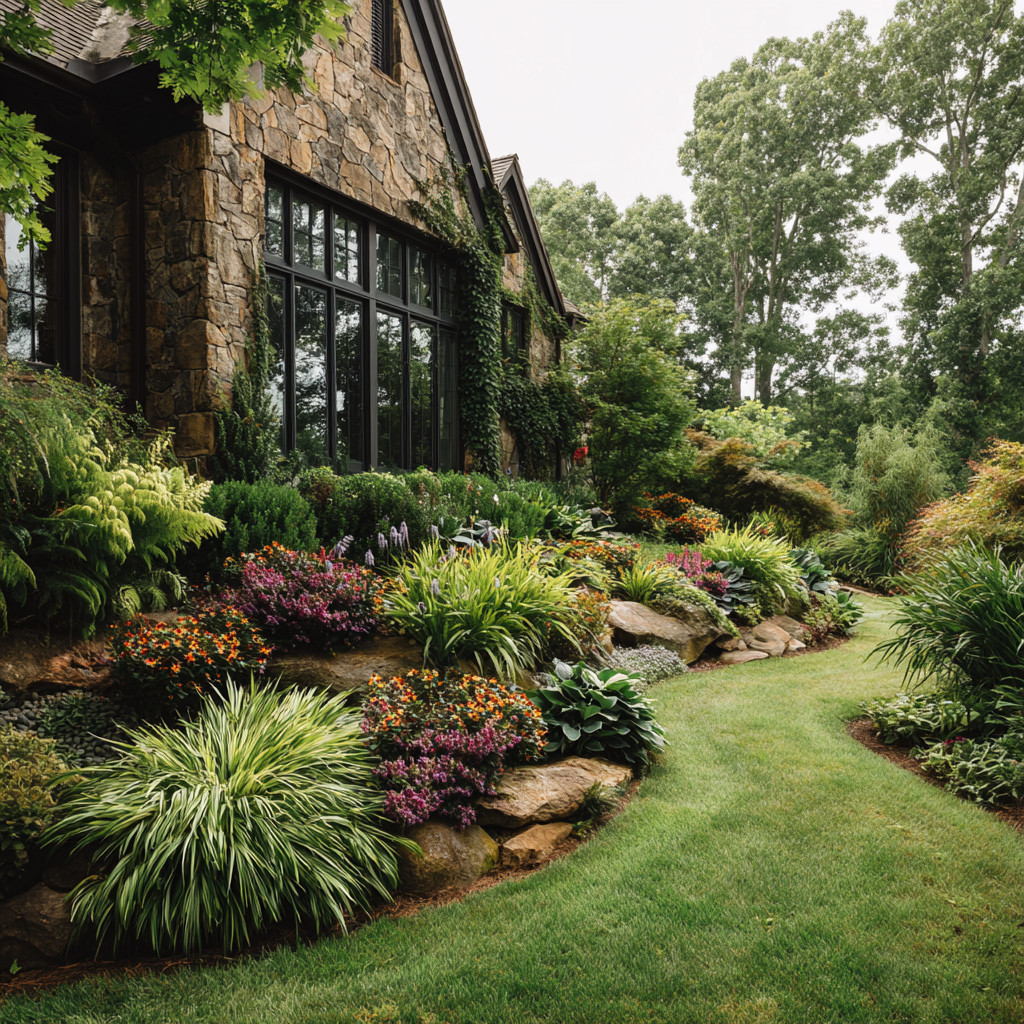
For homeowners in the Transition and Southern zones, lawn care is rarely a passive activity. You are likely managing a dynamic ecosystem subject to intense heat, drought stress, and aggressive competition between grass species. The difference between a struggling yard and a resilient landscape isn’t just about mowing—it is about making the right agronomic decisions at critical junctions.
We often see homeowners caught in the “Repair vs. Replace” crossroads. You might be staring at a St. Augustine lawn decimated by chinch bugs, or a Zoysia turf slowly being colonized by Bermuda. The decision to invest in a recovery program or start fresh with sod is significant.
This guide provides the strategic framework you need to evaluate your warm-season turfgrass, addressing identification, damage mitigation, and the maintenance protocols that separate thriving lawns from those that merely survive.
The State of Your Lawn: The 50% Decision Rule
Before buying pallets of sod or investing in expensive treatment plans, you need an objective assessment of your lawn’s “salvageability.” Emotional attachment to a lawn often leads to throwing good money after bad. To clarify your next steps, we apply the 50% Rule—a standard used by agronomic experts to determine cost-efficiency.
The Rule: If more than 50% of your lawn is composed of healthy turfgrass (even if stressed), a strategic recovery plan is usually the most cost-effective route. If weeds, bare dirt, or invasive off-type grasses cover more than 50% of the surface area, renovation (replacement) is often the smarter economic choice.
This assessment is critical if you are seeing discoloration. Many homeowners panic when they see how to fix yellow grass spots, assuming the grass is dead. In warm-season turf, yellowing can indicate reversible dormancy or nutrient deficiencies rather than death. However, if the root system has failed, no amount of fertilizer will bring it back.
Turf Wars: Comparative Identification and Selection
Understanding which grass species you have—or which one you should have—is the foundation of successful management. Warm-season grasses are not created equal; they have distinct physiological limits regarding cold tolerance, shade, and drought.
We break down the “Big Three” to help you evaluate different grass types based on your property’s specific constraints.
Bermuda Grass: The Aggressive Athlete
Bermuda is the alpha of warm-season grasses. It is prized for its recovery rate and high traffic tolerance.
- The Pro: It has a biological “check-engine light.” When water is scarce, it goes dormant (turns brown) to protect the crown, surviving severe droughts where other grasses fail.
- The Con: It requires full sun (8+ hours). In shade, it thins out rapidly. Its aggressive rhizomes also make it a nuisance if it invades flower beds or neighboring lawns.
St. Augustine: The Shade-Tolerant Diva
Common in humid regions, St. Augustine offers a wide, coarse blade and deep blue-green color.
- The Pro: It is the undisputed king of shade tolerance among warm-season options.
- The Con: It lacks the dormancy mechanism of Bermuda. When St. Augustine dries out, it suffers “desiccation death.” It requires consistent water and is highly susceptible to chinch bugs and fungal issues.
Zoysia: The Luxury Carpet
Zoysia bridges the gap, offering the density of Bermuda with better shade tolerance.
- The Pro: Varieties like Zeon Zoysia grass care creates a dense, barefoot-friendly mat that naturally suppresses weeds. It has excellent cold tolerance for the transition zone.
- The Con: It is slow to recover from damage. While Bermuda repairs itself in weeks, Zoysia can take a full season to fill in divots or dead spots.
Centipede: The Low-Input Option
Often called the “lazy man’s grass,” Centipede requires less mowing and fertilizer.
- The Pro: Thrives in acidic soil and requires very low nitrogen inputs.
- The Con: Extremely sensitive to herbicides and traffic. It turns yellow (iron chlorosis) easily in alkaline soils.
The Invasion Protocol: Managing Bermuda in St. Augustine
One of the most frustrating challenges for homeowners is the “mixed bag” lawn—specifically, wild Bermuda invading a St. Augustine lawn. Because both are warm-season grasses, herbicides that kill one often damage the other.
If your “Diagnosis” from the 50% rule suggests you should repair rather than replace, you need a targeted suppression strategy. This is not a one-time event but a campaign.
The Strategy
- High Mowing: St. Augustine thrives at taller heights (3.5–4 inches), while Bermuda prefers to be cut low. By mowing high, you allow the St. Augustine to shade out the lower-growing Bermuda.
- Chemical Suppression: Specialized herbicide programs (often involving active ingredients like Ethofumesate or specific tank mixes of Fusilade with safeners) can suppress Bermuda growth without killing the St. Augustine. These are advanced treatments that usually require weed prevention services from licensed professionals to ensure mix rates are precise.
- Fertilization Timing: Push growth when St. Augustine is most active but Bermuda is slowing down (early fall), giving the desired turf a competitive edge.
Strategic Management: Beyond Mowing and Blowing
Successfully managing warm-season grass requires shifting your mindset from “maintenance” to “cultivation.” There are three critical levers you can pull to improve turf health: Aeration, Fertilization, and Establishment methods.
1. Breaking the Barrier: Soil Compaction
Warm-season grasses rely on lateral growth (rhizomes and stolons) to spread. Compacted clay soil acts as a physical barrier to this growth. If you struggle to insert a screwdriver into your soil, you likely see signs lawn needs aeration. Core aeration removes plugs of soil, allowing oxygen to reach the root zone and creating physical space for the root mass to expand. For Zoysia and Bermuda, this is essential for thickening the turf canopy.
2. The Nitrogen Trap
A common error in the Southern and Transition zones is applying nitrogen too late in the season. While you may want to keep the grass green into November, applying high-nitrogen fertilizer late in the fall forces tender top growth just as the grass should be hardening off for winter.
This new growth freezes at the cellular level during the first frost, leading to “Winter Kill.” To avoid this, consult resources on the best time to fertilize lawn in georgia or your specific region. Generally, your last heavy nitrogen application should be well before soil temperatures drop below 70°F.
3. Establishment: Sprigs vs. Plugs
If you are repairing bare areas, how you plant matters. Research from the University of Florida indicates that while sprigging is viable, it is roughly 3x slower than plugging.
- Plugs: 4-inch plugs planted on 12-inch centers can achieve 100% coverage in 6-8 weeks during the growing season.
- Sprigs: While cheaper, sprigs leave the soil exposed longer, inviting weed competition that requires aggressive pre-emergent management.
The Verdict
Warm-season turfgrass management is a science of timing. Whether you are battling a Bermuda invasion or trying to wake up a Zoysia lawn, the difference between success and failure often lies in the precision of your inputs.
If your evaluation reveals that your lawn needs more than a simple mow—perhaps a strategic renovation or a complex chemical rotation to handle weeds—you don’t have to guess at the chemistry. We are here to help you navigate the repair process and build a landscape that lasts.
Frequently Asked Questions
Q: Can I just overseed my St. Augustine or Zoysia lawn to fix patches?
A: Generally, no. St. Augustine and most improved Zoysia cultivars are sterile hybrids; they do not produce viable seed. “Seeding” them usually introduces mismatched common varieties or weeds. Repair requires sod or plugs.
Q: Why does my neighbor’s Bermuda look better than mine despite us mowing on the same day?
A: It likely comes down to mowing frequency and height. Bermuda performs best when mowed frequently (every 3-5 days) and kept short. If you mow infrequently and take off more than 1/3 of the blade, you stress the plant, causing a brown, stemmy appearance known as “scalping.”
Q: Is it safe to let my lawn go completely brown in the summer?
A: It depends on the species. Bermuda and Zoysia can enter summer dormancy and bounce back once rain returns. St. Augustine, however, does not go dormant—it dies. Caring for your summer lawn means understanding these biological limits to avoid costly replacement.