Key Takeaways
- A green lawn isn’t always healthy, especially in Atlanta’s humid climate.
- Surface color can hide shallow roots, soil imbalance, and internal lawn stress.
- High nitrogen levels may create fast color but weaken plant resilience.
- Turf disease thrives in humid conditions and in conditions of excess growth.
- True lawn health shows in structure, density, and recovery; not just color.
A Green Lawn Isn’t Always Healthy, Especially in Atlanta
Let’s start with a hard truth: a green lawn isn’t always healthy.
In Atlanta’s long, moisture-heavy growing season, turf can look vibrant on the surface while struggling underneath. Deep green color might impress the neighbors, but it doesn’t automatically signal strong roots, balanced soil, or stable growth.
At Weed Pro, we regularly evaluate lawns that appear lush but reveal hidden stress once we dig a little deeper. In a humid climate, color can be misleading. Nitrogen boosts, moisture retention, and rapid blade growth can mask structural weaknesses.
So before you celebrate that emerald glow, let’s talk about what healthy turf actually looks like and why surface color alone doesn’t tell the full story.
Why Surface Color Is an Incomplete Health Indicator
When homeowners think of a “healthy lawn,” they picture rich green blades. That visual cue feels reassuring. However, surface color only reflects chlorophyll presence, not root depth, nutrient balance, or disease resistance.
Grass can achieve a dark color through:
- Elevated nitrogen levels
- Rapid blade production
- Frequent watering
- Overfertilization
But those same factors can reduce long-term stability. A healthy lawn is more than color. It demonstrates:
- Deep root development
- Strong plant resilience
- Balanced growth rates
- Resistance to turf disease
- Steady recovery after stress
Color alone can’t confirm those traits.
How Nitrogen Levels Create the Illusion of Health
Nitrogen fuels green growth. It drives chlorophyll production and accelerates blade expansion. In controlled amounts, nitrogen supports proper development. However, excessive nitrogen levels can create short-term visual success while weakening internal strength. Here’s what happens during overfertilization:
- Rapid top growth consumes stored energy
- Root expansion slows
- Carbohydrate reserves decline
- Shallow roots develop
- Lawn stress increases under heat
The lawn looks fantastic until conditions become unfavorable. In Atlanta’s humid climate, fast top growth combined with moisture can also increase fungal pressure. That’s when appearance and health diverge.
| Weed Pro Lawn Care: Local Lawn & Outdoor Pest Experts Reliable Service Backed by Results You Can SeeC hoose the Right Lawn Care Solution for Your Property: –Complete Lawn Care Programs: Ongoing, customized lawn care plans designed to strengthen turf, improve soil health, and reduce weeds. –Targeted Weed & Pest Control: Focused solutions for persistent lawn weeds, invasive pests, and seasonal pressures such as mosquitoes and surface insects. –Irrigation & Lawn Health Support: Professional support for irrigation efficiency, aeration, overseeding, and soil conditioning to improve water absorption, reduce runoff, and help lawns recover from compaction, disease, or environmental damage. Customer Praise:“I have been with weedpro for more than 3 years and they provide great service to my lawn and also they did seeding to my back yard and it is looks amazing. Love working with the team especially Jay and Zian.” – Michael A. Why Homeowners Choose Weed Pro Lawn Care: -Locally owned and operated, serving North Georgia communities -Experienced technicians trained in region-specific lawn and pest challenges -Customized service plans based on property conditions, not one-size-fits-all programs -Environmentally responsible treatments with a focus on long-term lawn health -Clear communication, reliable scheduling, and service you can trust Schedule your Service Today! |
Humidity Changes Everything
Humidity isn’t just uncomfortable for people. It changes turf biology.
Atlanta’s extended summer moisture creates conditions in which evaporation slows, and leaf surfaces remain damp longer. That extended leaf wetness encourages the development of turf diseases. Even lawns that appear green can host early-stage fungal activity. Humidity amplifies:
- Moisture retention on leaf blades
- Disease spread across dense turf
- Reduced oxygen exchange in soil
- Soil imbalance due to excess moisture
Under these conditions, color may persist, but underlying health declines.
The Difference Between Fast Growth and Strong Growth
Fast growth often gets mistaken for strong growth. When grass grows rapidly due to high nitrogen levels, blades elongate quickly. That surge produces impressive surface density. However, root systems may not expand proportionally. Strong growth means:
- Balanced shoot-to-root ratio
- Stable carbohydrate storage
- Controlled expansion
- Sustainable plant resilience
Fast growth, especially under humid conditions, may reduce long-term structural integrity. Over time, shallow roots struggle to support the canopy they created.
Signs Your Lawn Is Green, But Under Stress
You can’t always see stress immediately. But subtle signals appear if you look closely. Watch for:
- Excessively soft turf underfoot
- Thatch buildup from rapid growth
- Increased mowing frequency
- Patchy thinning after heat waves
- Disease rings forming despite color
These indicators suggest lawn stress, even if the color remains vibrant. Stress accumulates quietly; until environmental pressure exposes weakness.
Turf Disease Thrives in Lush, Humid Conditions
In Atlanta’s environment, high nitrogen combined with humidity creates a perfect storm. Lush growth increases leaf density. Dense canopies trap moisture. Moisture feeds fungal pathogens. This is how turf disease spreads rapidly across seemingly healthy lawns. Common contributing factors include:
- Overfertilization
- Prolonged leaf wetness
- Poor air circulation
- Compacted soil
A green lawn can host active fungal pressure without immediate discoloration. By the time visible damage appears, internal stress may have been building for weeks.
Soil Imbalance and Hidden Root Problems
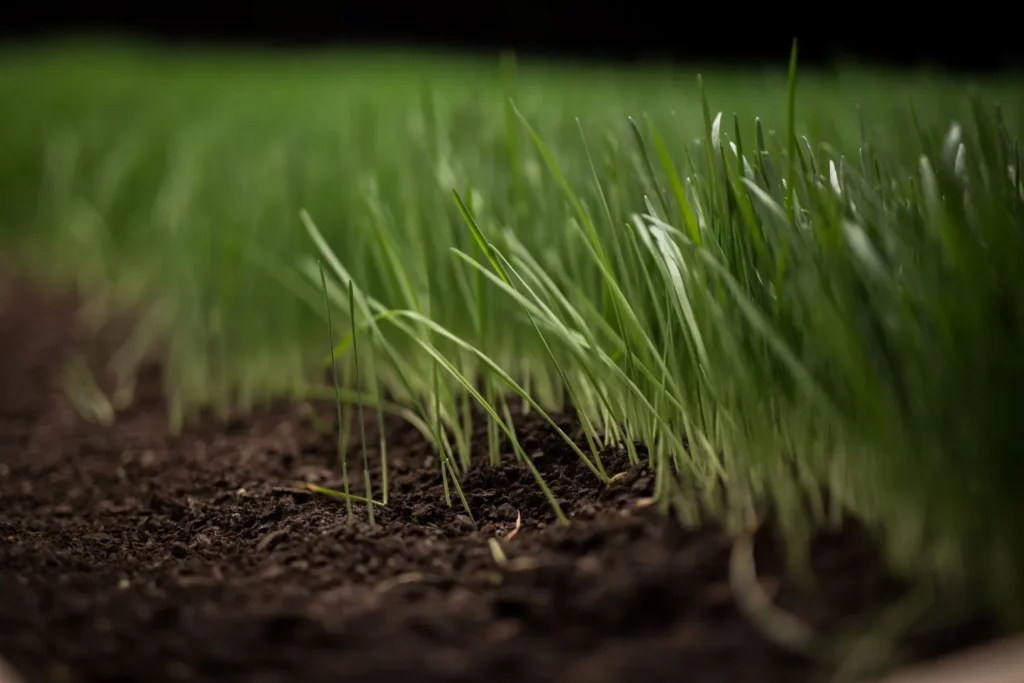
Color doesn’t reveal soil structure. A lawn can look dark green while suffering from:
- Compaction
- Nutrient lockout
- Poor drainage
- pH instability
- Shallow roots
These issues weaken root anchoring and reduce nutrient absorption efficiency. Soil imbalance often develops gradually. Nitrogen may temporarily mask symptoms, but without correction, root systems remain compromised. Strong lawns are built from the soil up not sprayed from the top down.
Why Shallow Roots Create Long-Term Vulnerability
One of the most common hidden problems in Atlanta lawns is shallow rooting. High nitrogen levels and frequent watering encourage roots to remain near the surface. That makes sense, nutrients and moisture sit near the top. However, shallow roots reduce drought tolerance and heat resilience. When extreme weather arrives:
- Moisture evaporates quickly
- Root systems struggle to access deeper reserves
- Lawn stress spikes
- Recovery slows
A green lawn with shallow roots may look great today but collapse tomorrow under stress.
Plant Resilience vs. Cosmetic Success
True turf health shows up in resilience. Ask yourself:
- Does the lawn recover quickly after heavy rain?
- Does it bounce back after foot traffic?
- Does it tolerate brief drought without thinning?
- Does it resist fungal outbreaks during humidity spikes?
If the answer is yes, you likely have structural health. If not, you may have cosmetic success hiding deeper issues. Color is visible. Resilience is functional.
The Compounding Effect of Overfertilization
Repeated overfertilization intensifies the imbalance. Each application pushes blade growth. Over time, rapid cycling increases thatch buildup and reduces oxygen penetration. The result?
- Weakened soil structure
- Increased turf disease susceptibility
- Reduced root depth
- Greater lawn stress under seasonal transitions
In a humid climate, these effects multiply. Healthy turf requires balance; not acceleration.
Why Atlanta Lawns Are Especially Susceptible
Atlanta combines:
- Long growing seasons
- High humidity
- Warm nighttime temperatures
- Frequent rainfall
These conditions promote rapid growth. But they also magnify the imbalance. A green lawn here may simply reflect environmental conditions not superior health. Without monitoring nitrogen levels and moisture control, visual success can quickly turn into fungal outbreaks and thinning patches. Understanding the climate context is essential.
How to Evaluate Lawn Health Beyond Color
If you want to know whether your lawn is truly healthy, look beyond green. Evaluate:
- Root depth
- Density consistency
- Soil firmness
- Recovery speed
- Disease resistance
Dig small inspection holes occasionally. Healthy roots should extend several inches into the soil. If roots cluster near the surface, shallow development may be present. Long-term health lives underground.
Build a Strong Lawn, Not Just Green
In Atlanta’s humid environment, it’s easy to chase color. But a green lawn isn’t always healthy, and focusing solely on appearance can backfire.
At Weed Pro, we prioritize structural balance. That means carefully managing nitrogen levels, supporting root depth, and reducing conditions that promote turf disease.
Contact us today so we can evaluate and improve your lawn.
Frequently Asked Questions
Can organic fertilizers reduce the risk of hidden lawn stress?
Organic sources often release nutrients more gradually, which may reduce rapid top growth surges. Slower nutrient availability can help balance shoot and root development over time.
Does mowing frequency affect how green a lawn appears?
Yes. Frequent mowing can stimulate new blade growth, temporarily enhancing color intensity. However, mowing alone does not guarantee deeper root strength.
Are darker green lawns always overfertilized?
Not necessarily. Some turf varieties naturally exhibit deeper pigmentation. However, unusually rapid color changes following fertilization often indicate elevated nitrogen levels.
Up Next: When Grass Growth Slows Even When Everything Looks Right
Now that we’ve uncovered why a green lawn isn’t always healthy, it’s time to explore another common mystery. Why does grass sometimes slow down, even when watering and fertilizer appear perfectly balanced? Next Read: Why Grass Growth Slows in Cumming Even When Watering and Fertilizer Look Right