Key Takeaways
- Aeration relieves surface compaction but does not permanently fix poor soil structure.
- Soil structure determines how long the benefits of aeration actually last.
- Repeated aeration without soil improvement delivers diminishing returns.
- Root health depends more on pore stability than on temporary holes.
- Understanding aeration’s limits prevents wasted treatments and recurring lawn stress.
Why Aeration Is Often Misunderstood
Aeration is one of the most recommended lawn treatments, yet it’s frequently misunderstood. Many homeowners expect aeration to permanently fix drainage issues, thinning turf, or recurring disease. While aeration can provide short-term relief, it does not change the underlying soil framework that controls long-term performance.
The confusion comes from visible results. Aeration creates immediate openings in the soil, which temporarily improves water movement and oxygen access. But once those openings collapse, the lawn returns to its previous condition if the soil structure hasn’t improved.
Understanding this difference helps set realistic expectations and better treatment strategies.
What Lawn Aeration Actually Does
Aeration works by removing small cores or creating channels that relieve surface compaction. This allows water, air, and nutrients to move more freely into the root zone for a limited time.
Aeration helps most when:
- Soil is compacted near the surface
- Thatch buildup restricts airflow
- Roots are shallow due to oxygen limitation
These benefits are real, but they are temporary unless deeper soil conditions are addressed.
What Soil Structure Really Means
Soil structure refers to how soil particles bind together into aggregates and to the pore spaces formed between them. Good structure allows water to infiltrate slowly, oxygen to reach roots, and microbes to function efficiently.
Poor structure causes:
- Rapid surface sealing after rain
- Standing water despite aeration
- Shallow rooting and weak turf recovery
Unlike compaction, structure does not improve simply by poking holes in the ground.
| Weed Pro Lawn Care: Local Lawn & Outdoor Pest Experts Reliable Service Backed by Results You Can See Choose the Right Lawn Care Solution for Your Property: – Complete Lawn Care Programs: Ongoing, customized lawn care plans designed to strengthen turf, improve soil health, and reduce weeds. – Targeted Weed & Pest Control: Focused solutions for persistent lawn weeds, invasive pests, and seasonal pressures such as mosquitoes and surface insects. – Irrigation & Lawn Health Support: Professional support for irrigation efficiency, aeration, overseeding, and soil conditioning to improve water absorption, reduce runoff, and help lawns recover from compaction, disease, or environmental damage. Customer Praise:“Easy and quick set-up. Immediate results. I have been trying and failing little by little to maintain my yard over the past three years. Weed pro came in and turned the yard around in 6 months. Thank you Weed Pro Lawn care for excellent and affordable lawn care.” – Antonio Rizzo Why Homeowners Choose Weed Pro Lawn Care: – Locally owned and operated, serving North Georgia communities – Experienced technicians trained in region-specific lawn and pest challenges – Customized service plans based on property conditions, not one-size-fits-all programs – Environmentally responsible treatments with a focus on long-term lawn health – Clear communication, reliable scheduling, and service you can trustSchedule your Service Today! |
Why Aeration Alone Doesn’t Fix Structural Problems
Aeration loosens soil mechanically, but structure is biological and chemical in nature. Without organic matter, microbial activity, and stable aggregates, soil quickly collapses back into its compacted state.
This is why lawns often require aeration year after year without lasting improvement. The treatment relieves symptoms but not the cause.
Repeated aeration without structural improvement can even increase stress by disrupting roots without building long-term resilience.
When Aeration Works Well
Aeration is most effective when used as part of a broader soil strategy. In these situations, aeration creates openings that allow beneficial amendments to reach deeper layers.
Aeration works best when combined with:
- Organic matter incorporation
- Soil conditioning or microbial support
- Overseeding to rebuild density
In these cases, aeration serves as a tool for access rather than a standalone fix.
When Aeration Has Limited Impact
There are situations where aeration delivers little improvement. Heavy clay soils with low organic content, soils with poor microbial activity, or lawns suffering from chronic drainage issues often rebound quickly after aeration.
Common signs that aeration alone isn’t enough include:
- Compaction returning within weeks
- Persistent puddling after rain
- Roots remaining shallow despite treatment
These conditions indicate a deeper soil structure issue rather than surface compaction alone.
The Role of Organic Matter in Soil Stability
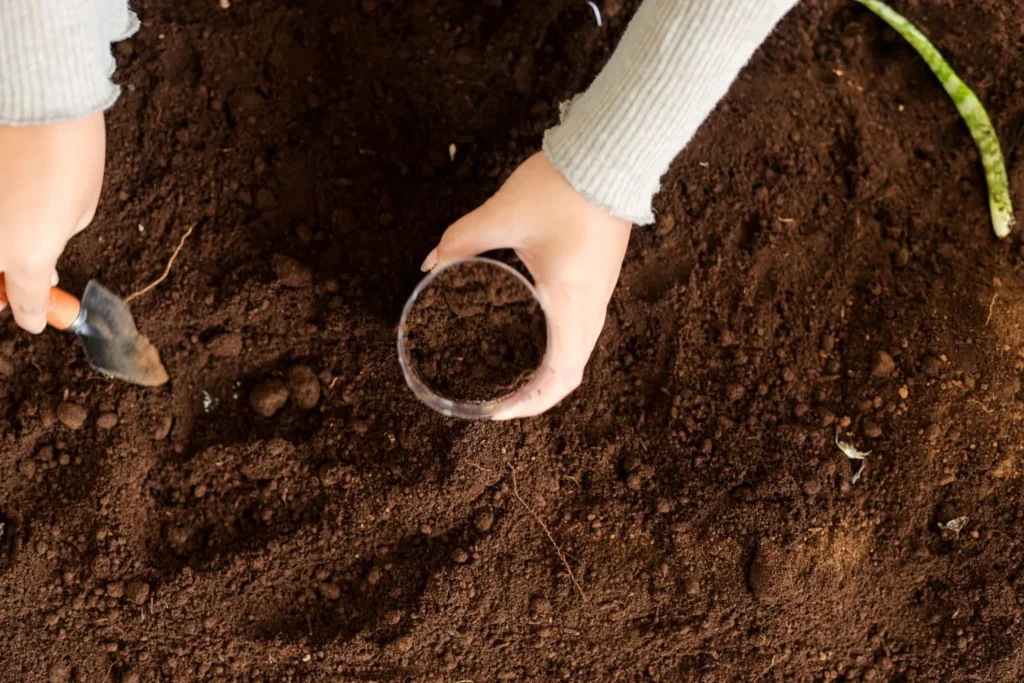
Organic matter is the backbone of healthy soil structure. It feeds microbes, binds particles into aggregates, and stabilizes pore spaces over time.
Without organic matter, aeration holes collapse quickly. With it, those openings become part of a lasting pore network that supports deeper rooting and better drainage.
This is why long-term soil improvement always includes organic inputs alongside mechanical treatments.
Why Root Health Depends on Structure, Not Holes
Roots don’t grow toward holes; they grow toward stable oxygen and moisture availability. Aeration creates temporary pathways, but structure determines whether those pathways persist.
Healthy soil allows roots to explore deeper layers, access consistent moisture, and recover faster from stress. Poor structure traps roots near the surface, where heat, drought, and disease pressure are highest.
Improving structure changes how roots behave year-round, not just after treatment.
How to Use Aeration Strategically
Aeration should be timed and applied based on soil condition, not habit. When used correctly, it supports long-term improvement instead of short-term relief.
Strategic aeration focuses on:
- Opening the soil before organic amendments
- Relieving compaction ahead of overseeding
- Supporting recovery during high-growth periods
This approach aligns mechanical relief with biological improvement.
Aeration Helps: But Soil Health Makes It Stick
If your lawn needs aeration every year and still yields the same results, the problem may not be compaction alone. Weed Pro Lawn Care helps homeowners determine whether aeration is the right tool, or whether deeper soil improvements are needed for lasting results.
Our soil-first approach evaluates structure, drainage, and root health, so treatments support long-term turf performance rather than short-term fixes. Contact us to schedule an evaluation and build a plan that improves your lawn from the ground up.
FAQ – Aeration and Soil Structure
How long do aeration benefits usually last?
Aeration benefits typically last a few weeks to a few months, depending on soil type and activity. Without organic matter and microbial support, holes collapse quickly. Structured soil maintains its benefits far longer.
Can aeration fix drainage problems?
Aeration may temporarily improve drainage, but it does not permanently fix structural issues. Poor aggregation and low organic matter limit long-term water movement. Structural improvement is required for lasting drainage correction.
Should aeration be done every year?
Not always. Annual aeration may be unnecessary if soil structure is improving. Aeration should be based on soil conditions, not a fixed schedule.
Next: Mosquito Lifecycle: How Knowing It Keeps Your Yard More Enjoyable
In Mosquito Lifecycle: How Knowing It Keeps Your Yard More Enjoyable, we explain how moisture patterns, soil conditions, and timing influence mosquito activity and what homeowners can do to break the cycle.