Seasonal Disease Cycles in Warm-Season Lawns
Key Takeaways Why Lawn Disease Follows Seasonal Patterns Lawn disease does not appear randomly. In warm-season lawns, outbreaks are closely tied to shifts in temperature,

Key Takeaways Why Lawn Disease Follows Seasonal Patterns Lawn disease does not appear randomly. In warm-season lawns, outbreaks are closely tied to shifts in temperature,
Key Takeaways Why Grass Matching Matters More Than Most Homeowners Think When lawns thin out or develop bare spots, overseeding feels like a simple fix.
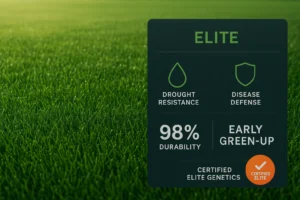
You’ve likely spent hours researching “best grass for my lawn,” only to hit a wall of conflicting information. One source says Fescue is king; another
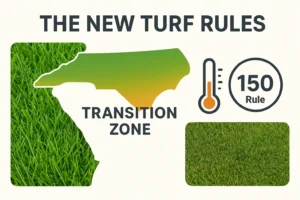
If you are looking at a standard USDA hardiness zone map to decide on your next turf investment, you might be looking at outdated data.
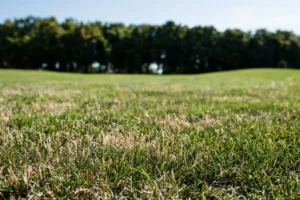
Key Takeaways Why Lawn Disease Isn’t Just a Surface Problem Lawn disease is often treated as a visible issue because symptoms appear first on the
Key Takeaways Why Compact Urban Lots Are Hard on Turf Urban lawns operate under constant pressure. Smaller lot sizes mean turf is exposed to heavier
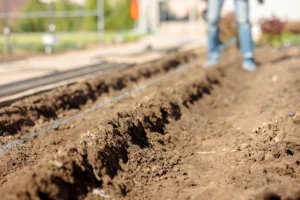
Key Takeaways Why Thin Topsoil Creates Ongoing Lawn Problems Topsoil is the primary growing medium for turfgrass roots. When it is shallow, compacted, or mixed
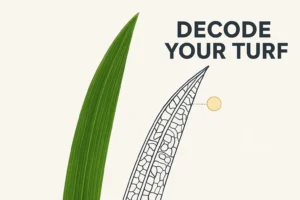
You’ve likely stood over your lawn, staring at a yellowing haze across the turf, asking the same question every homeowner eventually faces: Is this a
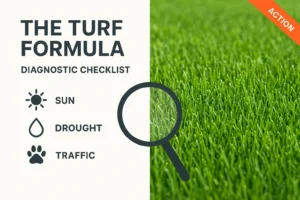
Most homeowners approach lawn selection backward. They fall in love with a specific “look”—the deep emerald of a Kentucky Bluegrass or the carpet-like density of
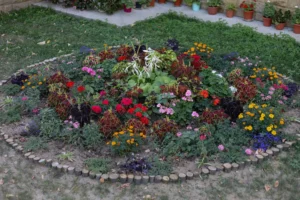
Key Takeaways Why Weed Problems Often Start at the Bed Edge Many persistent weed issues do not begin in the middle of a lawn or