Key Takeaways
- Residential lawns often contain multiple soil layers created by construction and use.
- Hardpan is a compacted subsurface layer that blocks roots, water, and oxygen.
- Many surface lawn problems originate below ground in restricted soil layers.
- Watering and fertilizing cannot overcome physical soil barriers.
- Identifying soil layering helps determine whether aeration or deeper soil correction is needed.
Why Soil Layers Matter More Than Most Homeowners Realize
Most people think of soil as a single continuous mass beneath their lawn, but residential turf rarely grows on uniform ground. Over time, yards develop distinct soil layers, each with different density, drainage behavior, and oxygen availability. These layers influence how roots grow, how water moves, and how resilient turf is under stress.
When soil layers don’t interact well, especially when compacted zones form, turf may look fine temporarily, but struggle year after year. Understanding what’s happening beneath the surface explains why many lawns fail to improve despite consistent maintenance.
What Are Soil Layers in Residential Lawns?
Soil layers are horizontal zones within the soil profile that differ in texture, compaction, and structure. In natural landscapes, these layers form slowly over hundreds or thousands of years. In residential lawns, however, layering often happens quickly due to construction, grading, and repeated disturbance.
A typical residential lawn may contain a thin organic surface zone, a compacted topsoil layer, and a dense subsurface layer formed by heavy equipment. Below that may be native soil that remains largely untouched. These layers don’t always blend, and sharp boundaries between them can restrict the movement of water, air, and roots.
Why Residential Lawns Are Especially Prone to Layering
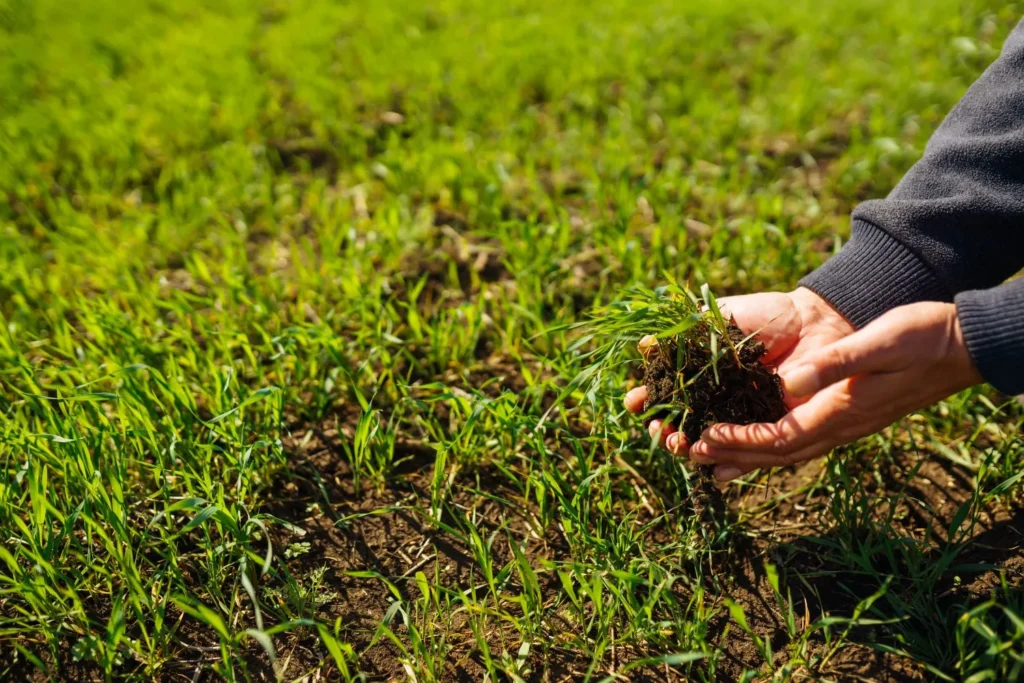
Unlike agricultural or natural soils, residential lawns are heavily altered environments. During construction, soil is stripped, moved, compacted, and covered often without proper restoration. Sod or seed is then installed over ground that was never loosened or conditioned for long-term plant growth.
Over time, foot traffic, mowing, and shallow irrigation reinforce these layers instead of correcting them. The result is a soil profile that appears stable at the surface but behaves poorly beneath it.
What Is Hardpan and Why Is It a Problem?
Hardpan is a dense, compacted soil layer that resists penetration by roots, water, and oxygen. It’s not a specific soil type but a condition created by pressure. Once formed, it behaves like a physical barrier beneath the lawn.
Hardpan commonly forms a few inches below the surface, making it particularly damaging. Turf roots grow downward until they hit resistance, then spread sideways instead. This leads to shallow rooting, poor drought tolerance, and increased susceptibility to disease and heat stress.
How Hardpan Forms in Residential Lawns
Hardpan formation is usually the result of repeated compression. Construction equipment, grading machinery, and even years of foot traffic on moist soil can compress particles so tightly that pore space collapses. When that happens, water and oxygen struggle to move through the soil.
In older neighborhoods, hardpan is especially common because decades of use compound the problem. Each year of traffic, mowing, and shallow watering reinforces compaction instead of relieving it.
| Weed Pro Lawn Care: Local Lawn & Outdoor Pest Experts Reliable Service Backed by Results You Can See Choose the Right Lawn Care Solution for Your Property: –Complete Lawn Care Programs: Ongoing, customized lawn care plans designed to strengthen turf, improve soil health, and reduce weeds. –Targeted Weed & Pest Control: Focused solutions for persistent lawn weeds, invasive pests, and seasonal pressures such as mosquitoes and surface insects. –Irrigation & Lawn Health Support: Professional support for irrigation efficiency, aeration, overseeding, and soil conditioning to improve water absorption, reduce runoff, and help lawns recover from compaction, disease, or environmental damage. Customer Praise:“We’ve been using Weed Pro since 2022. We are very pleased with the service & how nice our yard looks. Jessie & Brandon are the techs who do the work & they’re great. I appreciate most that they text me a day ahead to let me know when to expect them. They let me know if a special treatment we ordered was applied & give me detailed information on what to expect. They text me pictures of any trouble spots in our yard & recommend a solution. I highly recommend Weed Pro!!!” – Anna M. Why Homeowners Choose Weed Pro Lawn Care: -Locally owned and operated, serving North Georgia communities -Experienced technicians trained in region-specific lawn and pest challenges -Customized service plans based on property conditions, not one-size-fits-all programs -Environmentally responsible treatments with a focus on long-term lawn health -Clear communication, reliable scheduling, and service you can trust Schedule your Service Today! |
How Soil Layers and Hardpan Affect Root Growth
Roots need space, oxygen, and moisture to grow. When they encounter a compacted layer, growth slows or stops entirely. Instead of penetrating deeper, roots remain concentrated near the surface where conditions fluctuate more dramatically.
This shallow root system makes turf more vulnerable to drought, heat, and wear. Even with frequent watering, roots can’t access deeper moisture reserves because the soil profile doesn’t allow movement downward.
Why Drainage Suffers in Layered Soils
Water behaves very differently in layered soils than in uniform ones. When water moves downward and encounters a dense layer, it slows or stops, causing saturation above the compacted zone. This can lead to surface pooling, runoff, or chronically wet soil, all of which favor disease.
Ironically, the same lawn may show signs of drought stress shortly afterward because water never penetrated deeply enough to support roots once the surface dries.
Why Fertilizer and Water Can’t Fix Structural Soil Problems
Nutrients and irrigation help only when roots can consistently access them. In layered soils, nutrients often remain trapped in surface zones, while water either runs off or stagnates above compacted layers.
This creates a cycle in which homeowners apply more fertilizer and water, trying to correct the symptoms, but the underlying problem restricted movement remains unchanged. Without correcting the soil structure, improvements are usually short-lived.
How to Tell If Your Lawn Has Layering or Hardpan Issues
You don’t need specialized equipment to suspect a layering problem. Lawns with persistent dry spots, poor drainage, or shallow root systems often indicate subsurface restrictions.
A simple screwdriver or soil probe test can reveal resistance just a few inches down. If the tool stops abruptly despite moist soil, compaction is likely present.
The Difference Between Soil Texture and Hardpan
Soil texture refers to the proportion of sand, silt, and clay and is largely permanent. Hardpan, by contrast, is structural and caused by compaction. Clay soils can still support healthy turf if structured properly, while sandy soils can suffer severe hardpan if compressed.
This distinction matters because texture must be managed, but hardpan can often be corrected.
Why Overseeding Often Fails Over Compacted Soil
Seeds may germinate over hardpan, but roots struggle to establish depth. As a result, new turf initially looks promising, then declines as soon as environmental stress appears.
Without addressing the underlying compaction, overseeding becomes a temporary cosmetic fix rather than a durable improvement.
How Soil Management Improves Layered Lawns Over Time
Correcting soil layering involves restoring pore space and encouraging biological activity that stabilizes structure. Core aeration can temporarily open pathways, but lasting improvement requires roots, microbes, and organic matter to occupy those channels.
When soil biology is active, and roots grow deeper, layers become less restrictive and more integrated over time.
Improve What’s Beneath Your Lawn
If your lawn struggles despite regular care, soil layering, or hardpan may be limiting progress. Weed Pro Lawn Care helps homeowners identify subsurface soil issues and apply solutions that promote deeper roots and long-term turf health. Contact us today to schedule a lawn evaluation and start improving your soil from the ground up.
Frequently Asked Questions
How deep is hardpan usually found in residential lawns?
Hardpan commonly forms between three and ten inches below the surface, depending on construction history and traffic. This depth is shallow enough to restrict roots but deep enough to be overlooked.
Can hardpan correct itself over time?
Hardpan rarely improves without intervention. Normal watering and fertilizing don’t relieve compaction, and repeated traffic can make it worse.
Is aeration enough to fix hardpan?
Aeration helps, but severe compaction often requires repeated treatments and follow-up practices to prevent reconsolidation.
Continue Learning About Soil Compaction
To expand on this topic, check out Why Compacted Soil Heats Up Faster Than Healthy Soil, which explores how dense soil layers increase heat stress and turf decline.