
Key Takeaways
- Repeated lawn fungus usually signals an underlying soil or moisture problem.
- Alpharetta’s shade patterns and neighborhood layouts intensify humidity.
- Treating fungus without addressing the underlying conditions leads to recurring outbreaks.
- Compacted soil and poor drainage weaken turf defenses.
- Long-term control focuses on the environment, not just fungicides.
Why Lawn Fungus Often Feels “Unfixable” in Alpharetta
Many Alpharetta homeowners feel stuck in a frustrating cycle: the lawn looks better after treatment, only for fungus to return weeks or months later. This isn’t bad luck; it’s biology combined with local conditions.
Alpharetta’s mature landscapes, dense tree canopies, and humid summers create environments where fungal pathogens thrive year after year. Once lawn fungus establishes itself, it doesn’t disappear just because symptoms fade.
Understanding why fungus returns is the key to stopping it for good.
Why Alpharetta Lawns Face Unique Fungus Pressure
Alpharetta neighborhoods often feature:
- Large, mature trees
- Shaded backyards and side yards
- Dense landscaping around homes
- Irrigation systems designed for full-sun lawns
These elements create moisture-retaining microclimates that rarely dry completely. Even when rainfall is moderate, humidity and shade keep leaf surfaces wet long enough for fungal spores to activate.
The result is turf that looks healthy on the surface but stays vulnerable underneath.
What Repeated Lawn Fungus Really Indicates
When fungus returns season after season, it’s rarely because the treatment “didn’t work.” More often, it means the lawn environment is still favorable for disease.
Recurring fungus typically points to:
- Chronic soil compaction
- Excess moisture retention
- Poor airflow through the turf canopy
- Inappropriate grass selection for shade
- Repeated stress on roots
Until these conditions change, the fungus will continue to cycle back.
How Soil Compaction Drives Recurring Fungus
Compacted soil restricts oxygen flow to roots. Without oxygen, roots weaken, reducing the lawn’s ability to fight pathogens naturally.
In Alpharetta, clay-heavy soils compact easily, especially in high-traffic areas or on lawns graded during construction. Water sits near the surface rather than draining, creating the damp conditions that fungi love.
Healthy roots are your lawn’s first line of defense; compacted soil removes that defense.
Why Shade Makes Fungus Harder to Control
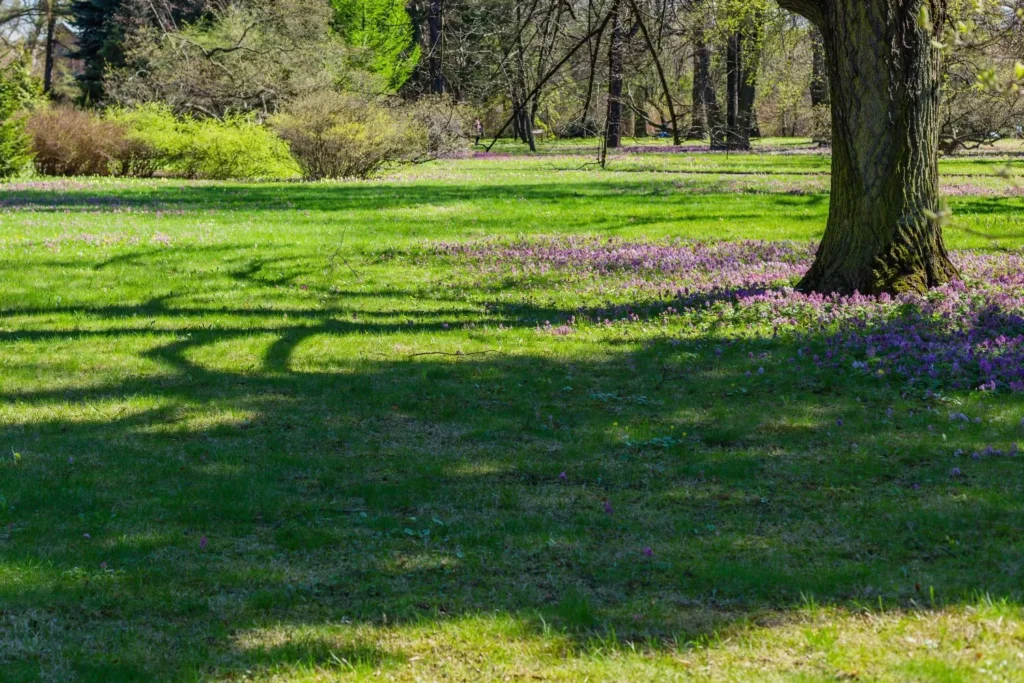
Shade doesn’t cause fungus, but it creates ideal conditions for it to grow.
In shaded Alpharetta lawns:
- Morning dew lingers late into the day
- Grass dries slowly after irrigation
- Soil stays cooler and wetter
- Air circulation is limited
Fungal spores need moisture more than sunlight. Shade gives them time to infect the grass before conditions improve.
The Hidden Role of Irrigation in Repeat Outbreaks
Many irrigation systems in Alpharetta are programmed for convenience rather than lawn health. Evening or overnight watering adds moisture at exactly the time when fungi are most active.
Over time, this pattern trains the disease to reappear consistently, even if fungicides are used.
Shifting irrigation timing alone can dramatically reduce recurring fungus pressure.
Why Fertilization Issues Can Mimic Fungus Problems
Thin, stressed turf is more vulnerable to infection. Lawns that lack balanced nutrition struggle to recover after disease stress.
However, applying fertilizer without understanding soil conditions can worsen the problem. Excess nitrogen encourages lush, tender growth that fungi easily attack.
Proper fertilization supports turf strength; improper fertilization fuels disease cycles.
| Weed Pro Lawn Care: Local Lawn & Outdoor Pest Experts Reliable Service Backed by Results You Can See Choose the Right Lawn Care Solution for Your Property: – Complete Lawn Care Programs: Ongoing, customized lawn care plans designed to strengthen turf, improve soil health, and reduce weeds. – Targeted Weed & Pest Control: Focused solutions for persistent lawn weeds, invasive pests, and seasonal pressures such as mosquitoes and surface insects. – Irrigation & Lawn Health Support: Professional support for irrigation efficiency, aeration, overseeding, and soil conditioning to improve water absorption, reduce runoff, and help lawns recover from compaction, disease, or environmental damage. Customer Praise:“Easy and quick set-up. Immediate results. I have been trying and failing little by little to maintain my yard over the past three years. Weed pro came in and turned the yard around in 6 months. Thank you Weed Pro Lawn care for excellent and affordable lawn care.” – Antonio Rizzo Why Homeowners Choose Weed Pro Lawn Care: – Locally owned and operated, serving North Georgia communities – Experienced technicians trained in region-specific lawn and pest challenges – Customized service plans based on property conditions, not one-size-fits-all programs – Environmentally responsible treatments with a focus on long-term lawn health – Clear communication, reliable scheduling, and service you can trustSchedule your Service Today! |
Why Fungicide-Only Approaches Fail Long-Term
Fungicides suppress symptoms, but they don’t change moisture patterns, airflow, or soil structure. In lawns with recurring fungus, treatments often become reactive rather than preventive.
Over time, repeated applications:
- Increase cost
- Deliver diminishing returns
- Fail to stop reinfection
Breaking the cycle requires correcting the environment that allows fungus to thrive.
How Thatch Buildup Traps Disease
Thatch holds moisture against the soil surface and grass crowns. In humid Alpharetta conditions, thick thatch layers rarely dry completely.
This creates a constant disease reservoir where fungi survive between outbreaks. Even if surface symptoms disappear, spores remain active within the thatch layer.
Managing thatch is critical for long-term disease control.
Why Fungus Often Appears in the Same Spots
Recurring fungus almost always shows up in the same lawn zones:
- Under tree canopies
- Near fences or foundations
- In low-lying or compacted areas
- Along with irrigation overlaps
These areas share environmental stressors that persist unless intentionally addressed.
The Difference Between Control and Prevention
Control manages active disease. Prevention removes the conditions that allow disease to start.
In Alpharetta lawns, prevention often includes:
- Soil aeration to restore oxygen
- Adjusted watering schedules
- Thatch management
- Grass variety matching
- Strategic pruning for airflow
When prevention is prioritized, disease pressure drops dramatically.
Why Timing Matters in Alpharetta’s Climate
Fungal pathogens activate quickly when conditions align. Waiting until symptoms are widespread makes control harder and recovery slower.
Monitoring seasonal risk periods allows for early intervention before disease gains momentum.
This proactive approach separates temporary improvement from lasting results.
Stop Treating Symptoms, Fix the Cause
If lawn fungus keeps returning in your Alpharetta yard, it’s time to look deeper than surface treatments. Weed Pro Lawn Care helps homeowners identify the moisture, soil, and shade conditions driving repeat outbreaks.
Instead of repeating the same cycle every season, let’s build a plan that strengthens your lawn from the ground up.
Contact us today to schedule a professional evaluation and take control of recurring lawn fungus.
FAQ: Recurring Lawn Fungus in AlpharettaWhy does lawn fungus keep coming back even after treatment?
Because the underlying conditions, moisture, compaction, and airflow, haven’t changed. Fungicides reduce symptoms but don’t eliminate the cause.
Is shade always the main problem?
Shade alone isn’t the issue; when combined with poor drainage and humidity, it creates ideal conditions for fungi. Managing airflow and moisture can significantly reduce risk.
Can soil improvement really stop fungus in the long term?
Yes. Improving soil structure and root health strengthens turf defenses, making it much harder for fungus to establish and spread.
Reference: Continue the Lawn Disease Series
Next, read Soil Compaction Problems in Atlanta’s Older Neighborhoods to learn how long-standing soil issues contribute to recurring lawn stress and disease.