If you are looking at a standard USDA hardiness zone map to decide on your next turf investment, you might be looking at outdated data. For property owners and managers, the challenge isn’t just selecting a grass type—it is understanding that the ground beneath your feet is changing.
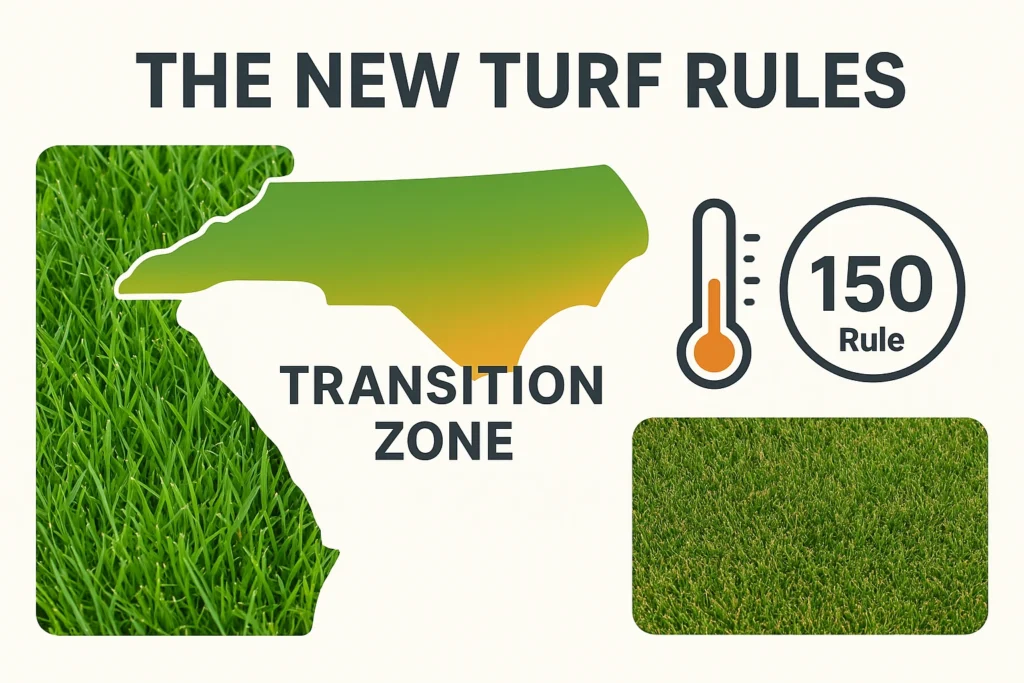
We are witnessing a climatological shift. As hardiness zones migrate northward, the “Transition Zone”—that difficult middle ground where it’s too hot for traditional cool-season grasses and too cold for tropical varieties—is expanding. This reality renders the old “North vs. South” playbook obsolete. You need a transition strategy that accounts for microclimates, soil temperature thresholds, and water resilience.
The New Rules of Turf Selection: Beyond the USDA Map
The most critical data point for your lawn this year isn’t the air temperature; it’s the trend line. Research from GCM Online indicates that the use of warm-season grasses in the transition zone has increased from 5% to 17% over the last 15 years. This isn’t a stylistic choice; it’s a survival response to rising nighttime temperatures.
If you are managing a property in an area historically dominated by Kentucky Bluegrass or Ryegrass, you may have noticed these species struggling to recover from summer stress. This is often because nighttime temperatures are failing to drop low enough for the plant’s respiration to reset.
To build a resilient landscape, we have to look deeper than general categories. We must evaluate different grass types based on their physiological ability to handle your specific microclimate—whether that’s a heat island in an urban center or a shaded, moisture-retentive valley.
The Comparison Matrix: Matching Grass to Microclimates
When evaluating turf, we use a matrix that balances aesthetic value against “Maintenance ROI”—the ratio of time and resources spent versus the resilience gained.
1. The Cool-Climate Strategy (Traditional North)
For regions where winters remain harsh, the goal is cold tolerance paired with improved drought resistance.
- The Contenders: Kentucky Bluegrass blends and Fine Fescues.
- The Strategy: Look for “Thermal-blue” hybrids. These offer the visual appeal of bluegrass but with deeper root systems.
- Microclimate Note: Fine fescue characteristics make it ideal for shaded areas where other grasses thin out, provided the soil drainage is adequate.
2. The Transition Hub (The “Insurance” Zone)
This is the most complex region to manage. You need a grass that won’t winter-kill but won’t fry in July.
- The Contenders: Turf Type Tall Fescue (TTTF) and Zoysia.
- The Strategy: Tall Fescue is your “insurance policy.” It has the deepest root system of the cool-season grasses, allowing it to access water that Bluegrass cannot. However, for those leaning toward warm-season varieties, understanding the best grass seed for Georgia and similar transition climates often leads to hybrid Zoysia, which offers a carpet-like density with lower water inputs.
3. The Arid Interior and South
Here, water conservation dictates the decision.
- The Contenders: Bermuda (specifically TifTuf) and St. Augustine.
- The Strategy: Data from the National Turfgrass Evaluation Program (NTEP) highlights that new cultivars like TifTuf Bermuda can use 38% less water than standard varieties while maintaining color.
The “Lawn Stress” Diagnostic: When to Act
Once you have the right turf, the challenge shifts to maintenance. Most homeowners over-water and under-diagnose. We recommend using two technical triggers—the “Footprint Test” and the “150 Rule”—to make data-backed decisions rather than guessing.
The Footprint Test vs. The Calendar
Don’t water because it’s Tuesday. Water when the grass asks for it. Walk across your lawn; if your footprints remain visible after a few seconds, the turgor pressure in the leaf blade is low, and the grass is entering drought stress. This is your signal to apply water deeply but infrequently, encouraging roots to dive deeper.
The 150 Rule: Managing Disease Risk
In humid transition zones, fungus is a silent killer. The “150 Rule” is a simple calculation used by pros:
Temperature (F) + Humidity (%) = Stress Index
If the sum exceeds 150, your lawn is at high risk for fungal diseases like Pythium or Brown Patch.
- Scenario: It is 85°F with 70% humidity (Total: 155).
- Action: Do not water in the evening. Moisture sitting on the blades overnight in these conditions is a guaranteed recipe for disease. This is also a critical time to review your lawn care tips for summer to ensure you aren’t inadvertently stressing the turf further with improper mowing heights.
Implementation: Seed, Sod, or Transition?
If your evaluation confirms that your current turf is incompatible with your microclimate, you face a choice: renovation or transition.
The Soil Temperature Threshold
Timing is physics, not guesswork.
- Cool-Season Grasses: Germination stops below 50°F.
- Warm-Season Grasses: These require soil temperatures between 70-90°F to thrive.
Attempting to seed Bermuda when soil temps are 60°F is simply throwing money into the ground. Conversely, if you are looking for the best time to fertilize lawn in georgia or similar climates, you must wait until the turf breaks dormancy completely—usually when soil temps stabilize above 65°F—to avoid feeding winter weeds instead of your grass.
The Decision Tool: Seed vs. Sod
- Seed: Lower upfront cost, higher labor. Best for Tall Fescue and cool-season hybrids. Requires strict adherence to dunwoody lawn aeration and overseeding schedules (or your local equivalent) to ensure seed-to-soil contact.
- Sod: Instant gratification, higher cost. Essential for hybrid Bermudas and Zoysias that do not produce viable seed.
- Lawn Alternatives: In areas with heavy shade or poor soil, consider integrating winter flowers in georgia or ground covers to reduce the turf footprint and increase biodiversity.
Next Steps for Your Property
The data is clear: the climate is shifting, and your lawn care strategy must adapt. Whether you need to transition to a more heat-resilient cultivar or refine your maintenance triggers using the 150 Rule, the goal is a landscape that thrives by design, not by luck.
If you are ready to evaluate your property’s specific microclimate needs, we can help you interpret the soil data and build a transition plan that ensures long-term health and sustainability.
Frequently Asked Questions
How do I know if my lawn is in the “Transition Zone”?
If you experience freezing winters but sweltering, humid summers where cool-season grass struggles to survive July, you are in the transition zone. This zone is actively moving north, affecting areas previously considered “cool-season” only.
Can I mix grass types to handle different microclimates?
Yes, but proceed with caution. Mixing TifTuf Bermuda with Fescue generally results in a patchy, uneven look due to different textures and growth rates. A better strategy is to zone your yard: use shade-tolerant Fescue under trees and heat-loving Bermuda in full sun, separated by a hardscape border.
Why is the “150 Rule” critical for my budget?
ignoring the 150 Rule often leads to fungus outbreaks. Treating a fungal infection is significantly more expensive than preventing one. By adjusting your watering habits based on this temperature-humidity index, you save on fungicide applications and water bills.
Is overseeding necessary for all grass types?
No. Overseeding is primarily for cool-season bunching grasses like Tall Fescue that don’t spread on their own. Warm-season grasses like Bermuda and Zoysia spread via runners (stolons and rhizomes) and typically do not require overseeding unless you are “winter overseeding” with ryegrass for temporary green color.