Key Takeaways
- Tree roots compete aggressively with mulch beds for water and oxygen.
- Heavy shade alters soil moisture and microbial activity.
- Improper mulch depth can suffocate roots and invite pests or disease.
- Compacted soil under trees prevents mulch from functioning correctly.
- Successful mulch beds require design changes, not just more mulch.
Why Mulch Beds Commonly Fail Around Mature Trees in Atlanta
Mulch beds look simple on the surface, but under mature trees, they’re one of the hardest landscape features to maintain, especially in Atlanta. Homeowners often assume mulch failure means the wrong mulch was used or that it needs to be refreshed more often. In reality, the problem usually starts below the surface.
Tree roots, shade density, soil compaction, and moisture imbalance create conditions in which mulch struggles to fulfill its intended role. Without addressing those conditions, even high-quality mulch breaks down quickly, washes away, or becomes a magnet for pests and disease.
Understanding why mulch beds fail under tree canopies helps homeowners stop wasting money on constant reapplication and start building beds that actually last.
How Tree Root Systems Undermine Mulch Bed Performance
Trees don’t politely share space with surrounding plants. Mature trees develop dense, shallow root systems that spread far beyond the trunk, often right where mulch beds are installed.
These roots aggressively absorb water and oxygen from the soil. Mulch placed above them struggles to regulate moisture because the roots pull water away as quickly as it’s applied. Over time, the soil beneath the mulch becomes dry, compacted, and biologically inactive.
In some cases, homeowners respond by adding more mulch. That creates a different problem: excess mulch reduces oxygen exchange and worsens root stress, leading to declining tree health and unstable beds.
Why Shade Canopies Change How Mulch Behaves
Heavy shade alters soil conditions in ways many homeowners don’t expect. Under dense tree canopies, evaporation slows, sunlight penetration drops, and air circulation decreases. These factors affect how mulch decomposes and how moisture moves through the soil.
Instead of evenly moderating soil temperature and moisture, mulch in shaded areas often stays damp for long periods. That prolonged moisture encourages fungal growth, attracts insects, and accelerates mulch breakdown.
At the same time, limited sunlight reduces beneficial microbial activity that normally helps mulch improve soil structure. The result is a bed that looks soggy, thin, or uneven long before it should.
The Role of Soil Compaction Beneath Tree Canopies
Atlanta’s clay-heavy soils are already prone to compaction, and areas beneath mature trees are often the worst offenders. Foot traffic, mower movement, and years of root growth compress soil particles tightly together.
Compacted soil prevents water from infiltrating properly. Instead of soaking in, water runs across the surface or pools briefly before evaporating. Mulch placed on top can’t correct this problem — it simply masks it.
Without addressing compaction, mulch beds continue to fail no matter how often they’re refreshed.
Why Improper Mulch Depth Makes Problems Worse
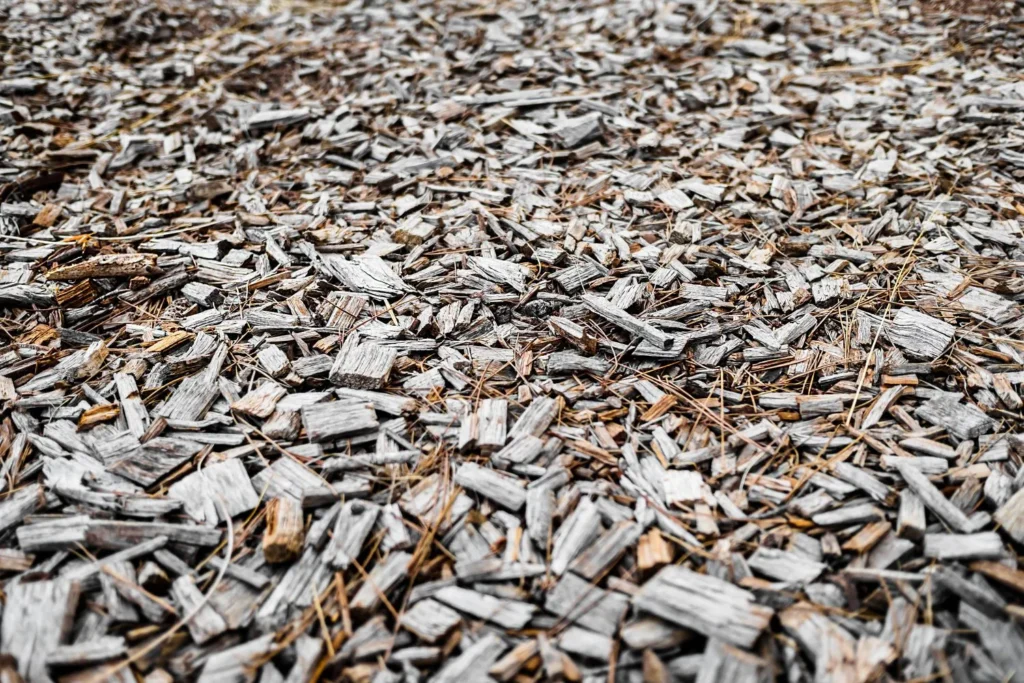
One of the most common mistakes in tree-adjacent mulch beds is applying mulch too deeply. Thick layers are often used to hide exposed roots or prevent weeds, but excessive depth causes unintended damage.
Problems caused by overly deep mulch include:
- Restricted oxygen flow to tree roots
- Increased moisture retention against bark and surface roots
- Ideal habitat for insects and rodents
- Faster breakdown and collapse of the mulch layer
Mulch should protect soil, not smother it. Around trees, depth matters more than appearance.
How Mulch Breakdown Accelerates Under Trees
Mulch decomposes naturally, but shaded, root-dense environments speed up that process. Constant moisture, limited airflow, and fungal activity cause organic mulch to break down unevenly.
Instead of slowly improving soil structure, mulch turns into compacted organic sludge. That layer repels water, traps pests, and creates an unstable surface that washes away during heavy rain.
This is why mulch beds under trees often look thin, patchy, or muddy much earlier than they should.
| Weed Pro Lawn Care: Local Lawn & Outdoor Pest Experts Reliable Service Backed by Results You Can See Choose the Right Lawn Care Solution for Your Property: – Complete Lawn Care Programs: Ongoing, customized lawn care plans designed to strengthen turf, improve soil health, and reduce weeds. – Targeted Weed & Pest Control: Focused solutions for persistent lawn weeds, invasive pests, and seasonal pressures such as mosquitoes and surface insects. – Irrigation & Lawn Health Support: Professional support for irrigation efficiency, aeration, overseeding, and soil conditioning to improve water absorption, reduce runoff, and help lawns recover from compaction, disease, or environmental damage. Customer Praise:“Easy and quick set-up. Immediate results. I have been trying and failing little by little to maintain my yard over the past three years. Weed pro came in and turned the yard around in 6 months. Thank you Weed Pro Lawn care for excellent and affordable lawn care.” – Antonio Rizzo Why Homeowners Choose Weed Pro Lawn Care: – Locally owned and operated, serving North Georgia communities – Experienced technicians trained in region-specific lawn and pest challenges – Customized service plans based on property conditions, not one-size-fits-all programs – Environmentally responsible treatments with a focus on long-term lawn health – Clear communication, reliable scheduling, and service you can trustSchedule your Service Today! |
Why Weed Pressure Increases in Tree Mulch Beds
Failing mulch beds invite weeds. As mulch decomposes unevenly, bare patches form, allowing light to reach the soil surface. Opportunistic weeds exploit these gaps quickly.
Tree roots also complicate weed control. Herbicides can stress trees, and manual removal can further disturb roots. The result is a constant battle that never fully resolves.
Proper mulch bed design focuses on stability and soil health rather than constant suppression.
Design Adjustments That Improve Mulch Bed Longevity
Mulch beds under trees require different strategies than open-sun beds. Successful designs account for root zones, shade patterns, and soil limitations.
Effective adjustments include:
- Reducing mulch depth near trunks and major roots
- Expanding bed edges to reduce foot traffic and compaction
- Using mulch types that resist rapid breakdown
- Improving soil structure before refreshing mulch
These changes don’t eliminate tree competition, but they reduce its impact.
Why Simply Replacing Mulch Doesn’t Fix the Problem
Many homeowners refresh mulch annually and expect better results each time. Unfortunately, replacing mulch without correcting underlying conditions only resets the same failure cycle.
Without addressing compaction, root competition, and shade-driven moisture imbalance, new mulch behaves exactly like the old layer. It breaks down quickly, shifts during rain, and fails to regulate soil conditions.
Long-term success requires improving what’s underneath, not just what’s visible.
Stop Replacing Mulch Start Fixing the Cause
If your mulch beds constantly thin out, wash away, or attract weeds around trees, the issue isn’t the mulch, it’s the environment beneath it. At Weed Pro Lawn Care, we evaluate tree-root zones, soil conditions, and shade patterns to design mulch beds that actually last.
Our approach focuses on soil health and structural stability, not just surface coverage. Contact us today to schedule an evaluation and finally put an end to failing mulch beds around your trees.
FAQ: Mulch Beds and Tree Canopy Challenges
Why does mulch disappear faster under trees than in sunny areas?
Shade, moisture retention, and fungal activity accelerate decomposition under trees. Tree roots also pull moisture away unevenly, causing breakdown in patches.
Is it bad to pile mulch high around tree trunks?
Yes. Excess mulch restricts oxygen, traps moisture against the bark, and increases the risk of pests. Proper depth protects roots without suffocating them.
Can soil compaction really ruin a mulch bed?
Absolutely. Compacted soil prevents water infiltration and microbial activity. Mulch placed on compacted soil breaks down faster and performs poorly.
Reference: Continue Learning About Tree-Area Lawn Challenges
Next, read How Heavy Rainfall Affects Mulch Longevity in Cumming Yards to understand how rainfall patterns further influence mulch performance and erosion issues.