Key Takeaways:
- Mulch beds fail most often because of soil issues beneath the surface
- Compacted or unstable soil causes mulch to sink, wash out, or migrate
- Poor grading and drainage undermine even high-quality mulch
- Repeated mulch replacement without fixing subsurface issues is costly
- Proper preparation creates longer-lasting, cleaner-looking beds
Why Mulch Bed Failure Is Usually a Below-Ground Problem
When mulch beds collapse, homeowners often blame the mulch itself. The assumption is that the material broke down too quickly, washed away, or was installed incorrectly. In reality, mulch bed failure almost always begins below the surface.
Mulch is only as stable as the soil supporting it. If the ground underneath is compacted, uneven, poorly graded, or biologically inactive, the mulch layer above it has no chance of staying in place long-term. Without proper subsurface preparation, mulch shifts, sinks, and deteriorates faster — no matter how often it’s replaced.
What “Subsurface Preparation” Really Means
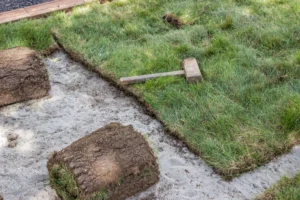
Subsurface preparation refers to everything that happens before mulch is installed. This includes soil structure, compaction level, drainage patterns, and the transition between turf, bed edges, and hardscape. A properly prepared mulch bed starts with soil that can:
- Support the mulch layer evenly
- Drain excess water without erosion
- Resist settling and compression over time
Skipping this step is the most common reason mulch beds collapse within a single season.
How Compacted Soil Undermines Mulch Beds
Compacted soil is one of the biggest threats to mulch bed stability. When soil is compacted, it loses pore space, the tiny air gaps that allow water movement, root growth, and biological activity.
When compacted, soil absorbs water unevenly, leading to runoff. Water flows across the surface, carrying mulch with it or forcing it into low spots. Over time, this creates thinning areas, exposed soil, and uneven bed depth.
Signs Compaction Is Affecting Your Mulch Bed
Some symptoms show up quickly, while others develop gradually as weather and foot traffic take their toll. Common warning signs include:
- Mulch sinking into the soil instead of sitting on top
- Bare spots forming after rainstorms
- Mulch collecting at bed edges or against hardscapes
These are not mulch-quality problems; they’re soil-structure problems.
Why Poor Grading Causes Mulch to Move
Grading determines how water flows across and through a mulch bed. Even slight slopes or low points can dramatically change how mulch behaves during heavy rain. If the bed is not graded correctly:
- Water accelerates across the surface
- Mulch floats, shifts, or piles up
- Soil beneath the mulch erodes
Once grading issues exist, adding more mulch only masks the problem temporarily.
The Relationship Between Drainage and Mulch Longevity
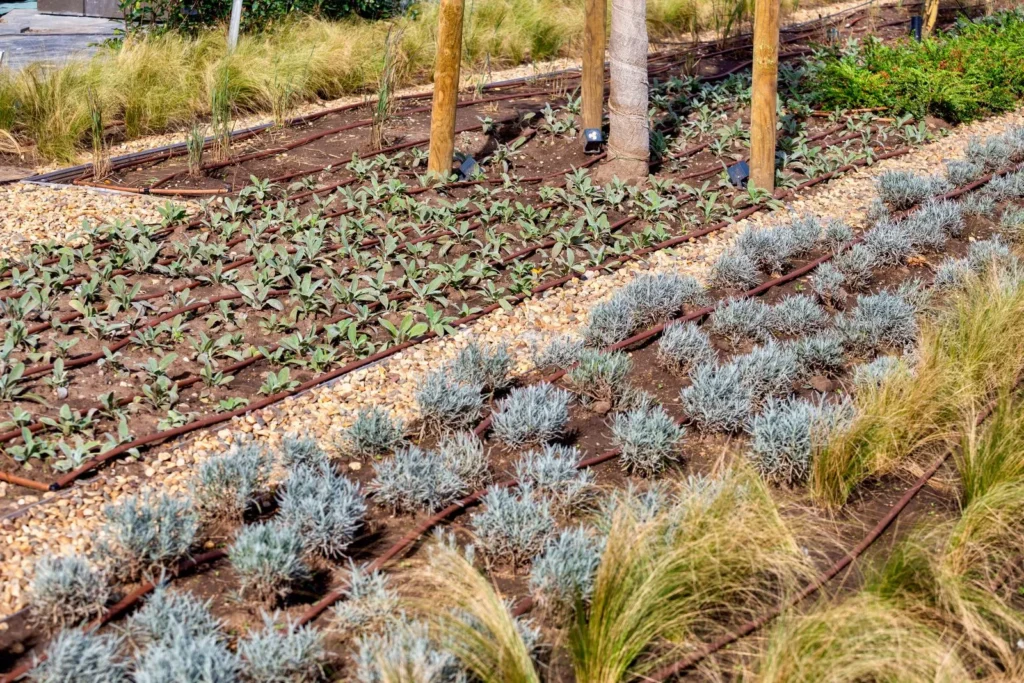
Drainage and mulch longevity are directly connected. Well-draining soil allows water to slowly and evenly pass through the mulch layer. Poor drainage traps moisture, destabilizes soil, and accelerates decomposition. Excess moisture beneath mulch creates:
- Anaerobic soil conditions
- Rapid organic breakdown
- Increased fungal and pest activity
All of these shorten the lifespan of a mulch bed.
Why Weed Fabric Often Makes Things Worse
Weed fabric is commonly installed to “protect” mulch beds, but when paired with poor subsurface preparation, it often accelerates failure.
Fabric restricts natural soil-mulch integration and traps fine particles above the barrier. Over time, mulch decomposes into a compacted layer on top of the fabric, creating a false soil surface that weeds quickly exploit.
Without addressing soil structure first, fabric becomes a liability rather than a solution.
| Weed Pro Lawn Care: Local Lawn & Outdoor Pest Experts Reliable Service Backed by Results You Can See Choose the Right Lawn Care Solution for Your Property: –Complete Lawn Care Programs: Ongoing, customized lawn care plans designed to strengthen turf, improve soil health, and reduce weeds. –Targeted Weed & Pest Control: Focused solutions for persistent lawn weeds, invasive pests, and seasonal pressures such as mosquitoes and surface insects. –Irrigation & Lawn Health Support: Professional support for irrigation efficiency, aeration, overseeding, and soil conditioning to improve water absorption, reduce runoff, and help lawns recover from compaction, disease, or environmental damage. Customer Praise:“WeedPro has always been reliable for me for my Roswell lawn. They have an easy website to navigate, and they are very responsive to my texts and calls. They send me a text prior to the day of my next application which is always very helpful. Their technicians are friendly and let me know in detail in text what was done and if they suggest any additional service. The company is not pushy for additional applications which I really appreciate.” – Sue A. Why Homeowners Choose Weed Pro Lawn Care: -Locally owned and operated, serving North Georgia communities -Experienced technicians trained in region-specific lawn and pest challenges -Customized service plans based on property conditions, not one-size-fits-all programs -Environmentally responsible treatments with a focus on long-term lawn health -Clear communication, reliable scheduling, and service you can trust Schedule your Service Today! |
How Soil Biology Affects Mulch Stability
Healthy soil biology supports the proper functioning of mulch beds. Microorganisms slowly break down mulch at a controlled rate, integrating organic matter into the soil and improving structure. When soil is compacted or biologically inactive:
- Decomposition becomes uneven
- Mulch breaks down too fast in some areas
- Other areas remain dry and unstable
This imbalance causes mulch beds to look patchy and collapse unevenly.
Why Re-Mulching Without Preparation Fails Repeatedly
Many homeowners re-mulch year after year without addressing underlying soil problems. Each application looks good initially, but the same collapse happens again, sometimes faster than before. This cycle leads to:
- Increasing material costs
- Thicker mulch layers that suffocate roots
- Raised beds that spill into turf or walkways
Without subsurface correction, re-mulching becomes a short-term cosmetic fix.
How Proper Bed Preparation Changes Everything
When soil is properly prepared, mulch behaves differently. It stays where it’s placed, decomposes evenly, and supports plant health instead of working against it. Effective preparation typically includes:
- Loosening compacted soil
- Correcting grade and drainage
- Establishing clear bed edges
These steps create a stable foundation that supports mulch instead of fighting it.
The Role of Bed Edging in Mulch Stability
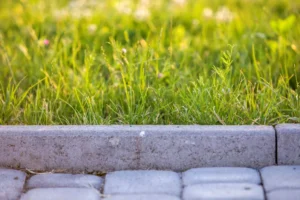
While edging alone can’t fix soil problems, it plays a supporting role when subsurface conditions are addressed. Clean, defined edges help contain mulch during heavy rain and reduce migration into turf. Edging works best when paired with:
- Stable soil beneath the mulch
- Proper grade transitions
- Controlled water flow
Without those elements, edging simply delays inevitable collapse.
Why Mulch Depth Isn’t the Core Issue
Many mulch failures are blamed on depth, either too much or too little. While depth matters, it’s rarely the root cause of collapse. Even perfectly applied mulch depth won’t compensate for:
- Compacted subsoil
- Poor drainage
- Uneven grading
Fix the soil first, and depth becomes a fine-tuning detail rather than a failure point.
How Tree Roots Complicate Mulch Bed Stability
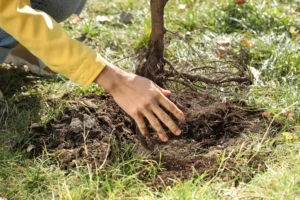
Around trees, mulch bed preparation becomes even more critical. Surface roots disrupt soil structure and change how water moves beneath the bed. Without proper preparation:
- Mulch slides off root flares
- Soil erodes between roots
- Beds thin out unevenly
This is why tree-ring mulch beds often fail faster than open planting beds.
Build Mulch Beds That Last With Weed Pro
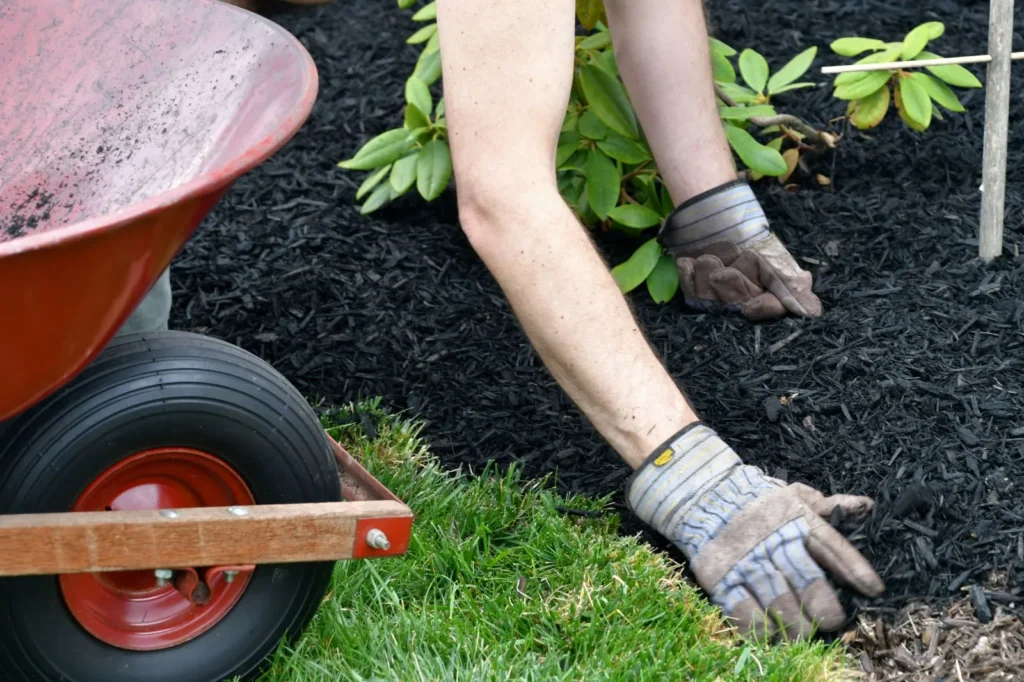
If your mulch beds collapse every season, the problem isn’t the mulch, it’s what’s underneath. Long-lasting mulch beds require proper soil preparation, grading, and structure before a single bag of mulch is installed.
Weed Pro evaluates mulch beds from the ground up, correcting compaction, drainage, and stability issues that cause repeated failure. Contact us today to schedule an on-site assessment and build mulch beds that stay in place, look better longer, and protect your landscape investment.
FAQ
Why does mulch disappear after heavy rain?
Rainwater moves mulch when the soil beneath it is compacted or poorly graded, leading to runoff rather than absorption.
Is weed fabric necessary under mulch?
Not usually. Without proper soil preparation, weed fabric can worsen mulch breakdown and weed problems.
How often should mulch beds be rebuilt properly?
With correct preparation, mulch beds can remain stable for multiple seasons with only light top-offs.
Continue Learning About Mulch Performance
Next, explore how environmental factors affect mulch lifespan in Why Mulch Decomposition Rates Vary Across the Same Property.