Key Takeaways
- Construction and utility work damage the soil long before the turf visibly fails.
- Compaction, soil mixing, and grade changes prevent normal root recovery.
- Reseeding without soil correction leads to repeated lawn failure.
- Proper repair restores soil structure first, then rebuilds turf density.
- Restoring soil structure is just as crucial as replanting grass after construction damage.
Why Lawns Struggle After Construction or Utility Work
Few things stress a lawn more than construction or underground utility work. Even when grass is replaced quickly, the soil underneath is often compacted, displaced, or contaminated with subsoil. That hidden damage prevents roots from establishing properly.
Homeowners are often surprised when new grass looks fine at first after a lawn repair, only to thin out, turn yellow, or die entirely within months. The problem usually isn’t the seed or sod; it’s the soil profile that was altered during excavation.
What Types of Damage Do Construction Projects Cause?
Construction disrupts soil layers that took years to form naturally. Once those layers are disturbed, turf struggles to recover without intervention.
Common Lawn Damage After Construction
- Severe soil compaction from heavy equipment
- Buried debris such as gravel, concrete dust, or construction waste
- Topsoil loss or mixing with infertile subsoil
- Uneven grading that causes water pooling or runoff
Each of these issues interferes with root development and water movement, creating long-term turf stress.
Why Utility Trenches Are Especially Hard on Lawns
Utility repairs often slice narrow trenches through otherwise healthy lawns. While these areas look small, the soil damage is deep and concentrated.
Trenched areas usually suffer from:
- Tight, compacted backfill
- Poor soil-to-root contact
- Inconsistent moisture retention
Grass planted over these zones often grows unevenly, creating visible stripes or weak bands across the lawn.
Why Reseeding Alone Rarely Fixes Construction Damage
Simply spreading seed over damaged areas rarely solves the problem. Seed may germinate, but without healthy soil structure, roots remain shallow and weak.
Steps you should take after a lawn experiences construction damage include:
- Restoring soil porosity
- Correcting grade issues
- Reintroducing organic matter
- Matching grass types to site conditions
Skipping these steps leads to repeated failure and frustration.
How Soil Compaction Blocks Lawn Recovery
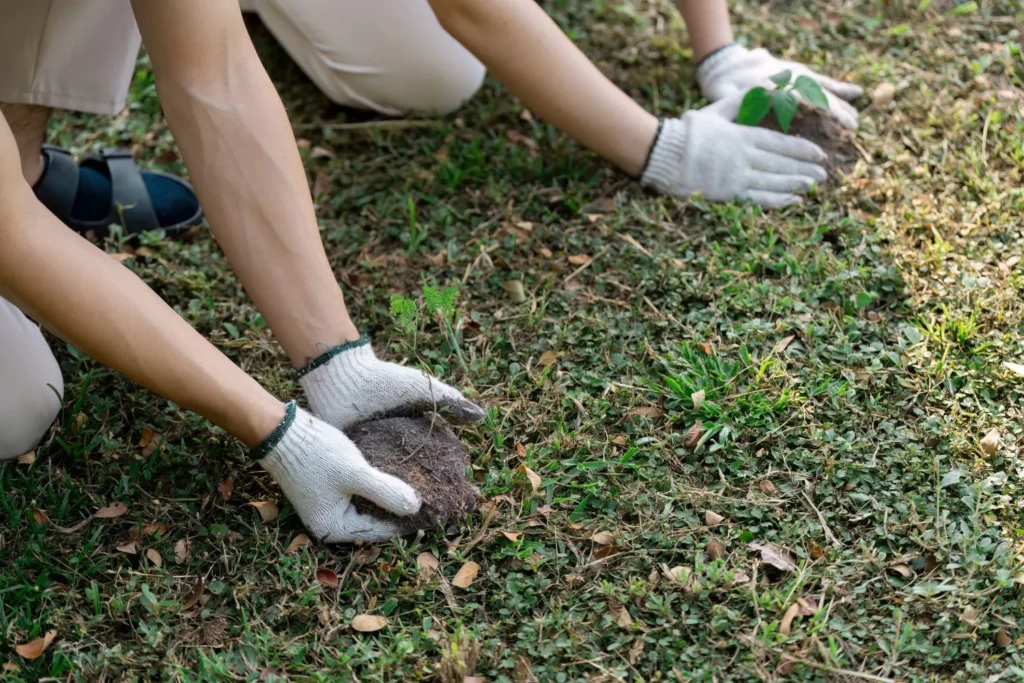
Compacted soil restricts oxygen, water infiltration, and root expansion. Grass roots growing in compacted areas are forced to stay shallow, making them vulnerable to heat, drought, and foot traffic.
Compaction also:
- Increases runoff
- Reduces nutrient availability
- Encourages weed invasion
Without addressing compaction, lawn repair efforts rarely last more than one season.
What Proper Lawn Repair Looks Like After Construction
Effective lawn restoration focuses on rebuilding the soil first, then establishing turf.
Core Steps in Professional Lawn Repair
- Soil evaluation: Identifying compaction depth and debris
- Mechanical aeration or soil loosening: Relieving pressure below the surface
- Organic matter incorporation: Improving moisture and microbial activity
- Surface leveling: Ensuring even water distribution
- Targeted seeding or sod installation: Matching grass to site conditions
This process creates an environment where roots can anchor and spread properly.
| Weed Pro Lawn Care: Local Lawn & Outdoor Pest Experts Reliable Service Backed by Results You Can See Choose the Right Lawn Care Solution for Your Property: – Complete Lawn Care Programs: Ongoing, customized lawn care plans designed to strengthen turf, improve soil health, and reduce weeds. – Targeted Weed & Pest Control: Focused solutions for persistent lawn weeds, invasive pests, and seasonal pressures such as mosquitoes and surface insects. – Irrigation & Lawn Health Support: Professional support for irrigation efficiency, aeration, overseeding, and soil conditioning to improve water absorption, reduce runoff, and help lawns recover from compaction, disease, or environmental damage. Customer Praise:“Easy and quick set-up. Immediate results. I have been trying and failing little by little to maintain my yard over the past three years. Weed pro came in and turned the yard around in 6 months. Thank you Weed Pro Lawn care for excellent and affordable lawn care.” – Antonio Rizzo Why Homeowners Choose Weed Pro Lawn Care: – Locally owned and operated, serving North Georgia communities – Experienced technicians trained in region-specific lawn and pest challenges – Customized service plans based on property conditions, not one-size-fits-all programs – Environmentally responsible treatments with a focus on long-term lawn health – Clear communication, reliable scheduling, and service you can trustSchedule your Service Today! |
Why Post-Construction Lawns Often Attract Weeds
Weeds thrive in disturbed soil because they’re adapted to poor conditions. Thin turf, exposed soil, and uneven moisture create ideal conditions for weeds.
Without proper repair:
- Weeds outcompete new grass
- Bare spots expand
- Turf density continues to decline
Restoring soil health helps grass regain dominance naturally.
When Professional Lawn Repair Makes the Biggest Difference
DIY repairs may work for minor surface damage, but deeper structural damage often requires professional tools and experience.
Professional repair is especially valuable when:
- Soil has been heavily compacted
- Drainage patterns changed
- Multiple utility trenches exist
- Turf repeatedly fails in the same areas
Addressing these issues early prevents long-term lawn decline.
Restore Your Lawn the Right Way After Construction
Construction doesn’t have to permanently damage your lawn, but quick fixes rarely work. At Weed Pro Lawn Care, we specialize in repairing lawns affected by construction and utility work by fixing the soil problems that prevent recovery.
Our process evaluates compaction, soil disruption, and grading issues so your lawn can rebuild from the roots up.
Contact us today to schedule a lawn repair assessment and receive a tailored plan that restores healthy growth, rather than repeating patch repairs year after year.
FAQ: Lawn Repair After Construction or Utility Damage
How long does it take for a lawn to recover after construction?
Recovery time depends on soil conditions and the repair methods used. Without proper soil correction, lawns may struggle indefinitely. With professional preparation, visible improvement often begins within one growing season.
Can you repair construction damage myself?
Minor surface damage can sometimes be repaired with basic tools. Deep compaction, buried debris, or drainage problems usually require specialized equipment and soil expertise. DIY attempts often fail when soil issues are left untreated.
Should you use sod or seed after construction damage?
Both can work, but only if soil conditions are corrected first. Sod placed over compacted soil often declines just as fast as the seed. The right choice depends on timing, soil health, and lawn usage.
Reference: Continue Learning About Lawn Stress
Next, explore Fertilizing Lawns Under Heat Stress to understand how temperature, soil conditions, and nutrient timing affect recovery and long-term turf strength.