Key Takeaways
- Atlanta’s humidity creates ideal conditions for fungal lawn diseases.
- Microclimates trap moisture longer than surrounding areas.
- Leaf wetness duration matters more than rainfall totals.
- Soil compaction and poor airflow intensify disease pressure.
- Preventing disease requires managing moisture, not just treating symptoms.
Why Lawn Disease Is More Aggressive in Atlanta Than Many Homeowners Expect
Atlanta lawns don’t struggle with disease because homeowners “do something wrong.” They struggle because the environment strongly favors pathogens. Warm temperatures, high humidity, and frequent overnight moisture create perfect conditions for fungi to thrive.
Unlike cooler or drier regions, Atlanta rarely gives turf a chance to fully dry out. Moisture lingers on leaf surfaces and in the soil profile, allowing lawn diseases to spread quickly once they appear.
Understanding how Atlanta’s microclimates work is the first step toward stopping repeated outbreaks.
What Is a Lawn Microclimate and Why Does It Matter?
A microclimate is a small area where environmental conditions differ from those of the surrounding area. In lawns, microclimates form because of shade, soil conditions, airflow restrictions, and moisture retention.
Two yards on the same street can experience completely different disease pressure depending on how long the moisture sticks around. Microclimates explain why disease often appears in the same places year after year.
These pockets quietly create ideal conditions for fungal growth, even when the rest of the lawn looks fine.
How Humidity Extends Leaf Wetness Time
Fungal diseases depend on moisture sitting on grass blades. In Atlanta, humidity slows evaporation, meaning dew and irrigation moisture stay on leaves for extended periods.
Many turf pathogens need only a few hours of leaf wetness to infect grass. Atlanta’s overnight humidity frequently exceeds that threshold, especially in shaded or low-airflow areas.
Longer leaf wetness equals faster infection and wider spread.
Why Shade and Poor Airflow Create Disease Hotspots
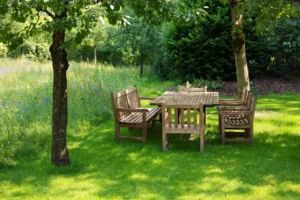
Shaded lawns dry more slowly. Trees, fences, homes, and dense shrubs block airflow, preventing evaporation.
In shaded microclimates:
- Dew persists later into the morning
- Soil remains damp longer
- Grass blades stay cooler and wetter
These conditions allow fungi to establish and spread before the turf can recover. This is why disease often starts along tree lines, fence borders, or between homes.
The Role of Soil Moisture in Disease Spread
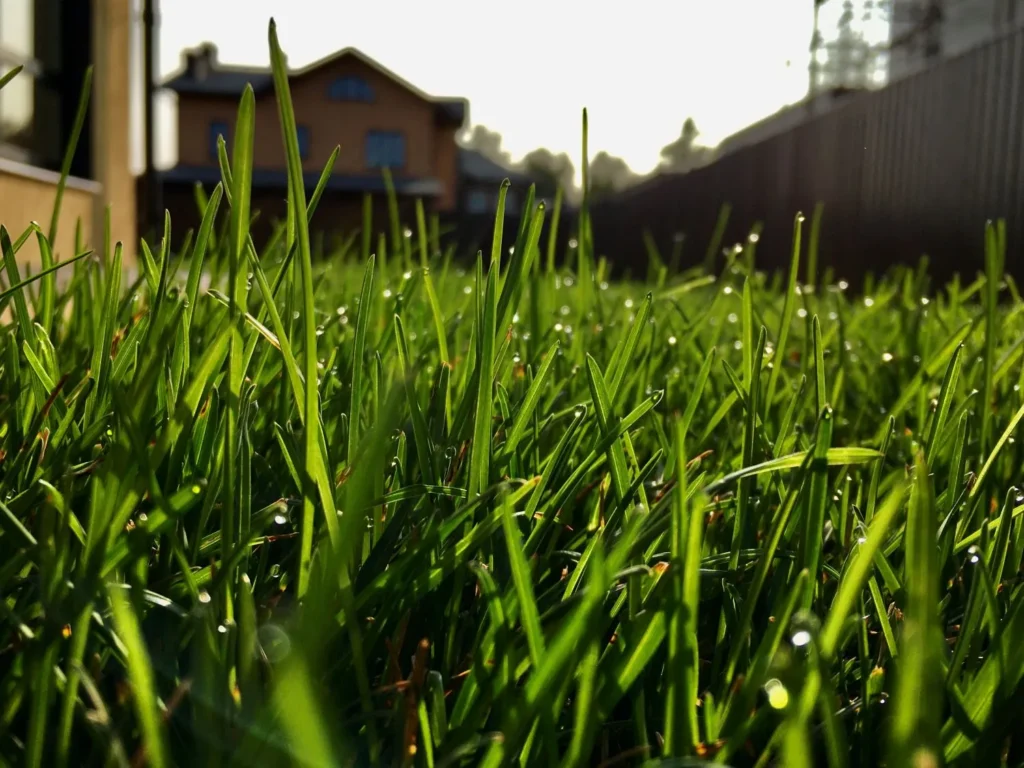
Disease doesn’t just live on the surface. Excess soil moisture weakens roots and reduces oxygen availability, making turf less able to defend itself.
Atlanta’s clay-heavy soils compact easily, trapping water in the root zone. When roots are stressed, grass becomes more susceptible to pathogens that would otherwise remain dormant.
Healthy roots require oxygen, not constant saturation.
Why Repeated Disease Often Appears in the Same Areas
Homeowners frequently notice that disease returns to the same locations each season. This isn’t a coincidence.
Those areas usually share underlying issues:
- Poor drainage
- Compacted soil
- Limited sunlight
- Inadequate airflow
Treating the visible disease without fixing these conditions allows fungi to rebound as soon as the weather becomes favorable again.
How Warm Nights Accelerate Fungal Activity
Many lawn diseases thrive when nighttime temperatures stay warm. Atlanta’s summer nights often remain around 70°F, which accelerates fungal metabolism.
Warm nights, combined with humidity, create ideal conditions for pathogen growth. Turf doesn’t get a recovery window, so disease spreads faster than grass can repair itself.
This is why outbreaks often worsen seemingly overnight.
Why Irrigation Timing Makes Disease Worse
Watering isn’t the problem, when watering happens is.
Evening or nighttime irrigation extends leaf wetness into overnight hours, stacking moisture on top of already humid conditions. This dramatically increases infection risk.
Morning irrigation allows sunlight and airflow to dry blades before fungi can establish.
| Weed Pro Lawn Care: Local Lawn & Outdoor Pest Experts Reliable Service Backed by Results You Can See Choose the Right Lawn Care Solution for Your Property: – Complete Lawn Care Programs: Ongoing, customized lawn care plans designed to strengthen turf, improve soil health, and reduce weeds. – Targeted Weed & Pest Control: Focused solutions for persistent lawn weeds, invasive pests, and seasonal pressures such as mosquitoes and surface insects. – Irrigation & Lawn Health Support: Professional support for irrigation efficiency, aeration, overseeding, and soil conditioning to improve water absorption, reduce runoff, and help lawns recover from compaction, disease, or environmental damage. Customer Praise:“Easy and quick set-up. Immediate results. I have been trying and failing little by little to maintain my yard over the past three years. Weed pro came in and turned the yard around in 6 months. Thank you Weed Pro Lawn care for excellent and affordable lawn care.” – Antonio Rizzo Why Homeowners Choose Weed Pro Lawn Care: – Locally owned and operated, serving North Georgia communities – Experienced technicians trained in region-specific lawn and pest challenges – Customized service plans based on property conditions, not one-size-fits-all programs – Environmentally responsible treatments with a focus on long-term lawn health – Clear communication, reliable scheduling, and service you can trustSchedule your Service Today! |
Common Lawn Diseases Fueled by Atlanta’s Humidity
Atlanta lawns commonly experience fungal diseases that thrive in warm, wet conditions. While identification varies, the environmental trigger is usually the same: prolonged moisture.
Some diseases spread rapidly across turf, while others start at the crown or root level and move upward. Both are intensified by humid microclimates.
Why Chemical Treatments Alone Don’t Solve the Problem
Fungicides can temporarily suppress disease, but they don’t change the environment that caused it.
Without addressing moisture retention, airflow, and soil health, chemical treatments often become a repeating cycle. Over time, this increases cost and reduces effectiveness.
Lasting control requires environmental correction, not just surface treatment.
How Mowing Practices Influence Disease Pressure
Mowing height and frequency affect airflow through the canopy. Turf cut too low loses its ability to dry efficiently and becomes stressed.
Slightly taller mowing heights:
- Improve air circulation
- Reduce moisture retention near the crown
- Strengthen turf resilience
Proper mowing is one of the simplest disease-prevention tools homeowners can control.
The Connection Between Thatch and Moisture Retention
Excess thatch acts like a sponge, holding moisture against the soil surface. In humid climates, that moisture rarely dissipates fully.
Thatch buildup increases:
- Leaf wetness duration
- Root-zone humidity
- Pathogen survival rates
Managing thatch is a key part of reducing disease pressure in Atlanta lawns.
Break the Disease Cycle for Good

If lawn disease keeps returning no matter what you try, Atlanta’s humidity may be working against you. Weed Pro Lawn Care helps homeowners identify moisture-driven microclimates and correct the conditions that allow disease to spread.
Instead of repeating treatments every season, let’s fix the underlying problem.
Contact us today to schedule an evaluation and create a long-term plan to protect your lawn.
FAQ: Lawn Disease and Humid Microclimates
Why does lawn disease spread so quickly in Atlanta?
High humidity, warm nights, and prolonged leaf wetness create ideal conditions for fungi. Microclimates trap moisture even when rainfall is low.
Can better drainage reduce lawn disease?
Yes. Improving drainage and soil oxygen reduces root stress and limits fungal survival, making turf more resistant to infection.
Is fungicide still necessary in humid areas?
Sometimes, but it works best when paired with environmental corrections. Without moisture control, fungicides provide only short-term relief.
Reference: Continue the Lawn Disease & Soil Health Series
Next, read Why Repeated Lawn Fungus Is Common in Alpharetta Lawns to explore how soil conditions and neighborhood design contribute to recurring disease problems.