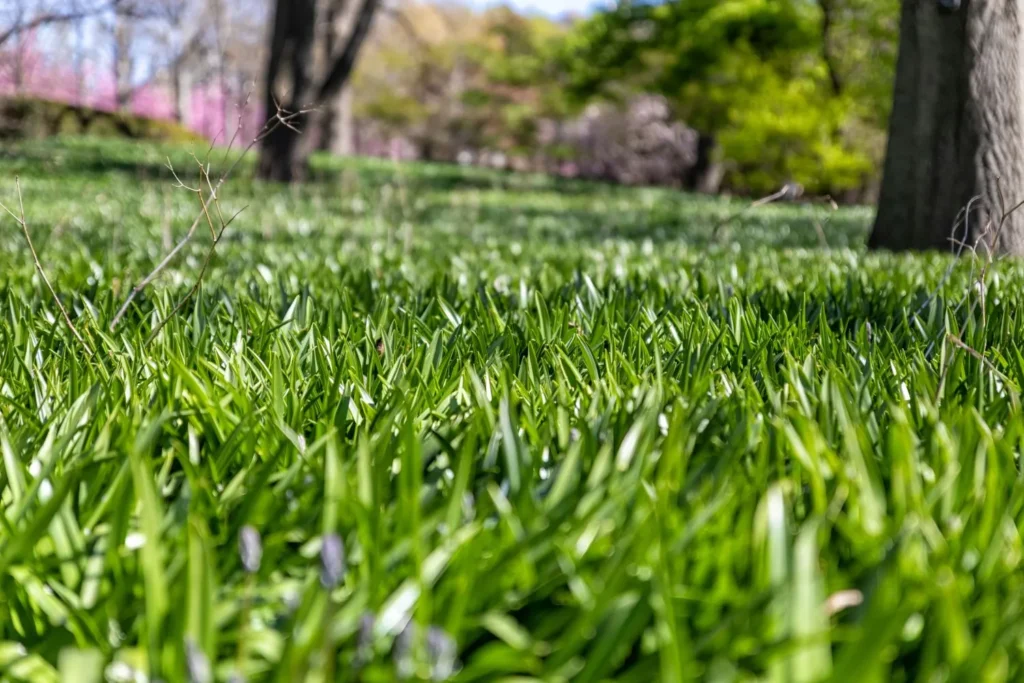
Key Takeaways:
- Lawn color reflects surface response, not root or soil health
- Fertilizer can mask stress without fixing underlying problems
- Shallow roots often hide behind temporary green-up
- Soil oxygen, moisture balance, and structure drive real turf health
- Long-term decline often starts below the surface
Why Lawn Color Is Often the First Thing Homeowners Notice
Color is the most obvious signal your lawn gives you. When grass turns green, it feels like success. When it yellows or browns, it feels like failure. Because color is so visible, it’s easy to assume it accurately reflects overall turf health.
But color is only a surface-level response. Grass can look vibrant while its root system, soil environment, and long-term resilience are quietly breaking down underneath.
That’s why many lawns look “great” right before they decline rapidly.
What Lawn Color Actually Tells You and What It Doesn’t
Lawn color mainly reflects chlorophyll activity in the leaf tissue. Chlorophyll production responds quickly to nitrogen, water, and temperature. That makes color a fast indicator but also a misleading one.
Lawn Color Can Improve Even When:
- Roots are shallow or damaged
- Soil is compacted or poorly aerated
- Disease pressure is increasing
- Moisture balance is unstable
Green leaves do not guarantee strong roots, good soil structure, or stress tolerance.
How Fertilizer Masks Declining Turf Health
One of the most common reasons lawn color improves while turf health declines is nitrogen-driven green-up.
Nitrogen stimulates:
- Rapid leaf growth
- Increased chlorophyll production
- Temporary color enhancement
What it doesn’t automatically improve:
- Root depth
- Soil oxygen levels
- Structural resilience
This creates a dangerous illusion of health.
Why Nitrogen Can Become a Crutch
When lawns rely on frequent fertilizer applications to stay green, they often become weaker over time. The plant prioritizes leaf growth over root growth, making it more vulnerable to heat, drought, and disease. Over time, this leads to:
- Thinning turf despite good color
- Increased disease outbreaks
- Faster decline under stress
Shallow Roots: The Hidden Cost of “Good Color”
Healthy turf builds deep, dense root systems. Weak turf invests most of its energy above ground. Signs of shallow-rooted turf include:
- Rapid wilting during heat
- Poor recovery from foot traffic
- Increased watering needs
- Turf that pulls up easily
A lawn can look green and still be barely anchored in the soil.
| Weed Pro Lawn Care: Local Lawn & Outdoor Pest Experts Reliable Service Backed by Results You Can See Choose the Right Lawn Care Solution for Your Property: Complete Lawn Care Programs: Ongoing, customized lawn care plans designed to strengthen turf, improve soil health, and reduce weeds. Targeted Weed & Pest Control: Focused solutions for persistent lawn weeds, invasive pests, and seasonal pressures such as mosquitoes and surface insects. Irrigation & Lawn Health Support: Professional support for irrigation efficiency, aeration, overseeding, and soil conditioning to improve water absorption, reduce runoff, and help lawns recover from compaction, disease, or environmental damage. Customer Praise:“Awesome service. I’ve tried several weed control providers and WeedPro is the first one that has actually kept my yard weed free. Jay is awesome with providing personalized customer care. Would highly recommend!” – Brian L. Why Homeowners Choose Weed Pro Lawn Care: -Locally owned and operated, serving North Georgia communities -Experienced technicians trained in region-specific lawn and pest challenges -Customized service plans based on property conditions, not one-size-fits-all programs -Environmentally responsible treatments with a focus on long-term lawn health -Clear communication, reliable scheduling, and service you can trust Schedule your Service Today! |
Why Soil Conditions Matter More Than Color
Soil determines how roots function; not color. When soil is compacted, saturated, or oxygen-starved, roots cannot grow properly, even if the grass blades look healthy. Over time, the plant loses its ability to self-regulate moisture, nutrients, and stress. Key soil issues that hide behind green turf include:
- Compaction layers restricting roots
- Poor drainage traps moisture
- Low oxygen availability
- Weak microbial activity
Moisture Imbalance: Green Today, Diseased Tomorrow
Overwatering often produces lush color; right before problems appear. Excess moisture:
- Reduces oxygen in soil
- Encourages fungal pathogens
- Weakens root tissue
Because grass stays green in wet conditions, moisture stress often goes unnoticed until disease spreads.
Why Disease Can Develop Under a Green Lawn
Many lawn diseases attack roots, crowns, or lower leaf tissue first. By the time discoloration appears, the problem is already well established. Common scenarios include:
- Green turf with thinning density
- Dark green patches preceding disease outbreaks
- Sudden collapse after heat or rain
Color doesn’t warn you early; structure does.
The Difference Between Cosmetic Health and Functional Health
Cosmetic lawn health focuses on appearance. Functional lawn health focuses on performance.
Cosmetic Health Relies On:
- Frequent fertilization
- Short-term green-up
- Visual uniformity
Functional Health Relies On:
- Root depth
- Soil structure
- Oxygen and moisture balance
- Stress tolerance
Lawns that prioritize cosmetic health often fail when conditions become challenging.
Why Green Lawns Sometimes Decline Faster
Ironically, lawns that look the best are often pushed the hardest. Excess nitrogen, aggressive mowing, and frequent watering create growth that the soil cannot support long-term. This imbalance leads to:
- Faster depletion of soil resources
- Increased thatch buildup
- Greater disease susceptibility
Eventually, the system collapses.
When Color Improvement Should Raise Red Flags
Not all green-up is good news. Be cautious when color improves alongside:
- Increased watering needs
- Faster mowing frequency
- Thinner turf density
- Repeated disease issues
These signals suggest the lawn is being stimulated rather than strengthened.
How to Evaluate Turf Health Beyond Color
To assess real turf health, look below the surface. Healthy turf shows:
- Firm root anchoring
- Consistent density
- Slow, steady growth
- Good recovery from stress
Unhealthy turf hides behind color but fails under pressure.
Don’t Let Green Grass Fool You
If your lawn stays green but struggles with thinning, disease, or stress, color isn’t the problem, it’s the disguise. True turf health starts below the surface, and ignoring those signals often leads to sudden, frustrating decline.
Weed Pro helps homeowners look past color to evaluate soil conditions, root health, and long-term resilience. Contact us today to schedule a professional assessment and make sure your lawn isn’t just green; but genuinely healthy.
FAQ
Is a green lawn always a healthy lawn?
No. Lawn color reflects leaf response, not root strength or soil health.
Why does a lawn decline even though it stays green?
Shallow roots, compaction, moisture imbalance, or disease can weaken turf without immediate color loss.
Can improving soil health fix recurring lawn problems?
Yes. Correcting soil structure and root conditions often stabilizes turf in the long term.
Explore More Turfgrass
How Turfgrass Stores Energy Between Growth Cycles in Atlanta Lawns.