Key Takeaways
- Stone Mountain’s hot summers, clay-leaning soils, and occasional heavy storms demand irrigation systems that adjust to weather and soil conditions, not fixed, “set it and forget it” timers.
- Smart controllers, drip irrigation, proper zoning with pressure regulation, and durable components all work together to cut waste and improve plant health.
- Professional design and installation make a big difference in preventing leaks, overspray, and uneven coverage that drive up water bills.
- Simple checks, like watching for misting, runoff, or constantly soggy spots, can reveal where upgrades will deliver the biggest savings.
Efficient Irrigation in Stone Mountain: Why It Matters
Stone Mountain lawns and landscapes face a tricky mix of challenges: long, hot summers, clay-heavy soils that don’t drain quickly, and sudden downpours that can saturate the ground. If your irrigation system isn’t tuned to those conditions, you can easily end up with wasted water, runoff, and stressed plants, despite paying a high water bill.
An efficient irrigation system solves that problem by doing three things well:
- Watering only when needed
- Delivering water where roots actually are
- Operating reliably with minimal leaks and breakdowns
In this guide, we’ll walk through the five most important features of an efficient Stone Mountain irrigation system:
- Smart controllers
- Weather-based scheduling & remote access
- Drip irrigation for beds and plantings
- Customized zoning with proper pressure regulation
- Durable components and professional installation
Along the way, you’ll see simple comparisons and checklists you can use to evaluate your current system or plan upgrades.
Feature 1: Smart Controllers for Automatic, Weather-Savvy Adjustments
What Smart Controllers Do
Smart controllers are upgraded irrigation timers that use local weather data and sensor feedback to automatically adjust watering schedules. Instead of running the same program every day, they:
- Shorten or skip cycles after rain
- Lengthen cycles during dry, hot periods
- Adjust run times by zone (sun vs. shade, turf vs. beds)
For Stone Mountain homeowners, that means fewer soggy spots after storms and more targeted watering during heat waves.
How Smart Controllers Improve Efficiency
Smart controllers can substantially reduce outdoor water use compared to traditional fixed timers because they water based on conditions, not guesswork. Systems that incorporate rain sensors and soil moisture probes are especially efficient, since they can pause irrigation when the soil is already adequately moist.
Popular Smart Controller Styles (What to Look For)
| Model | Key Feature | Typical Advantage |
| Rachio-style controller | Cloud-based weather scheduling | Easy remote control and predictive adjustments |
| Hunter-style controller | Sensor and commercial compatibility | Strong sensor support and pro-level reliability |
| Rain Bird-style controller | Proven irrigation algorithms | Reliable zone-based water optimization |
Instead of focusing on the brand name alone, look for:
- Zone-specific programming
- Weather-based scheduling
- Support for soil moisture sensors
- A mobile app for remote adjustment and alerts
Feature 2: Weather-Based Scheduling and Remote Access
Why Weather-Based Scheduling Matters in Stone Mountain
Weather-based scheduling uses temperature, humidity, and rainfall data to adjust irrigation. In practice, this means:
- Skipping or shortening runs after rain
- Reducing watering during cooler, humid periods
- Avoiding long cycles when evaporation losses will be high
This is especially helpful in spring and summer when storms move through Stone Mountain, since your system can automatically prevent overwatering.
How Remote Access Helps You Save Water
With a connected controller and mobile app, you can:
- Pause irrigation instantly if you notice pooling or runoff
- Switch to seasonal programs without visiting the controller box
- Receive alerts about flow issues or zone failures
Remote control keeps your system efficient even when you’re not home and lets technicians troubleshoot faster when something goes wrong.
Feature 3: Drip Irrigation for Beds, Shrubs, and Trees
Why Drip Irrigation Is Ideal for Stone Mountain Landscapes
Drip irrigation delivers water slowly and directly to the root zone through emitters or drip lines. Compared with overhead spray, drip:
- Reduces evaporation by keeping water close to the soil
- Prevents overspray onto sidewalks, driveways, or fences
- Improves infiltration in clay-leaning soils by applying water at low pressure and low volume
Drip is especially effective in:
- Shrub borders
- Flower beds
- Tree and hedge lines
- Vegetable gardens
Water Use: Drip vs. Traditional Sprinklers
| Irrigation Method | Water Use | Best Use-Case |
| Drip line | Low | Shrubs, beds, trees, vegetable rows |
| Low-flow sprinkler (MP Rotator style) | Moderate | Lawns and large turf areas needing uniform coverage |
| Overhead spray | High | Temporary or emergency use only; limited precision |
In many Stone Mountain landscapes, the most efficient setup combines drip for beds and plantings with low-flow sprinkler heads for turf.
Plant-Health Benefits of Drip
Drip doesn’t just save water—it improves plant performance by:
- Keeping foliage dry, which reduces fungal disease risk
- Providing steady moisture at the roots for deeper root systems
- Allowing for fertigation (applying diluted fertilizer through the system)
The result: more consistent growth, fewer stress symptoms, and less hand-watering.
Feature 4: Customized Zoning and Pressure Regulation
What Good Zoning Looks Like
Customized zoning groups plants and areas that share similar water needs so each zone can be programmed differently. Typical zones might include:
- Front lawn (full sun)
- Back lawn (partial shade)
- Front foundation beds
- Shady side yard with shrubs
- Drip zones for trees
Good zoning ensures that your shady shrubs don’t get watered like your sun-soaked fescue lawn.
Benefits of Proper Zoning
- Avoids overwatering low-demand areas
- Reduces runoff on slopes via shorter, “cycle-and-soak” programs
- Makes it easier to fine-tune schedules and troubleshoot issues
Why Pressure Regulation Is Essential
Even the best-designed zones won’t perform well if the water pressure is wrong. Pressure regulation:
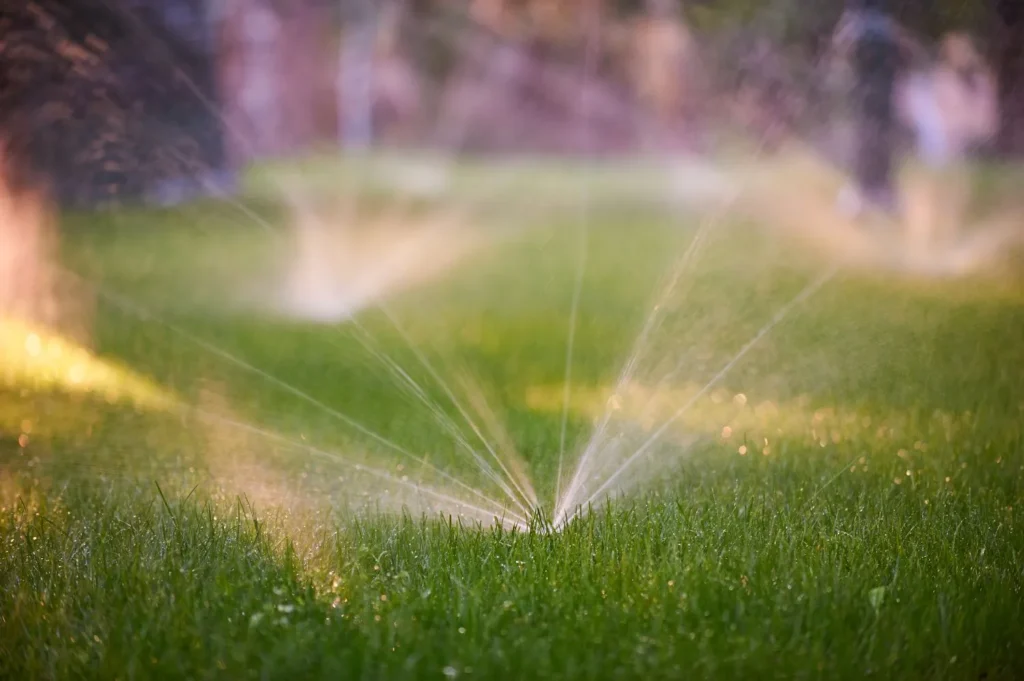
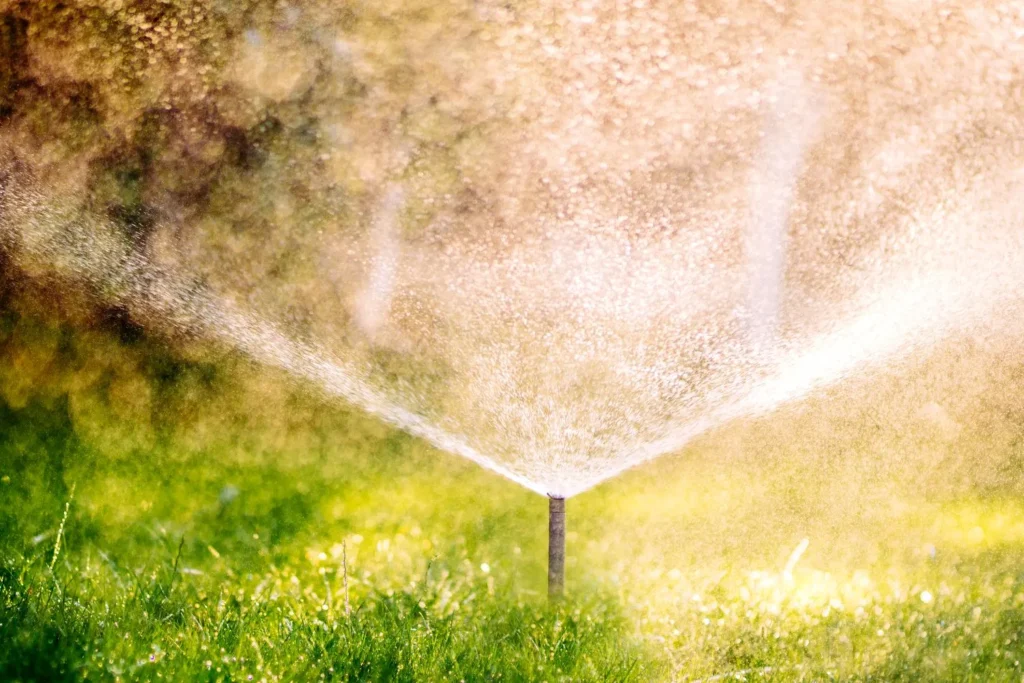
- Prevents misting and drift when pressure is too high
- Ensures heads provide even coverage when the pressure is too low
- Helps emitters and rotors operate in their intended performance range
Common signs of pressure problems include:
- Fine mist instead of clear streams
- Patchy coverage and dry spots
- Frequently broken or blown-off heads
Installing pressure-regulating valves or heads and correcting pressure are among the fastest ways to cut waste and improve consistency.
Feature 5: Durable Components and Professional Installation
Why Component Quality Matters Over Time
Efficient water use depends on a system that works reliably year after year. Pro-grade components offer:
- Stronger seals and diaphragms to prevent leaks
- Longer lifespans in Stone Mountain’s soils and temperatures
- Better compatibility when future repairs or upgrades are needed
Key Components and Their Value
| Manufacturer/Part Type | Expected Lifespan | Primary Benefit |
| Professional-grade valve | 5–15 years | Reliable zone control and fewer leaks |
| Backflow preventer | 10+ years | Protects water supply and meets code |
| MP Rotator-style head | 3–7 years | Low-flow, uniform distribution for turf |
Choosing quality up front reduces the need for frequent service calls and helps ensure water-saving features actually deliver long-term savings.
Why Professional Installation and Commissioning Are Worth It
Expert installation helps avoid common problems such as:
- Incorrect pipe sizing or valve placement
- Poor wiring and controller setup
- Mismatched heads within the same zone
- Inadequate backflow protection or pressure control
A professional crew will:
- Assess your property and measure flow and pressure
- Design zones based on plant type, slope, and soil
- Test each zone for coverage, leaks, and proper operation
- Program the controller with efficient, climate-appropriate schedules
That up-front design and commissioning work keeps your system efficient, easier to maintain, and better suited to Stone Mountain’s conditions.
Let Weed Pro Optimize Your Irrigation in Stone Mountain
Efficient irrigation isn’t just about saving water, it’s about protecting your lawn, beds, and trees from stress while avoiding runoff and wasted dollars. Smart controllers, drip lines, thoughtful zoning, and quality components all play a role, but they work best when they’re part of a well-designed system.
Weed Pro helps Stone Mountain and Metro Atlanta homeowners:
- Upgrade to smart controllers and weather-based scheduling
- Convert high-waste spray zones to drip where it makes sense
- Redesign zones and correct pressure for consistent coverage
- Install durable, pro-grade parts and provide seasonal tune-ups
Ready to get more out of every drop? Contact Weed Pro today for an irrigation assessment and tailored plan to make your system more efficient, reliable, and lawn-friendly.
Frequently Asked Questions
How do you know if your current irrigation system is wasting water?
Look for signs like runoff onto sidewalks or driveways, puddles that linger after a cycle, overly soggy spots, or areas that stay dry while others are soaked. Frequent broken heads, misting instead of clear streams, and high water bills are also red flags that your system needs adjustments or upgrades.
Is drip irrigation worth installing if you already have sprinklers?
Yes, especially for beds, shrubs, and trees. Adding a drip to these areas can significantly reduce water use and improve plant health compared to spray heads. Many homeowners keep sprinklers for lawns but transition beds and borders to drip irrigation for better precision and lower water waste.
Continue Your Irrigation Education
Keep the momentum going with “Dethatching or Aeration: Which Is Best for Your Lawn?” This guide walks you through how thatch and compaction impact turf health—plus how to decide which solution your lawn needs.