
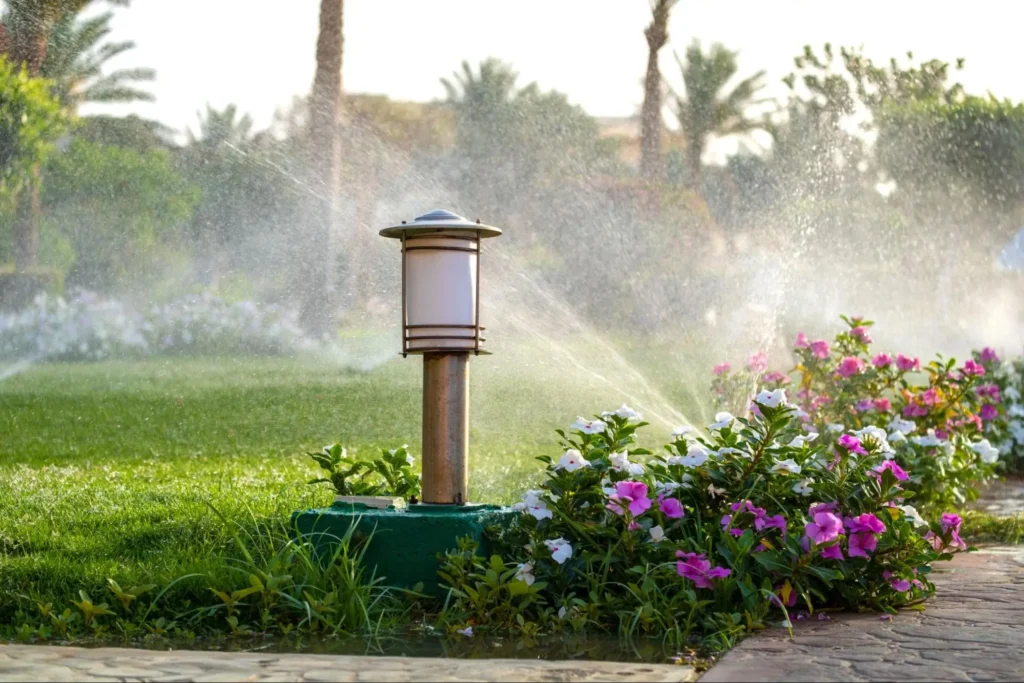
Is your lawn in Roswell looking dry, even though you are watering it regularly? Those great old-fashioned rotational irrigation systems, at times, can waste thousands of gallons of water and still give you a lawn whose growth is uneven. Then, along came smart irrigation controllers. What makes these controllers smart is that they can assess weather conditions and soil moisture to conserve water and create a more lush, green lawn. In this article, we will dive into how traditional systems operate, the technology that powers smart controllers, and compare water savings and financial benefits. We will also discuss ecological advantages and local program rebates. Providing you with all the necessary information to help you make the best decision for your lawn.
How Does A timer-based Irrigation System work?
A timer-based irrigation system uses a programmable controller with manual settings that open and close valves at predetermined times.
While it’s easy to program, keeping up with the environment can be difficult, and it’s common to have to reprogram a system monthly.
What are Some Typical Issues You Can Expect With Traditional Irrigation in Roswell?
Fixed schedules in Roswell’s hot summer and clay soil often result in overwatering and poor turf performance. To make sure you are on top of all temperature and weather changes, you may be forced to reprogram the system every season, or you may find yourself in a situation where your system is operating in the middle of a hot summer day, causing the water to evaporate quickly, resulting in lost efficiency.
On sloped areas, runoff and puddling are frequent.
You could even suffer a fine for not adhering to the city’s watering restrictions.
These issues highlight why property managers are now exploring smarter and more adaptive irrigation technologies.
How Do Traditional Systems Affect Your Water Bill & Lawn Health?
Watering on fixed, preset schedules means that even during high humidity or the rainy season, you are using the same water when you may, in fact, need less. This waste of water can cause utility bills to skyrocket by up to 30% while overtaxing your grass, leading to fungus growth.
The reverse occurs during the dry season, when too little moisture results in brown patches on your lawn.
Being mindful of these environmental changes and making the necessary adjustments to the schedule can help alleviate these issues, but this is incredibly time-consuming and burdensome.
What are The Ins and Outs of Smart Irrigation Controllers & How Do They Enhance Caring for Lawns in Roswell?
Smart irrigation controllers use environmental sensing tools, combined with communication and connectivity software, to apply watering in a pattern that promotes proper turf health. Smart irrigation controllers use weather forecasts, soil moisture probes, and your smartphone to automatically adjust watering schedules. These adjustments, often done without your knowledge, help reduce waste and provide your lawn with a consistent and appropriate water supply.
They even go as far as to detect imminent rain events, at which point it will determine whether to water the lawn before or after the rain.
These tools are meant to prevent wasting water and to avoid possible fines if your locality enforces water restrictions.
What is the Technology Used In Smart Irrigation Controllers?
Smart controllers rely on local forecasts to determine whether it should delay or altogether skip the predetermined watering times. Soil moisture sensors are helpful in analyzing the hydration of the soil before deciding whether a particular zone needs more or less moisture. Additionally, Wi-Fi or cellular modules provide homeowners with access to the same live data the controller is using to make its decision, and they are given the ability to remotely update watering programs using voice control or manually inputting the data.
What Features of Smart Controllers Make Them More Beneficial in Comparison to Traditional Timers?

Smart controllers feature technology and automation that conventional timers could never possess.
- Automated scheduled adjustments
- A sensor (e.g., rain and temperature) determines which zone gets activated
- Usage analytics & reporting
In these aspects, we see smart systems as a leap forward in landscape management.
How Much Financial Benefit is There in Switching to Smart Irrigation?
Quantifying the savings demonstrates the real return on investment when you upgrade in Roswell’s climate.
| Metric | Traditional System | Smart Irrigation Controller |
|---|---|---|
| Water Usage | Preset routines | Reduces consumption by 30–50 percent |
| Annual Cost | Higher utility bills | Lowers bills by $150–$300 annually |
What Is The Installation and Maintenance Process Like For Smart Systems?
Switching to smart irrigation involves a different setup and ongoing maintenance process than with older systems.
- A site assessment is needed to evaluate where sensors should be strategically placed and how compatible they are within a certain area.
- Initial controller wiring and Wi-Fi setup.
- They must undergo software updates and sensor recalibration.
While installation may require professional assistance, ongoing maintenance is simple, and the system often maintains itself.
Why Should A Roswell Homeowner and Business Owner Upgrade to Smart Irrigation?
The transition to smart irrigation provides a wide range of environmental and financial benefits, such as:
- Long-term savings on system maintenance and utility bills
- Improved performance across the lawn
- Landscapes that require minimal maintenance.
- Reduces runoff and soil erosion on sloped land
These advantages align well with Roswell’s increasing emphasis on sustainable lawn care and water-resilient landscapes.
What Local Incentives and Rebates are Currently Available to Those Looking to Switch to Smart Irrigation in Roswell?
The state and city both have programs in place to provide financial incentives for homeowners and business owners to switch to smart irrigation.
- Georgia WaterSense rebate
- Credits from the City of Roswell municipal
- Bill credits from utility companies
- Incentive programs based on seasonal timing
These rebates and incentives are in place to promote smart irrigation systems by making them more affordable.
Frequently Asked Questions
Do smart irrigation systems require Wi-Fi?
Most of them do, but some models also offer manual override and basic weather sensing without the necessity of internet access.
Will smart controllers be compatible with an existing irrigation setup?
Yes, most modern smart systems will fit in perfectly with existing valve zones and wiring.
Can smart irrigation help prevent fungal lawn issues?
Yes, they can help with fungal lawn issues by watering more efficiently and reducing excess moisture, the primary cause of these issues.
🔗 Up Next: Conquer Your Roswell Lawn
Don’t miss: “Conquer Your Roswell Lawn: DIY Weed Control That Works.”