Key Takeaways
- Thin or disturbed topsoil limits root depth, water retention, and nutrient availability.
- Lawns on compromised soil struggle to compete with weeds, disease, and environmental stress.
- Construction activity, grading, and erosion are common causes of long-term soil damage.
- Fertilizer and watering alone cannot overcome missing or compacted topsoil.
- Correcting soil structure is essential before lasting lawn improvement is possible.
Why Thin Topsoil Creates Ongoing Lawn Problems
Topsoil is the primary growing medium for turfgrass roots. When it is shallow, compacted, or mixed with subsoil, grass loses access to the oxygen, moisture, and nutrients it needs for healthy growth. The result is turf that looks stressed even when watered and fertilized correctly.
Properties with thin topsoil often show uneven growth, poor color, and rapid decline during heat or drought. These symptoms persist because the root system cannot develop deeply enough to support the plant. Without addressing the soil itself, surface-level treatments provide only temporary improvement.
Understanding the role of topsoil explains why some lawns never respond the way they should to standard care.
Common Causes of Thin or Disturbed Topsoil
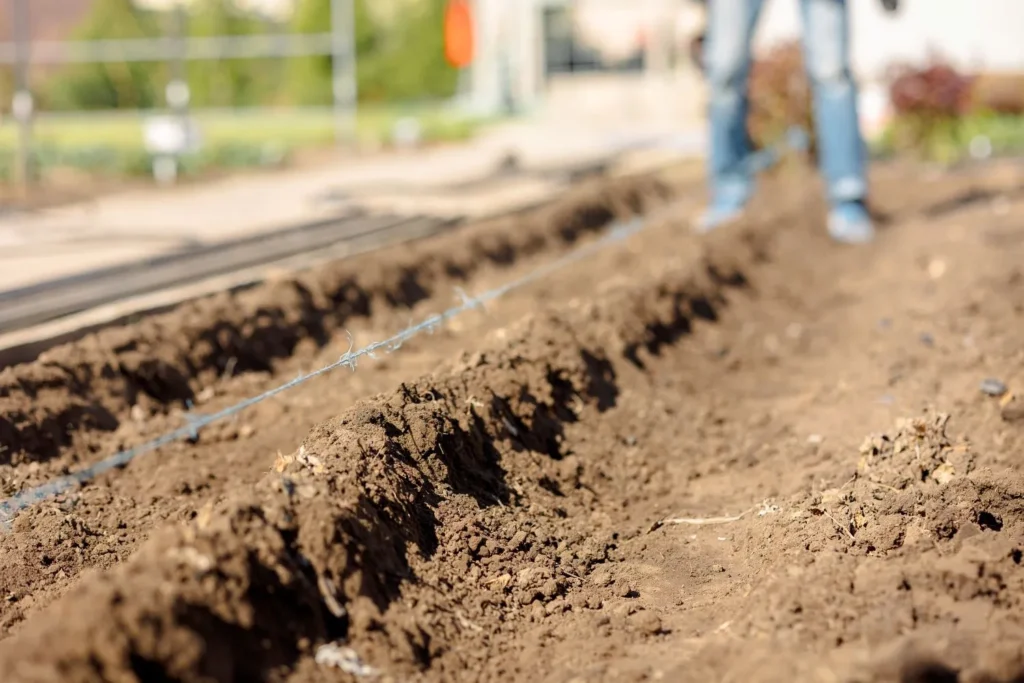
Thin topsoil is most often the result of construction or grading activity. During home building, renovation, or utility work, original topsoil is frequently scraped away or mixed with clay subsoil. Even when soil is replaced, it is often compacted or spread unevenly.
Erosion also plays a role, especially on sloped properties or areas without proper ground cover. Over time, rainwater carries away fine organic particles, leaving behind dense, low-fertility soil. Heavy foot traffic and equipment further compress what remains.
Once topsoil structure is damaged, the effects can last for years unless corrected intentionally.
How Disturbed Soil Limits Root Development
Healthy turf relies on a deep, branching root system to access water and nutrients. Thin or compacted soil restricts root penetration, forcing roots to stay near the surface where conditions fluctuate rapidly. This makes grass more vulnerable to heat, drought, and disease.
Shallow roots also limit the lawn’s ability to recover from stress or traffic. Even minor disruptions, such as mowing errors or short dry periods, cause visible decline. Weeds with aggressive or adaptable root systems take advantage of these weak conditions and spread quickly.
Root limitation is one of the main reasons lawns on poor soil never stabilize.
Why Fertilizer Alone Cannot Fix Thin Topsoil
Fertilizer supplies nutrients, but it does not create space for roots to grow or improve water movement. On thin soil, nutrients often leach quickly or remain inaccessible because roots cannot reach them. This leads to repeated applications with little visible benefit.
In some cases, excessive fertilization worsens the problem by encouraging top growth without root support. Grass appears greener briefly but becomes weaker and more disease-prone over time. The underlying soil constraint remains unchanged.
Without rebuilding soil structure, fertilizer acts as a short-term cosmetic fix rather than a solution.
Watering Challenges on Compromised Soil
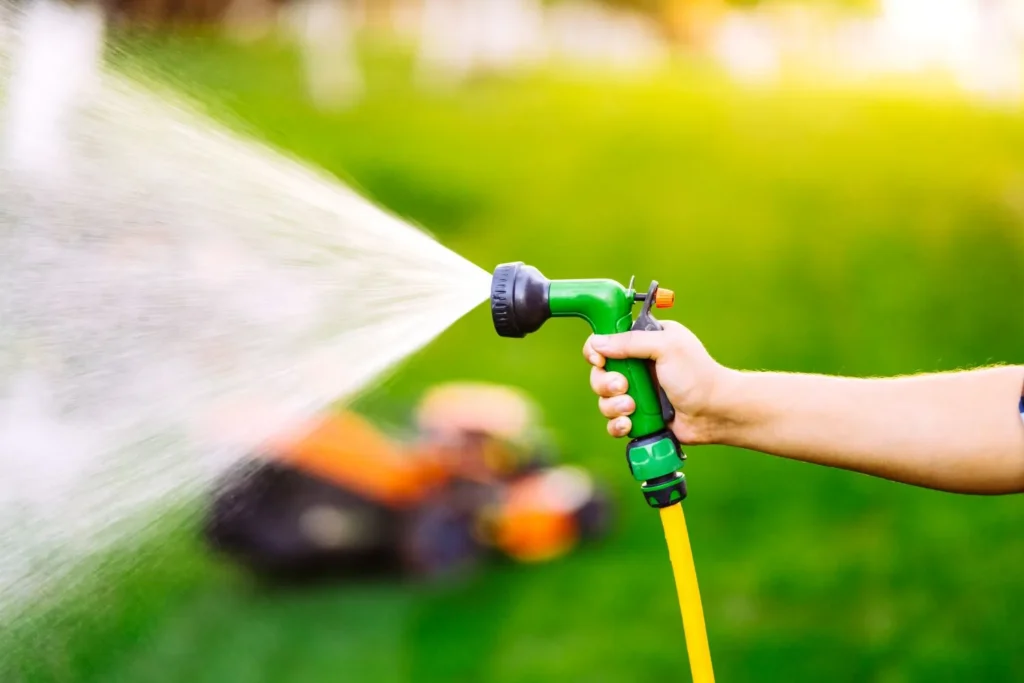
Thin topsoil struggles to hold moisture evenly. Water either runs off compacted areas or saturates shallow layers, creating extremes that stress turf. Lawns may appear dry shortly after watering, even when irrigation schedules are correct.
This inconsistent moisture availability encourages shallow rooting and favors weeds adapted to disturbed environments. It also increases disease risk by creating wet-dry cycles that weaken turf defenses.
Improving soil depth and structure is essential for achieving consistent, efficient watering.
Weed and Disease Pressure on Thin Soil
Weeds thrive where turf struggles. Thin or disturbed topsoil creates open space, inconsistent moisture, and low competition, ideal conditions for weed establishment. Many common lawn weeds are adapted to poor soils and outcompete turfgrass under stress.
Disease pressure also increases because stressed grass has weaker immune responses. Pathogens take advantage of shallow roots, poor drainage, and reduced airflow near the soil surface. Repeated disease outbreaks are common on lawns with underlying soil limitations.
Addressing soil quality reduces both weed and disease pressure more effectively than repeated treatments.
| Weed Pro Lawn Care: Local Lawn & Outdoor Pest Experts Reliable Service Backed by Results You Can See Choose the Right Lawn Care Solution for Your Property: – Complete Lawn Care Programs: Ongoing, customized lawn care plans designed to strengthen turf, improve soil health, and reduce weeds. – Targeted Weed & Pest Control: Focused solutions for persistent lawn weeds, invasive pests, and seasonal pressures such as mosquitoes and surface insects. – Irrigation & Lawn Health Support: Professional support for irrigation efficiency, aeration, overseeding, and soil conditioning to improve water absorption, reduce runoff, and help lawns recover from compaction, disease, or environmental damage. Customer Praise:“Easy and quick set-up. Immediate results. I have been trying and failing little by little to maintain my yard over the past three years. Weed pro came in and turned the yard around in 6 months. Thank you Weed Pro Lawn care for excellent and affordable lawn care.” – Antonio Rizzo Why Homeowners Choose Weed Pro Lawn Care: – Locally owned and operated, serving North Georgia communities – Experienced technicians trained in region-specific lawn and pest challenges – Customized service plans based on property conditions, not one-size-fits-all programs – Environmentally responsible treatments with a focus on long-term lawn health – Clear communication, reliable scheduling, and service you can trustSchedule your Service Today! |
Signs Your Property Has a Topsoil Problem
Persistent thin spots, rapid drought stress, and uneven color often point to soil depth issues. Areas near foundations, slopes, or former construction zones are especially prone to topsoil loss. If the grass struggles despite proper care, soil conditions should be evaluated.
Other signs include standing water after rain, hard soil that resists probing, and roots visible at the surface. These indicators suggest compaction or insufficient organic matter.
Recognizing these patterns helps prioritize soil correction over surface treatments.
How Lawn Care Must Change on Thin Topsoil
Successful lawn care on compromised soil focuses on rebuilding structure rather than pushing growth. Core aeration, organic amendments, and gradual soil improvement take precedence over aggressive fertilization. Overseeding helps increase density as soil conditions improve.
Traffic management and adjusted mowing practices reduce additional stress. In some cases, selective renovation or soil replacement may be necessary in high-impact areas.
Long-term improvement comes from treating soil as the foundation, not an afterthought.
Build a Healthier Lawn by Fixing the Soil First
If your lawn struggles no matter how carefully you water, mow, or fertilize, thin or disturbed topsoil may be the real issue. Weed Pro Lawn Care evaluates soil depth, compaction, and structure to determine why turf is failing and what steps will actually improve conditions.
Our approach focuses on rebuilding the soil environment so grass can develop strong roots and compete naturally against weeds and disease. Contact us today to schedule a property assessment and learn how targeted soil improvement can change the trajectory of your lawn.
FAQ – Thin Topsoil and Lawn Health
Can grass grow successfully on thin topsoil?
Grass can survive on thin topsoil, but it rarely thrives in the long term. Shallow soil limits root growth and increases vulnerability to stress. Sustainable improvement requires rebuilding soil depth and structure.
How do you know if construction damaged the soil?
Uneven growth, hard soil, and persistent thin spots near foundations or former work zones are common indicators. Construction often removes or compacts topsoil beyond recovery without intervention. A soil assessment confirms the extent of damage.
Is topsoil replacement always necessary?
Not always. Many lawns improve through aeration, organic amendments, and gradual rebuilding over time. Severe cases may require partial replacement, but most properties respond well to targeted soil rehabilitation.
Next: Turf Management in Compact Urban Lots
Thin topsoil issues are especially common on smaller properties with heavy use and limited soil volume. In the next article, Turf Management in Compact Urban Lots, we explore how space constraints, traffic, and soil compaction affect lawn health and which strategies work best in these environments.