Key Takeaways
- Poorly designed landscape beds create ideal conditions for weed establishment and rapid spread.
- Bed shape, edging height, soil transitions, and slope all influence long-term weed pressure.
- Weeds often exploit weak boundaries between turf and beds rather than invading healthy turf directly.
- Mulch and herbicides alone cannot compensate for structural bed design flaws.
- Correcting bed layout reduces weed pressure more effectively than repeated treatments.
Why Weed Problems Often Start at the Bed Edge
Many persistent weed issues do not begin in the middle of a lawn or bed. They start at the transition zone where turf meets mulch or soil. When this boundary is poorly defined, weeds gain easy access to light, moisture, and exposed soil, allowing them to establish before turf or ornamentals can compete.
Improper bed design creates zones where grass thins, soil erodes, and mulch shifts. These conditions favor opportunistic weeds that thrive in disturbed environments. Over time, these weeds spread outward, giving the impression of a widespread infestation when the real issue is structural.
Understanding how bed layout influences weed behavior helps explain why chemical control alone often fails.
How Bed Shape and Layout Encourage Weed Growth
Beds with irregular shapes, sharp angles, or narrow sections are harder to maintain consistently. These areas often receive uneven mowing, watering, and mulch coverage, which creates stress zones where turf struggles and weeds thrive.
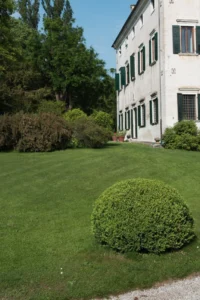
Straight edges with smooth curves allow for consistent maintenance and clear separation between lawn and beds. In contrast, jagged or overly complex designs create gaps where turf equipment cannot reach effectively. Weeds exploit these gaps quickly, especially during warm growing seasons.
Simplifying the bed shape reduces maintenance errors and limits the opportunities for weeds to establish.
Why Poor Edging Increases Weed Pressure
Edging is more than a visual element. It is a physical barrier that helps control soil movement, mulch migration, and grass encroachment. When edging is too shallow, poorly installed, or missing altogether, soil and mulch shift freely.
As mulch washes into turf or soil erodes from beds, bare patches form along edges. These patches provide ideal germination zones for weed seeds carried by wind, water, or foot traffic. Over time, weeds dominate these transition areas and spread into both turf and beds.
Proper edging maintains a stable boundary, protecting turf density and limiting weed access.
| Weed Pro Lawn Care: Local Lawn & Outdoor Pest Experts Reliable Service Backed by Results You Can See Choose the Right Lawn Care Solution for Your Property: – Complete Lawn Care Programs: Ongoing, customized lawn care plans designed to strengthen turf, improve soil health, and reduce weeds. – Targeted Weed & Pest Control: Focused solutions for persistent lawn weeds, invasive pests, and seasonal pressures such as mosquitoes and surface insects. – Irrigation & Lawn Health Support: Professional support for irrigation efficiency, aeration, overseeding, and soil conditioning to improve water absorption, reduce runoff, and help lawns recover from compaction, disease, or environmental damage. Customer Praise:“Easy and quick set-up. Immediate results. I have been trying and failing little by little to maintain my yard over the past three years. Weed pro came in and turned the yard around in 6 months. Thank you Weed Pro Lawn care for excellent and affordable lawn care.” – Antonio Rizzo Why Homeowners Choose Weed Pro Lawn Care: – Locally owned and operated, serving North Georgia communities – Experienced technicians trained in region-specific lawn and pest challenges – Customized service plans based on property conditions, not one-size-fits-all programs – Environmentally responsible treatments with a focus on long-term lawn health – Clear communication, reliable scheduling, and service you can trustSchedule your Service Today! |
Soil Transitions That Invite Weeds
Beds often sit higher or lower than the surrounding turf, especially when soil is added without grading adjustments. Sharp elevation changes cause water to pool or run off unevenly, creating moisture extremes that weaken desirable plants.
Weeds thrive in these stressed zones because they adapt quickly to fluctuating conditions. Turf grass, by contrast, struggles when roots are repeatedly exposed or buried by shifting soil. This imbalance allows weeds to establish dominance at the bed perimeter.
Smooth soil transitions that support consistent moisture distribution significantly reduce weed pressure.
How Mulch Placement Interacts with Bed Design
Even when mulch depth is appropriate, poor bed design can cause it to migrate. Sloped beds without proper edging allow mulch to wash downhill during rain, exposing soil in some areas while smothering turf in others.
Exposed soil invites weed germination, while excessive mulch buildup near turf edges weakens grass and creates additional entry points. Over time, homeowners respond by adding more mulch, compounding the problem rather than solving it.
A bed design that accounts for slope, runoff, and containment keeps mulch where it belongs and prevents recurring weed issues.
Why Herbicides Can’t Fix Structural Bed Problems
Pre-emergent and post-emergent herbicides are effective tools, but they do not correct the conditions that favor weed growth. When bed design continually exposes soil, stresses turf, and disrupts mulch placement, weeds return as soon as treatments wear off.
This cycle leads to repeated applications with diminishing results. Homeowners often assume the product failed when the real issue is that the landscape structure itself is inviting weeds back.
Long-term weed reduction depends on eliminating the conditions weeds rely on, not just suppressing visible growth.
Signs Bed Design Is Driving Weed Pressure
Recurring weeds along the same edges year after year often indicate a design issue rather than a treatment failure. Other signs include:
- Thinning turf adjacent to beds
- Mulch buildup on lawn edges
- Weeds appear immediately after rainfall.
How Proper Bed Design Reduces Weed Growth
Well-designed beds maintain clean boundaries, stable soil levels, and consistent moisture patterns. This allows turf to remain dense and competitive while ornamentals receive proper airflow and drainage.
Clear separation between lawn and beds limits seed movement and reduces the number of germination sites available. Over time, weed populations decline naturally as conditions favor desirable plants.
Design improvements often lead to noticeable weed reduction even before treatments are applied.
Reduce Weed Pressure by Fixing the Landscape Structure

If weeds keep returning along your beds, no matter what you apply, the issue may be structural rather than chemical. Poor bed design creates the exact conditions weeds need to thrive, even in well-maintained lawns. Weed Pro Lawn Care evaluates bed layout, edging, soil transitions, and mulch placement to identify where weeds are being given an advantage.
By correcting design flaws, we help homeowners reduce weed pressure at the source instead of relying on constant treatments. Contact us today to schedule a property assessment and learn how smarter bed design can support a healthier, more resilient lawn.
FAQ – Bed Design and Weed Control
Can poor bed design really cause weed problems?
Yes, bed design strongly influences soil stability, moisture distribution, and turf density. When these factors are out of balance, weeds establish easily and repeatedly. Treating weeds without correcting design issues usually leads to recurring infestations.
Will adding more mulch fix weed issues caused by bad bed design?
Adding mulch alone often makes the problem worse by increasing soil movement and moisture imbalance. Without proper edging and grading, mulch can shift and expose new germination zones. Structural corrections are needed before mulch can work effectively.
When should bed design be evaluated by a professional?
If weeds consistently appear along bed edges, after rainfall, or in the same locations every season, a professional evaluation is warranted. These patterns indicate structural issues rather than simple maintenance gaps. Early corrections prevent long-term turf decline and the need for repeated weed treatments.
Next: Lawn Care for Properties with Thin or Disturbed Topsoil
Improper bed design often exposes or worsens thin topsoil conditions. In the next article, Lawn Care for Properties with Thin or Disturbed Topsoil, we examine how soil depth, construction damage, and grading affect turf health and why weeds dominate when topsoil is compromised.