
You can create a thick, weed-free lawn by understanding how unwanted plants can invade your turf and make your home look less inviting. This guide is full of information to help you quickly identify common Atlanta weeds, suggest eco-friendly ways to remove them, offer suggestions if you want to call a pro, and give you tips throughout the year for maintaining a healthy lawn.
If that sounds intriguing to you, let’s dive into the first topic.
How To Spot the Most Common Broadleaf and Grassy Weeds in Georgia?
Broadleaf weeds such as dandelions and clovers are characterized by broad or wide leaves and extensive taproots that can penetrate compacted soil. Grassy weeds such as crabgrass and annual bluegrass, on the other hand, are packaged in dense clusters or mats and commonly establish themselves in barren or thin patches of turf.
In other words, if you can recognize the leaf shape and winter tolerance associated with most weeds in Atlanta, you can determine if you should hand-pull the weed or apply a selective herbicide.
How Do Georgia Weeds Grow and Their Seasons of Activity?
Warm-season weeds, like crabgrass, typically germinate when soil temperatures reach at least 55°F consistently during the spring and are at their peak in mid-summer. Cool-season weeds, such as annual bluegrass and hensbit, thrive in the cooler conditions of fall and early spring. Knowing the seasonal germination cycles of weeds helps align your control strategies and treatments effectively with the weeds’ germination time.
What are Some Natural and DIY Weed Control Methods for Homeowners
Using natural weed control options can reduce exposure to chemicals and boost your turf’s natural defenses. Common practices, such as physical removal and organic products, are useful in lowering weed populations and provide peace of mind for households with pets and children.
How Does Mowing and Watering Correctly Aid In Weed Prevention
Mowing your grass at the recommended height will provide shade to your young weed seedlings and reduce the evaporation of soil moisture into the environment. Deep, consistent watering encourages strong root systems in turfgrass, making it challenging for weeds to establish themselves.
Careful mowing and watering practices will help create a competitive environment that naturally prevents common weed species from becoming a problem.
How Does Mulching and Hand-Pulling Aid in Weed Prevention?
Mulch’s primary job in weed prevention is blocking sunlight from weed seeds. This prevents germination in bare areas and garden beds. Hand-pulling is useful when the soil is moist because it ensures that when you pull it, you are also pulling the entire root system, reducing future regrowth.
While both are beneficial in the battle against weeds, using mulch and hand-pulling should be done in tandem for the best outcome
.
How Do You Use Pre-Emergent and Post-Emergent Herbicides Strategically?
Chemicals such as pre- and post-emergent herbicides are necessary tools when dealing with persistent or widespread weed infestations. The beauty of pre-emergent herbicides is that they prevent weed seeds from germinating, while post-emergent products target weeds that are already in the process of growing. Applying these correctly and at the right time maximizes their effectiveness and minimizes potential damage to your turf. The table below provides a helpful comparison to guide your decision-making.
| Treatment Type | Optimal Application Timing | Targeted Weeds |
|---|---|---|
| Pre-emergent | Late winter to early spring | Crabgrass, Annual bluegrass |
| Post-emergent | When weeds are actively growing | Dandelions, Nutsedge |
Optimal Pre-Emergent Herbicides Application Timing
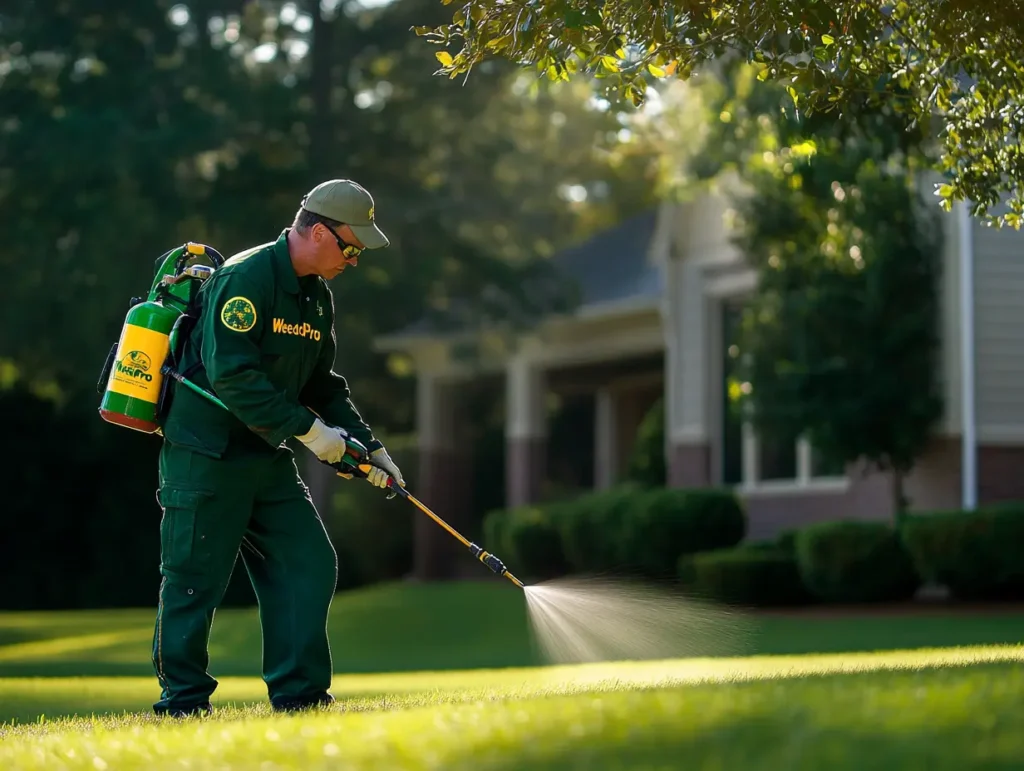
The application of a pre-emergent herbicide develops a protective shield in the soil that prevents weed seeds from germinating. The best time to apply this treatment is during late winter or early spring, which is before soil temperatures consistently exceed 55°F.
How Do You Use Post-Emergent Herbicides to Kill Already Established Weeds
Post-emergent herbicides work by embedding themselves into the leaf surface of weed foliage and slowly making their way down through the stem and into the roots to systemically kill an established plant.
The best time to apply this application is when the soil temperature is between 60°F and 85°F, and the weeds are actively growing and converting carbon dioxide through photosynthesis. It’s also essential that you avoid blanket-spraying an entire lawn. Instead, go for a more targeted approach, spraying in only the most severe areas to avoid damaging an entire lawn.
What are Some Safety Practices for Using Herbicides Around Children and Pets
Avoid children or pets coming in contact with areas you recently treated until the spray is completely dry. Store them in a secure location and make sure they are out of reach after use. When treating the lawn, make sure everyone within reach of the product is wearing the appropriate protective gloves and clothing.
Following these best safety practices is essential for keeping your family safe while promoting environmental stewardship.
Build a Weed-Resistant Lawn Through Rigorous Care
The most effective resistance to weed invasions is establishing a healthy soil, which includes dense, full turfgrass. Consistent fertilizing, the addition of organic material, and the right timing for aeration and overseeding will enhance root growth, providing better opportunities for nutrient absorption and a fuller turf. A fuller turf has all the necessary protections to be weed-resistant.
Frequently Asked Questions
Are there weed control techniques that are safe for pets?
Yes! Organic and pet-safe herbicides are becoming increasingly popular among pet owners. Be sure to check for products labeled as pet-friendly and always allow time for the spray to dry before allowing pets back onto the lawn.
Can you use the same weed control method year-round?
Not exactly. Different seasons will require you to use a different approach. For example, pre-emergents are best applied in early spring, while post-emergents are more beneficial during the summer months.
How soon after weed treatment can you mow the lawn?
You will want to wait 24–48 hours after applying weed control products. Mowing too soon can reduce the treatment’s effectiveness.
Next : Smart Sprinkler Installation
Don’t miss : “Smart Sprinkler Installation: Your Key to Big Savings in Cumming and Atlanta, GA.“