For property managers and HOA boards, “budget season” often feels like a battleground. You are caught in the middle, balancing the board’s demand for cost-cutting against residents’ demands for pristine curb appeal. It is the classic “Justification Gap”: you know that slashing the landscape budget will hurt property values long-term, but you need the data and financial logic to prove it to your stakeholders.
The reality is that commercial turf management is not just an operational expense; it is an asset management strategy. When you shift the conversation from “mowing the grass” to “protecting the asset,” the math changes entirely.
This guide is designed to equip you with the financial frameworks, ROI data, and “value engineering” tactics you need to build a defensible, high-value landscape budget.
The CFO’s View of Turf Management
To win budget approval, you have to speak the language of the board treasurer. They aren’t looking at green grass; they are looking at a spreadsheet. The most effective way to secure your budget is to demonstrate how professional landscape maintenance mitigates risk and drives revenue.
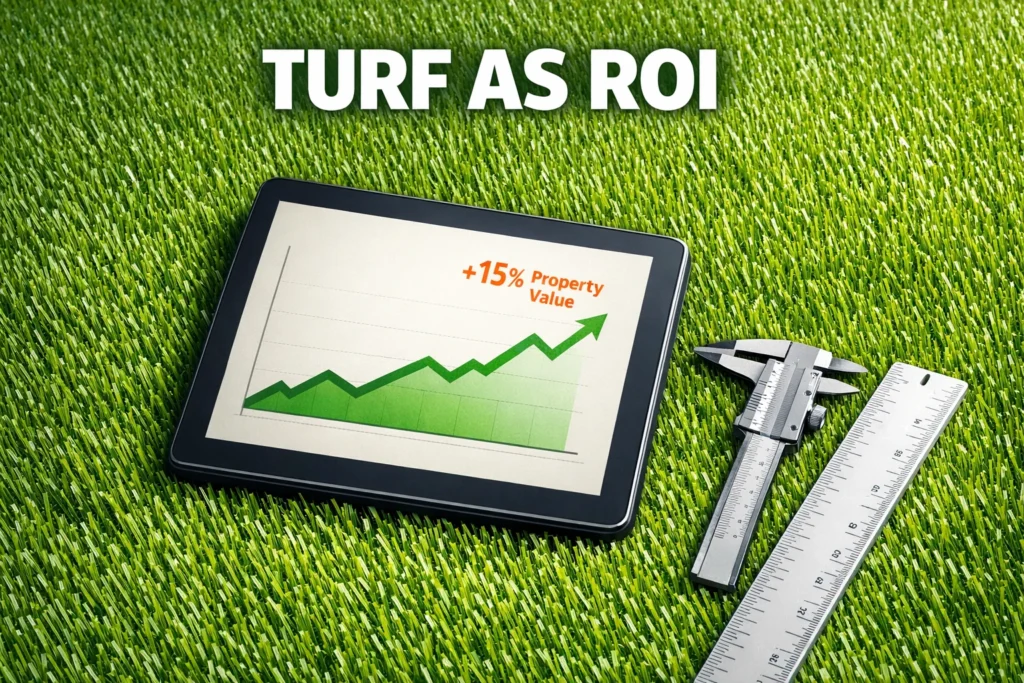
According to data from the National Association of Realtors (NAR), well-maintained landscaping can increase property values by 5% to 15%. Conversely, poor curb appeal is often the first red flag for potential buyers or tenants, signaling deferred maintenance elsewhere in the building.
Think of your turf budget as an insurance policy. Neglecting the lawn this year doesn’t just save a few thousand dollars; it creates a “technical debt” in the soil. Weeds take over, compaction suffocates roots, and eventually, you face a full renovation cost that is 5x to 10x the price of the annual maintenance you skipped.
The ROI of First Impressions
For commercial properties and HOAs, the return on investment (ROI) isn’t just about property value—it’s about occupancy and retention. Industry leaders report that strategic landscaping can yield an ROI of 100% to 400% over several years by increasing tenant retention rates.
When a potential tenant or homeowner pulls up to the property, they make a subconscious value judgment within seconds. If the beds are weed-free and the turf is vibrant, the perceived value of the unit inside goes up. A comprehensive landscape maintenance plan is a marketing tool that runs 24/7.
How to Audit a Commercial Quote
One of the hardest parts of your job is comparing bids. You receive three proposals: one is high, one is low, and one is in the middle. The board instinctively points to the lowest number. But in the turf industry, a low bid often hides missing services that will cost you extra later (via change orders).
To defend a quality bid, you need to understand the pricing logic behind it. Professional commercial turf pricing is generally built on this formula:
Labor + Materials + Overhead + Profit
- Labor: Professional crew rates currently range from $75–$120 per hour per man. This covers not just wages, but specialized training and safety certifications. A bidder significantly under this range is likely underinsured or using undocumented labor, which introduces liability to your HOA.
- Materials: This includes high-grade fertilizers, pre-emergents, and seed. Cheaper bids often substitute big-box store products for commercial-grade applications, resulting in inconsistent results.
- Overhead: This ensures the company has the fleet reliability to show up when they say they will.
When you see a “low-ball” bid, ask specifically what is being left out. Are they offering fewer visits? skipping pre-emergent weed control? Using the table below, you can force an “apples-to-apples” comparison during your next board meeting.
Value Engineering 101: Reducing Costs Without Cutting Quality
If the budget is tight, don’t cut the frequency of service—this leads to overgrown, messy properties that anger residents. Instead, use “Value Engineering.” This involves making strategic adjustments to the landscape that lower long-term maintenance costs while improving aesthetics.
1. Smart Water Management
Water is often a property’s second largest utility expense. If you are still using old mechanical timers, you are literally pouring money down the drain. Upgrading to smart controllers can reduce water waste by 20-40%. When you ask how do smart irrigation schedules compare with traditional schedules, the answer lies in weather-based adaptivity—watering only when the soil needs it, not when it’s raining.
Furthermore, proactive irrigation repair in Atlanta and similar markets ensures you aren’t facing fines for non-compliance with local water restrictions (like AB 1572 or local municipal codes).
2. High-Visibility Zoning
Not every square foot of your property needs golf-course-level attention. We can tier your service areas:
- Zone A (Entrances & Clubhouses): High-frequency detail, annual flowers, premium turf care.
- Zone B (Common Areas): Standard mowing and fertilization.
- Zone C (Perimeters/Natural Areas): Native plants or low-mow fescue that requires less water and labor.
3. Preventative Health vs. Reactive Repair
It is far cheaper to prevent a problem than to fix it.
- Compaction: Annual core aeration near me allows nutrients to reach the root zone, preventing the “thinning” that requires expensive sod replacement later.
- Weed Density: A thick lawn is the best defense against weeds. Adding a lawn overseeding service to your fall budget thickens the turf canopy, naturally crowding out invaders and reducing chemical costs over time.
- Pest Prevention: Ignoring subterranean pests can destroy an entire lawn in weeks. Investing in grub control atlanta services is a minor insurance premium compared to the cost of re-sodding thousands of square feet of dead turf.
The “Spring Value Letter” & Board Justification
Once you have your budget and your audit, the final hurdle is communication. Residents and board members often only notice landscaping when something is wrong. You can flip this dynamic by proactively communicating the value of the services before the season starts.
We recommend preparing a “Spring Value Letter” for your community. This document explains:
- Where the Money Goes: “We are investing in soil health this year to prevent costly sod replacement.”
- The Compliance Angle: “Our new irrigation plan ensures we meet city water guidelines.”
- The Schedule: “Expect to see crews on Tuesdays; here is what they will be doing.”
Transparency builds trust. When residents understand that the budget includes specific scientific treatments—like our Weed Pro VitaminLawn packages—they stop seeing “expenses” and start seeing “stewardship.”
Next Steps for Your Budget
Building a commercial turf budget doesn’t have to be a guessing game. By focusing on asset preservation, auditing your quotes for transparency, and utilizing value engineering, you can present a budget that not only passes the board vote but actually improves your property’s financial standing.
If you need help building a comprehensive maintenance plan or auditing your current landscape spend, our team is ready to partner with you to create a strategy that balances fiscal responsibility with exceptional results.
Frequently Asked Questions
Why shouldn’t we just hire the lowest bidder?
Low bidders often operate on razor-thin margins, which forces them to cut corners on insurance, training, or materials. This “deferred cost” eventually comes back to the HOA in the form of poor service quality, potential liability lawsuits, or the need for expensive landscape rehabilitation.
How does sustainable landscaping impact the budget?
While eco-friendly practices (like organic-based fertilizers or smart irrigation) might have a slightly higher upfront cost or learning curve, they significantly lower long-term costs. Healthier soil requires fewer chemicals, and water-wise systems reduce utility bills, often paying for themselves within 18-24 months.
Can’t we skip fertilization for one year to save money?
Skipping fertilization depletes the soil’s nutrient bank. The turf will weaken, lose its color, and become susceptible to disease and weed infestation. The cost to restore a lawn that has been neglected for a year is typically 20-30% higher than the cost of maintaining it would have been.