Professional Lawn Core Aeration

Core aeration improves soil oxygen flow by removing compacted plugs of soil, allowing water and nutrients to reach deeper root zones.

Core aeration relieves soil compaction by removing small plugs of soil, allowing air and nutrients to reach the root zone. This process supports stronger root development and improves overall lawn performance over time.

Last Updated: March 2026

Request a Quote

5.0 rating icons from Google and Facebook, showcasing Weed Pro Lawn Care's trusted reputation for irrigation services in Acworth, GA.

How Core Aeration Works

Aeration Conditions in Georgia

Georgia’s clay-heavy soil commonly leads to compaction, which can limit oxygen flow and reduce nutrient absorption. Core aeration helps relieve this compaction during active growing periods and improves overall soil performance. Timing is important, as aeration should align with periods when turf can recover and grow effectively.
How WeedPro Handles Core Aeration

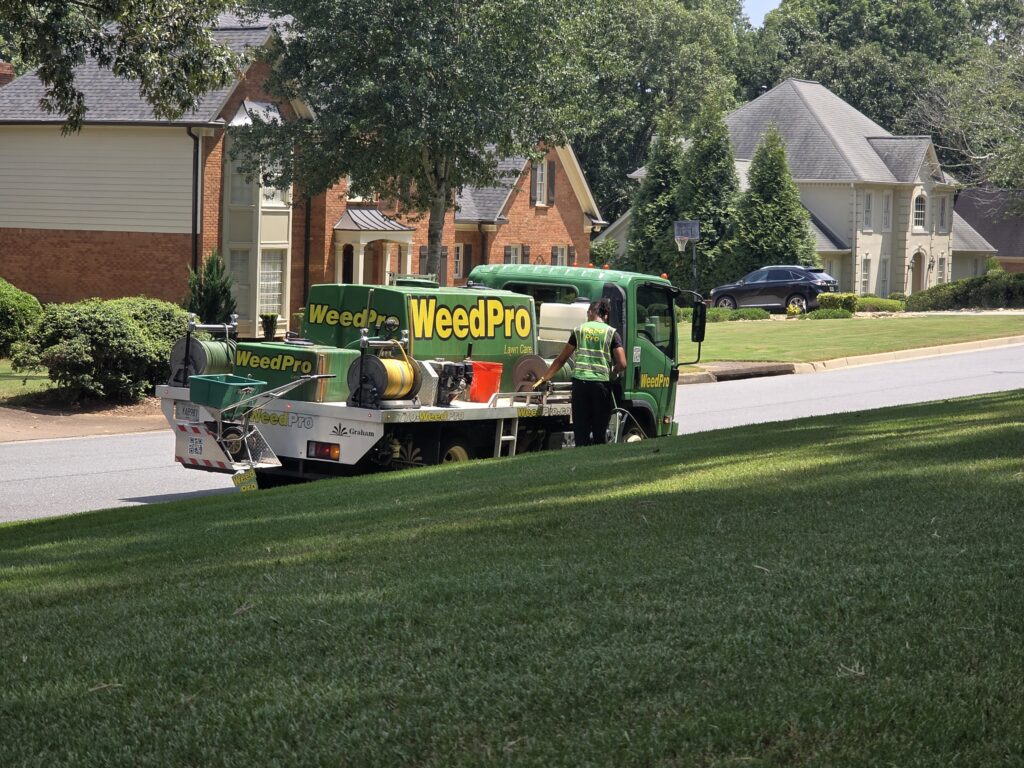
At Weed Pro, we don’t just poke random holes in the soil and call it a day. We bring out professional-grade lawn aerators designed to penetrate deeper than your average rental tool. Our team inspects the surface of the lawn, determines the best strategy, and uses expert timing to ensure your lawn gets the maximum benefit from the aeration process.
We often recommend double core aeration—yes, that means running the machine twice!—especially in Georgia’s heavy clay soil, where compacted soil is a constant battle. Whether you’re prepping for overseeding, dealing with thatch, or just trying to help your lawn thrive, we’ll aerate the lawn with precision and care. We’ll even help you plan the next steps—like how to irrigate the lawn, when to fertilize, and how soon you can mow your lawn again.
Technician operating a core-aerator machine on a lush green lawn
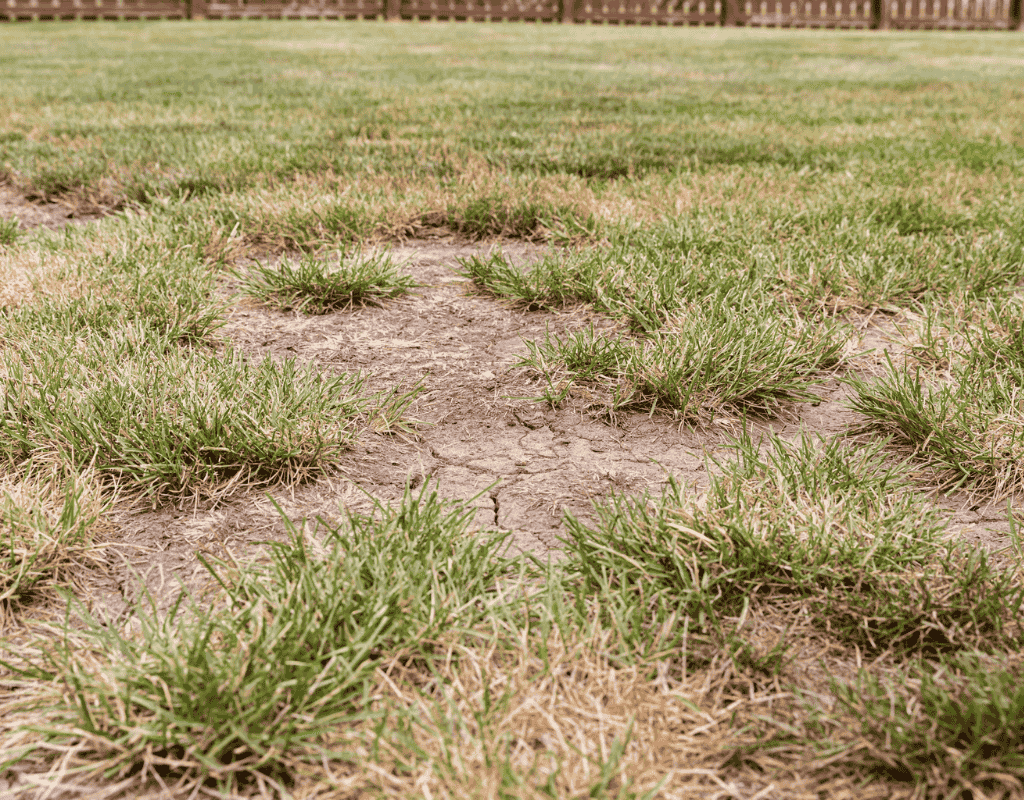
Close-up of a lawn after core aeration, showing small plugs and patchy bare spots where soil cores were removed to improve water and air penetration.

Signs You Need Core Aeration

You might be wondering, “How do I know it’s time to aerate my lawn?” Great question! If your lawn feels hard underfoot or water just sits on the surface instead of soaking in, your soil is compacted. Another red flag? Your grass looks thin or patchy, even though you’ve been keeping up with lawn maintenance. You may also notice an excessive buildup of thatch—a spongy layer of dead roots and debris just under the grass and the soil. When any of these signs show up, aeration can help your lawn bounce back fast.

What is Double Aeration?

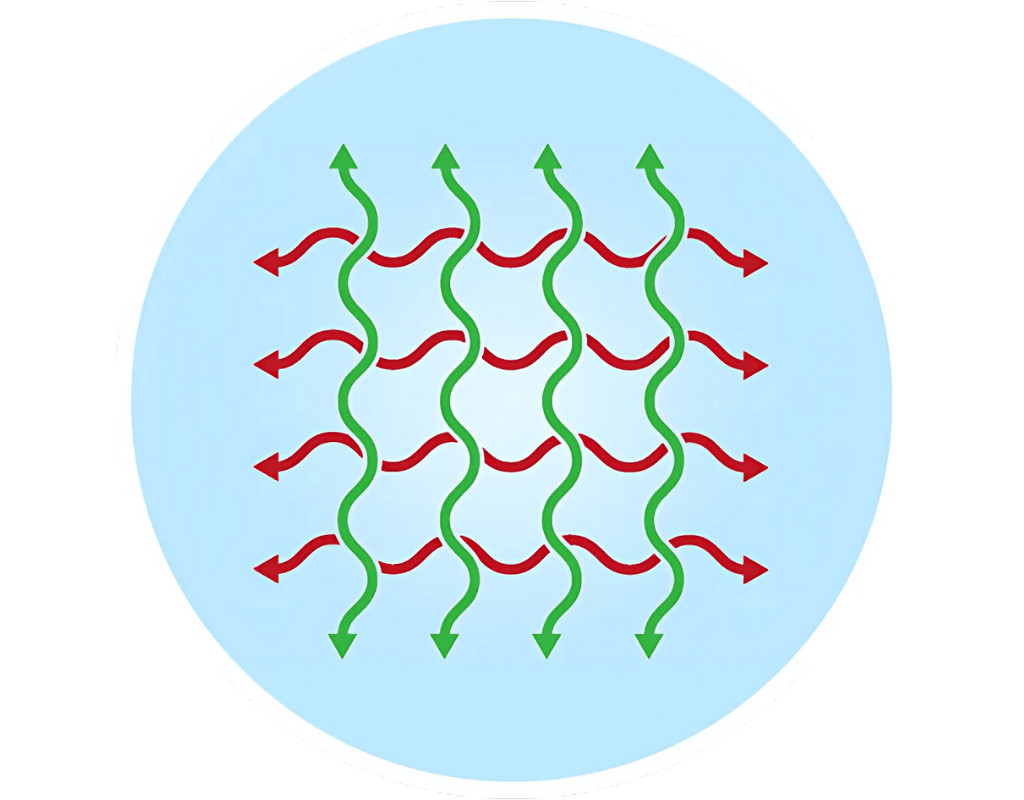
Double aeration consists of cross-directional penetration holes across the turf surface. This will increase the amount of area through which the soil receives extra seed (such as during lawn overseeding), water, air, and nutrients. If you are experiencing dead grass in your lawn and are looking to grow strong, healthy turf, double aeration can help your seed to take. After a period of heavy drought or turf disease problems, this process may be required to sustain more uniform seed germination rates or be recommended to loosen up compacted soil.
Infographic diagram showing soil plugs being removed to improve air and water penetration

FAQ – Lawn Aeration Services

How often should a lawn be aerated in Georgia?

Not all lawns require annual aeration. Recommendations depend on soil condition, traffic levels, and overall turf performance.

Signs may include thinning turf, compacted soil, water pooling, or reduced growth despite regular treatments.

Aeration temporarily leaves small soil plugs on the surface, which break down naturally. The process supports long-term lawn health.

Timing depends on grass type and seasonal growth patterns. Aeration is most effective when turf is actively growing and able to recover.

Yes. Aeration improves nutrient absorption by allowing fertilizer to reach the root zone more effectively.

Some lawns benefit from regular aeration, while others may require it less frequently depending on soil conditions and usage.

For more answers about soil conditions and lawn recovery, visit our aeration FAQ on the Lawn Care Answers page.