Key Takeaways:
- Mulch decomposes at different speeds depending on soil and microclimate conditions
- Moisture, shade, and airflow strongly influence breakdown rates
- Soil biology plays a larger role than mulch type alone
- Poor drainage and compaction accelerate decomposition
- Uneven mulch loss is usually a soil and environment issue, not a material defect
Why Mulch Rarely Decomposes Evenly Across a Yard
Many homeowners expect mulch to age uniformly across a property. After all, the same material is installed at the same time, often at the same depth. Yet within months, one area may look thin and broken down while another still appears fresh and intact.
This uneven breakdown isn’t random. Mulch decomposition rates vary because conditions beneath and around the mulch vary sometimes dramatically across even a small yard. Soil structure, moisture retention, shade patterns, and biological activity all influence how fast organic material breaks down.
Understanding these factors helps explain why re-mulching alone doesn’t solve recurring problem areas.
What Mulch Decomposition Really Is
Mulch decomposition is the gradual breakdown of organic material into smaller particles that integrate into the soil. Microorganisms, fungi, insects, moisture, and temperature drive this process.
In healthy conditions, decomposition is slow and controlled. Mulch protects the soil surface while gradually improving soil quality. When conditions are unbalanced, decomposition accelerates or becomes uneven, leading to mulch beds failing prematurely.
How Soil Moisture Drives Mulch Decomposition Rate
Moisture is one of the most significant factors in mulch breakdown. Microorganisms responsible for decomposition thrive in consistently damp environments. Areas of your yard that:
- Hold water longer
- Sit in low spots
- Have poor drainage
will experience faster mulch decomposition than drier areas nearby.
This is why mulch often disappears quickly near downspouts, slopes, or compacted zones while remaining intact elsewhere.
Why Poor Drainage Accelerates Breakdown
When water can’t move through soil efficiently, it lingers beneath mulch. That extended moisture window increases microbial activity and speeds organic decay. Over time, this leads to:
- Rapid thinning of mulch
- Soil exposure
- Muddy or matted mulch layers
In contrast, well-drained areas allow mulch to dry between rain events, slowing decomposition and preserving structure.
| Weed Pro Lawn Care: Local Lawn & Outdoor Pest Experts Reliable Service Backed by Results You Can See Choose the Right Lawn Care Solution for Your Property: –Complete Lawn Care Programs: Ongoing, customized lawn care plans designed to strengthen turf, improve soil health, and reduce weeds. –Targeted Weed & Pest Control: Focused solutions for persistent lawn weeds, invasive pests, and seasonal pressures such as mosquitoes and surface insects. –Irrigation & Lawn Health Support: Professional support for irrigation efficiency, aeration, overseeding, and soil conditioning to improve water absorption, reduce runoff, and help lawns recover from compaction, disease, or environmental damage. Customer Praise:“Weed Pro has been amazing! We’ve been having them come out for about 3 years now and can see the visible difference in our lawn … Especially in ATL with bad soil, humidity, rain and extreme heat to deal with. Jimmy is great, he’s always communicative when he is coming over and very thorough with the service he provided. highly recommend!” – Amy B. Why Homeowners Choose Weed Pro Lawn Care: -Locally owned and operated, serving North Georgia communities -Experienced technicians trained in region-specific lawn and pest challenges -Customized service plans based on property conditions, not one-size-fits-all programs -Environmentally responsible treatments with a focus on long-term lawn health -Clear communication, reliable scheduling, and service you can trust Schedule your Service Today! |
The Role of Soil Biology in Uneven Mulch Breakdown
Not all soil hosts the same level of biological activity. Areas with richer organic matter, better aeration, and active microbial populations break mulch down faster. This is why mulch often decomposes faster:
- Around mature trees
- Near garden beds with composted soil
- In shaded, biologically active zones
Meanwhile, compacted or lifeless soil slows decomposition, sometimes to the point where mulch sits unchanged for long periods.
Why Shade Creates Faster Decomposition Zones
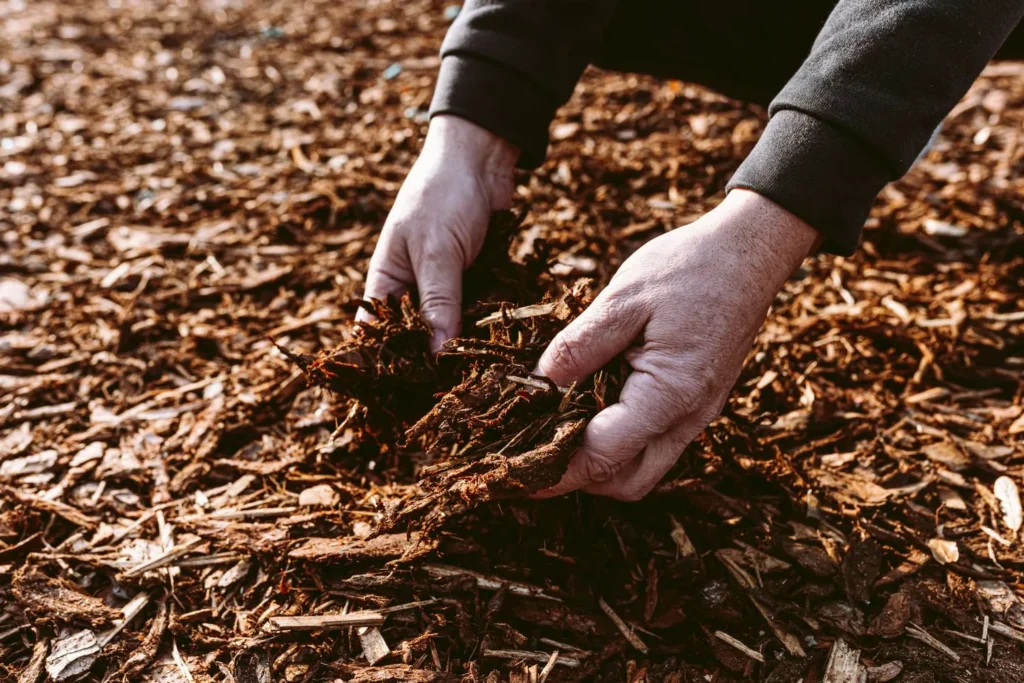
Shade changes temperature and moisture patterns beneath mulch. Shaded areas stay cooler and wetter, creating ideal conditions for fungi and bacteria that break down organic material. Mulch under tree canopies or beside structures often:
- Retains moisture longer
- Experiences less drying airflow
- Supports fungal decomposition
As a result, mulch decomposition rates are usually higher in shaded areas than in open, sun-exposed sections of the same yard.
How Sun and Heat Slow Mulch Breakdown
Sun exposure dries mulch quickly and limits microbial activity. While heat increases chemical reactions, inconsistent moisture in sunny areas actually slows biological decomposition. In full sun:
- Mulch dries out faster
- Microbial populations decline
- Breakdown slows significantly
This explains why mulch in open areas often looks “new” while shaded sections thin rapidly.
Airflow and Its Impact on Mulch Longevity
Airflow is an often-overlooked factor. Areas with good air movement dry more efficiently after rain, limiting prolonged moisture exposure.
Poor airflow zones, such as between dense shrubs or near solid fences, trap humidity, accelerating breakdown.
Why Mulch Type Isn’t the Main Variable
While hardwood, pine bark, and dyed mulches decompose at different rates, material choice usually plays a smaller role than environmental conditions. Even slow-decomposing mulch will break down quickly if installed over:
- Compacted soil
- Poor drainage
- Excessive moisture
This is why switching mulch types rarely fixes uneven decomposition on its own.
How Compacted Soil Alters Mulch Performance
Compacted soil prevents water infiltration and gas exchange, creating surface-level moisture retention. This leads to localized “hot spots” of decomposition where mulch sits directly over compressed ground. Compaction-related decomposition often appears as:
- Mulch sinking into the soil
- Dark, soggy patches
- Rapid breakdown after storms
Without addressing compaction, these areas will continue to consume mulch faster than surrounding sections.
Why Mulch Near Trees Breaks Down Faster
Tree roots influence moisture, microbial activity, and soil temperature. Fine feeder roots near the surface create active biological zones that accelerate decomposition.
Additionally, leaf litter and organic debris around trees provide additional microbial fuel, further speeding up breakdown.
When Uneven Decomposition Signals a Bigger Soil Problem
If mulch consistently disappears in the same areas year after year, the issue is rarely cosmetic. Persistent uneven decomposition usually points to underlying soil problems such as drainage failure, compaction, or grade issues. Ignoring these signals leads to:
- Increased material costs
- Repeated labor
- Declining bed performance
How Proper Bed Preparation Equalizes Decomposition
Correcting subsurface conditions stabilizes mulch performance across the property. When soil drains evenly, breathes properly, and supports balanced microbial activity, decomposition becomes more uniform and predictable.
This reduces the need for constant reapplication and improves overall landscape health.
Solve Uneven Mulch Breakdown With Weed Pro
If your mulch disappears faster in certain areas, no matter how often you replace it, the problem isn’t the mulch, it’s the environment beneath it. Uneven mulch decomposition rates signal soil, drainage, or airflow issues that need to be addressed at the source.
Weed Pro helps homeowners identify why mulch breaks down unevenly and correct the underlying conditions that lead to repeated failures. Contact us today to schedule an on-site assessment and create mulch beds that perform consistently across your entire property.
FAQ
Why does mulch break down faster near trees?
Tree roots, shade, and increased biological activity accelerate decomposition compared to open lawn areas.
Can poor drainage really affect mulch that much?
Yes. Prolonged moisture levels dramatically increase microbial activity and accelerate organic breakdown.
Should you use different mulch in different areas?
Usually no. Fixing soil and drainage issues is more effective than changing mulch types.
Continue Learning
Next, explore How Excess Moisture Triggers Secondary Lawn Infections