A thinning or patchy lawn doesn’t just hurt curb appeal; it’s often a sign that something below the surface isn’t working the way it should. In Georgia, lawns battle heat, clay-heavy soil, seasonal pests, and heavy foot traffic, all of which can weaken turf over time. The good news: most lawn damage is fixable once you understand the cause and take the right steps to rebuild grass density and root strength.
This guide walks you through the most common reasons lawns decline, practical DIY recovery steps, and when it’s worth calling a professional for deeper restoration work. Whether your yard shows drought stress, compaction, pest damage, or bare patches, a thoughtful approach can bring turf back thicker, greener, and more resilient.
Why Lawns Decline: Key Stressors to Look For
Lawns in our region break down for a handful of predictable reasons, and each leaves distinct visual clues. Learning to spot the signs helps you match the right fix to the real problem, rather than wasting effort on guesswork.
Common Causes & What They Look Like
- Drought Stress
Uniform browning, slow recovery after rain, and footprints that linger on the surface.
- Soil Compaction
Thin turf in high-traffic areas, difficulty pushing a screwdriver or soil probe into the ground.
- Grubs & Insects
Patchy, irregular dead areas that lift like carpet; digging reveals white larvae near the roots.
- Weed Pressure
Bare soil and thinning grass give crabgrass, clover, and other weeds an easy opening.
These early clues help you prioritize the first round of fixes, adjusting watering, aerating compacted areas, checking for pests, or planning overseeding.
How Drought Affects Warm-Season Lawns
During stretches of hot, dry weather, roots shrink, and the lawn loses its ability to absorb nutrients. You’ll often see:
- A bluish-gray cast before browning begins
- Depressed footprints after walking
- Quick decline on sunny slopes and near hardscape
The first recovery step is simple: confirm soil moisture a few inches down and shift to deep, infrequent watering to encourage strong root growth. Raising your mower height also relieves stress and supports recovery.
Pests, Diseases, and Weeds: What Else Can Cause Damage?
Georgia’s warm, humid climate creates ideal conditions for turf pests and fungal pathogens.
- Grubs chew roots and cause lifting patches
- Dollar spot, brown patch, and other diseases appear as rings or sunken areas
- Persistent weeds signal thin turf or nutrient imbalance
If you see rapid decline, greasy-looking leaf spots, or irregular dieback, a professional assessment is the fastest way to confirm the cause and choose the right treatment.
Professional Lawn Restoration: What It Includes and When It Helps
Some lawn issues respond well to DIY fixes, but widespread thinning, pest activity, or compacted soil often need a structured professional approach.
What Professional Restoration Targets
- Compaction relief
- Pest or disease suppression
- Soil amendments
- Overseeding to rebuild density
- Topdressing for smoother, healthier soil structure
Quick Service Comparison
| Service | What it treats | Expected result / timeline |
| Lawn Repair Program | Multiple issues after a property assessment | Noticeable improvement in 4–10 weeks with follow-up care |
| Lawn Core Aeration | Soil compaction and weak root systems | Improved root depth and water infiltration in 4–8 weeks |
| Lawn Overseeding | Bare spots and thinning turf | Thicker turf in 6–10 weeks, depending on seed and weather |
A coordinated program usually outperforms single treatments because each step supports the next.
Inside a Lawn Repair Program: How Turf Gets Rebuilt
A structured restoration plan begins with understanding what caused the damage. From there, treatments are layered in the right order:
- Assessment — Soil, pests, drainage, and turf health are evaluated
- Aeration — Relieves compaction and opens channels for air and water
- Overseeding — Adds the right seed blend to rebuild density
- Topdressing — Levels the soil and improves seed-to-soil contact
- Targeted Treatments — Weed control, grub control, or disease suppression as needed
With consistent watering and mowing, homeowners usually see visible recovery within several weeks.
Why Aeration + Overseeding Are the Core of Lawn Recovery
These two services make the biggest difference in restoring damaged turf:
Aeration
- Breaks up compacted clay
- Improves oxygen flow and nutrient uptake
- Encourages deeper, stronger roots
Overseeding
- Fills bare patches
- Thickens turf to block weeds
- Adds improved, resilient grass varieties
Combined, they create the conditions your lawn needs to rebuild itself quickly and naturally.
DIY Fixes for Small Bare Spots
Not every lawn issue requires a full restoration. Small patches often bounce back with a weekend of focused care.
A Simple DIY Repair Plan
- Prep the area: Rake out dead grass and loosen the top inch of soil
- Topdress lightly: Add a thin layer of enriched topsoil or compost
- Seed correctly: Apply the right mix for your turf type
- Moisture matters: Keep the seedbed evenly moist until seedlings mature
If weeks pass with little improvement, or the patch keeps returning, an underlying issue is likely still at work.
Watering & Mowing Practices That Support Recovery
Healthy lawns rely on consistent cultural care; especially after stress.
Watering
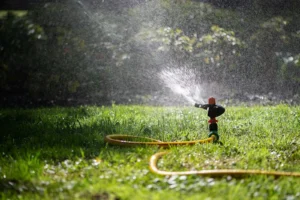
- Aim for 1 inch per week, delivered deeply
- Water early mornings to reduce disease risk
- Avoid frequent, shallow watering, which encourages weak roots
Mowing
- Keep blades sharp
- Avoid scalping recovering grass
- Follow recommended heights for your grass type
Small changes in routine often accelerate recovery more than homeowners expect.
When to Rake, Seed, and Repair Bare Areas
Early fall is typically the best window for overseeding and patch repair, thanks to warm soil and mild air temperatures. For best results:
- Rake and loosen the soil
- Apply a thin topdressing
- Spread a high-quality seed
- Keep traffic off new growth
Larger areas, chronic dieback, or repeated thinning usually indicate the need for a deeper professional evaluation.
Year-Round Prevention: How to Keep Lawn Damage From Returning
A strong lawn is built through routine care rather than emergency fixes.
Seasonal Prevention Guide
| Action | Frequency / Timing | Benefit |
| Soil testing and tailored fertilization | Every 1–3 years, early spring | Balanced nutrients and targeted soil amendments |
| Core aeration | Annually or every two years, spring or fall | Relieves compaction and encourages deeper roots |
| Overseeding or topdressing | Fall or transition periods | Maintains turf density and lowers weed pressure |
Following a seasonal rhythm makes lawns more resilient and reduces the need for repair work.
Why Soil Testing & Fertilization Matter
Soil health is the foundation of turf health. A routine soil test identifies:
- pH problems
- Nutrient shortages
- Organic matter needs
Correcting these issues helps new seedlings establish faster and builds long-term resilience so your lawn stays healthier between seasons.
Seasonal Care That Protects Georgia Lawns
Spring through fall, each season plays a role in strengthening turf:
- Spring: Aeration, dethatching, early weed prevention
- Summer: Water management, pest monitoring
- Fall: Overseeding, fertilization, root building
- Winter: Light cleanup and soil planning
Keeping ahead of seasonal stresses prevents the cycle of damage and repair.
Bring Your Lawn Back to Life with Expert Help
Damage from pests, weather, or soil problems doesn’t have to be permanent. With the right repair strategy, from overseeding to aeration to soil corrections, your lawn can recover quickly and stay greener year-round. Our team evaluates the underlying causes and builds a repair plan tailored to your lawn’s needs.
Contact us today to schedule a repair assessment and restore your lawn with confidence.
Frequently Asked Questions
How quickly should you repair damage once you see it?
It’s best to act early, since open soil invites weeds and stresses the surrounding turf. Early repairs save both time and long-term costs.
What’s better for repair, seed or sod?
Sod offers instant results, while seed is more budget-friendly for larger areas. Both can be effective when soil prep and watering are done properly.
What if the same areas keep getting damaged?
Recurring damage usually points to soil, drainage, or pest issues. A professional assessment helps diagnose the root cause and prevent repeat problems.
Reference Section: Next Article in Series
Read next: Lawn Soil Preparation for Georgia Homeowners: How to Test, Amend, and Improve Your Lawn Soil.