Key Takeaways
- A healthy fertilization plan starts with a soil test, not guesswork. This tells you which nutrients your lawn actually needs.
- Simple, natural amendments like compost, coffee grounds, and Epsom salt can support soil health when used correctly and in moderation.
- In Atlanta and North Georgia, warm-season grasses (Bermuda, Zoysia) and cool-season grasses (Tall Fescue, Rye) follow very different fertilization calendars.
- Safe DIY applications depend on calibrated equipment, proper PPE, and smart timing that avoids extreme heat and heavy rain.
- If you’re seeing repeated problems, burn, bare patches, or confusing soil results, a professional program can save time and protect your lawn.
Feeding Your Lawn the Smart Way in Atlanta & North Georgia
Fertilizing your lawn is more than just “making it green.” Done well, it helps turf:
- Grow thicker and denser
- Resist drought, heat, and foot traffic
- Recover faster from pests and disease
Done poorly, fertilization can burn grass, create thatch, and send excess nutrients into storm drains.
This guide walks you through DIY, homeowner-friendly fertilization with a focus on:
- Natural and homemade options
- Soil testing and nutrient basics
- Georgia-specific timing for warm- and cool-season lawns
- Safe application methods for granular and liquid products
- Common mistakes and when to call a pro
Let’s start with the “what” you’re actually feeding your lawn.
Understanding Nutrients and Natural Fertilizers
The Basics: N, P, K, and Micronutrients
Most lawn fertilizers list three numbers—N-P-K:
- Nitrogen (N) – drives green growth and color
- Phosphorus (P) – supports root development
- Potassium (K) – improves stress tolerance and disease resistance
Micronutrients like iron, magnesium, and manganese also matter, especially in certain Georgia soils. A quick soil test (through your local extension service or a lab) reveals:
- Existing nutrient levels
- Soil pH (often a significant factor in nutrient availability)
- Whether you actually need phosphorus or magnesium
That information guides both your store-bought products and your homemade additions.
Natural Fertilizer Options You Can Use at Home
Natural and homemade fertilizers typically work more slowly than synthetic products, but they:
- Add organic matter
- Feed soil microbes
- Improve structure and water-holding capacity over time
Used correctly, they fit nicely into an environmentally friendly lawn-care plan.
Common Household Ingredients and Their Benefits
| Ingredient | Main Nutrient | Application Rate / Practical Benefit |
| Coffee grounds | Nitrogen (low) | Light top-dress: ~1 cup per 10 sq ft; mix with compost to avoid compaction |
| Epsom salt | Magnesium (Mg) + Sulfate | Dissolve 1 lb per 1,000 sq ft in water if a soil test shows Mg deficiency |
| Compost (finished) | Balanced trace N-P-K + organic matter | Apply 1/4 inch top-dress; supports microbes and improves soil structure |
Important: Always base use of Epsom salt and other mineral additives on soil test results, not just lawn color. Overuse can upset nutrient balance.
Simple Ways to Use Natural Amendments
- Coffee grounds: Mix into compost, or sprinkle thinly (~1 cup per 10 sq ft) and rake in lightly.
- Epsom salt: About 1 lb per 1,000 sq ft dissolved in water only if soil tests show low magnesium.
- Compost: Spread ~¼ inch over the lawn and rake or drag it in, especially after aeration.
These natural amendments work best as supporting players alongside a balanced fertilization plan, not as your only nutrient source.
Fertilization Timing for Atlanta & North Georgia Lawns
Georgia lawns don’t all follow the same schedule. Timing depends on grass type, soil temperature, and weather.
Warm-Season vs. Cool-Season Fertilization Calendar
| Grass Type | Best Fertilization Months | Notes for Timing |
| Bermuda, Zoysia (warm-season) | May, July, September (light) | Feed after green-up; avoid heavy late-season nitrogen |
| Tall Fescue, Rye (cool-season) | Sept–Nov, Feb–Mar | Emphasize fall for root growth; keep spring applications light |
| Overseeded Lawns | Fall overseed + fall fertilizer | Coordinate overseeding with a starter fertilizer when needed |
How Georgia Weather Changes the Plan
- Heavy spring rains: Increase runoff and leaching risk; hold off on big applications right before storms.
- Heatwaves or drought: Avoid fertilizing severely stressed turf—focus on proper watering instead.
- Cooler fall periods: Great for feeding Fescue and overseeded lawns; roots grow while temps are more comfortable.
Watching the forecast and checking soil moisture will always beat following a rigid date-based schedule.
Applying DIY Fertilizers Safely and Effectively

Whether you use natural amendments, synthetic products, or a mix of both, the way you apply them matters as much as what you apply.
Granular vs. Liquid Fertilizers
Granular (slow-release, natural or synthetic)
- Forgiving for DIY use
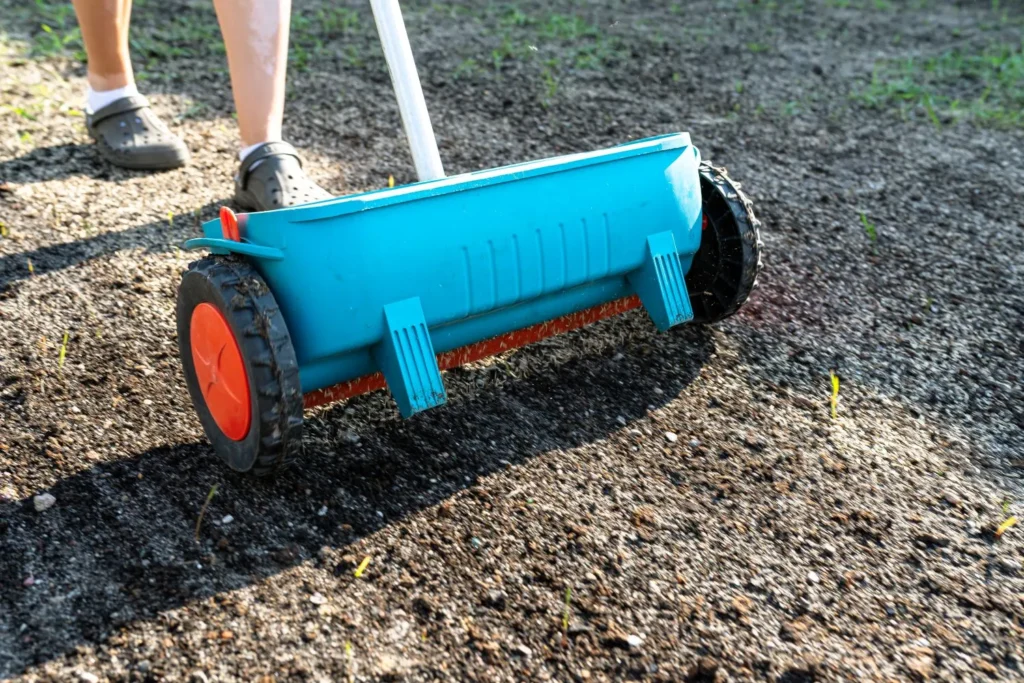
- Easy to apply with a spreader
- Lower risk of quick burn when applied at correct rates
Liquid (quick-release or foliar feeds)
- Faster response and greening
- Good for targeted treatments
- Require careful mixing and consistent coverage to avoid streaks
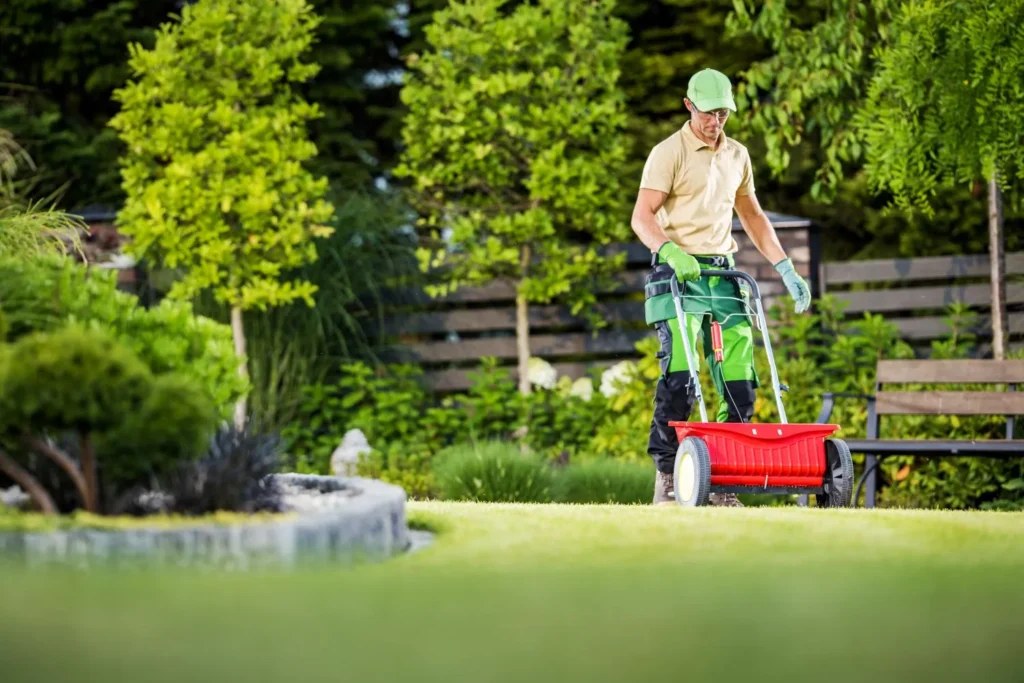
Step-by-Step: Granular Application
- Soil Test & Product Selection
- Confirm N-P-K needs, then choose a fertilizer that matches your grass type and season.
- Calibrate the Spreader
- Use the manufacturer’s setting as a starting point.
- Test on a driveway or small area with a known amount to ensure you’re hitting the label rate per 1,000 sq ft.
- Apply in a Consistent Pattern
- Walk at a steady pace.
- Use a crisscross pattern (north-south, then east-west) for more even coverage.
- Water In (When Recommended)
- Lightly irrigate after application unless the label says otherwise.
- Avoid heavy watering that might cause runoff.
- Record What You Did
- Note the product, rate, date, and weather. This helps prevent over-application later.
Step-by-Step: Liquid Application
- Mix with clean water as directed on the label.
- Use a hose-end or pump sprayer with an appropriate nozzle.
- Walk evenly and maintain a consistent speed and spray pattern.
- Avoid spraying in wind or extreme heat.
Essential Equipment and Safety Tips for DIY Fertilizing
Helpful Tools for Homeowners
- Broadcast spreader: Great for large, open lawns; watch overlap margins.
- Drop spreader: More precise along edges, sidewalks, and smaller yards.
- Hose-end or pump sprayer: For liquid feeds and spot treatments.
Safety Practices You Should Always Follow
- Wear gloves, closed-toe shoes, and eye protection when handling any fertilizer.
- Keep children and pets off the lawn until products are watered in and dry (or as directed on the label).
- Store all products in a cool, dry place, away from kids, pets, and drains.
- Never fertilize right before a predicted heavy rain; that’s how nutrients end up in creeks instead of your lawn.
Common DIY Fertilization Mistakes (and How to Fix Them)
Even with good intentions, it’s easy to make a few missteps.
Frequent Mistakes
- Over-fertilizing: Leads to burnt tips, thatch buildup, and soft, disease-prone growth.
- Poor timing: Heavy nitrogen in peak heat or late fall on warm-season grass can stress turf and delay dormancy.
- Uneven application: Creates stripes, patchy color, and inconsistent root depth.
- Ignoring soil tests Can Cause imbalances, such as too much phosphorus or unnecessary magnesium.
Signs of Over-Fertilization
- Browning or “burnt” leaf tips
- Sudden surge of lush growth, followed by thinning
- Increased fungal problems in warm, humid periods
Quick Corrective Steps
- Deeply water (if safe to do so) to help leach excess surface salts.
- Pause further fertilization until the lawn recovers.
- Run a soil test to guide repairs and prevent the problem from recurring.
Being precise with rates, timing, and equipment calibration prevents most of these issues.
When It’s Time to Call a Lawn Fertilization Professional
DIY is great for many homeowners—but there are times when calling in a pro is the smarter move.
Situations Where a Pro Helps Most
- Persistent brown patches that don’t respond to simple fixes
- Suspected soil problems (pH, severe compaction, poor drainage)
- Repeated weed, disease, or insect pressure
- A mix of warm- and cool-season grasses, you’re not sure how to manage
- Limited time or desire to handle products and equipment
How Weed Pro Supports Atlanta and North Georgia Lawns
Weed Pro offers:
- Soil analysis and customized nutrient plans
- Integrated programs with fertilization, weed control, and aeration
- Environmentally responsible product selection and application
- Timing tailored to local weather and your specific grass type
Our process is simple:
- Property Assessment – We evaluate grass type, soil conditions, and existing issues.
- Tailored Plan & Quote – You get a clear program and pricing with no guesswork.
- Treatment & Maintenance – We time applications correctly, monitor progress, and adjust as needed.
If DIY efforts keep falling short—or you’d just rather have a dependable, worry-free program—Weed Pro can take fertilization off your plate and keep your lawn moving in the right direction.
Frequently Asked Questions
Are natural or homemade fertilizers enough on their own?
Natural amendments like compost, coffee grounds, and Epsom salt can absolutely help, especially with soil structure and long-term health. However, they may not provide enough nitrogen or balanced nutrients on their own, especially for high-use turf. Many homeowners achieve the best results with compost and natural materials, along with a balanced, well-timed fertilizer program based on soil tests.
How many times per year should you fertilize your lawn in Atlanta?
Most warm-season lawns (Bermuda, Zoysia) do well with 2–3 well-timed applications per year, while cool-season grasses see the most benefit from a strong fall program and a light spring feeding. The exact number depends on your grass type, soil test, and goals (basic green-up vs. “golf-course” look).
Next Guide: Smart Irrigation Upgrade
For a deeper understanding of Irrigation, your next read is “Is Your Cumming, GA Lawn Ready for a Smart Irrigation Upgrade?”.